Blog

Latest insights on marketing analytics, paid advertising, and growth strategies.

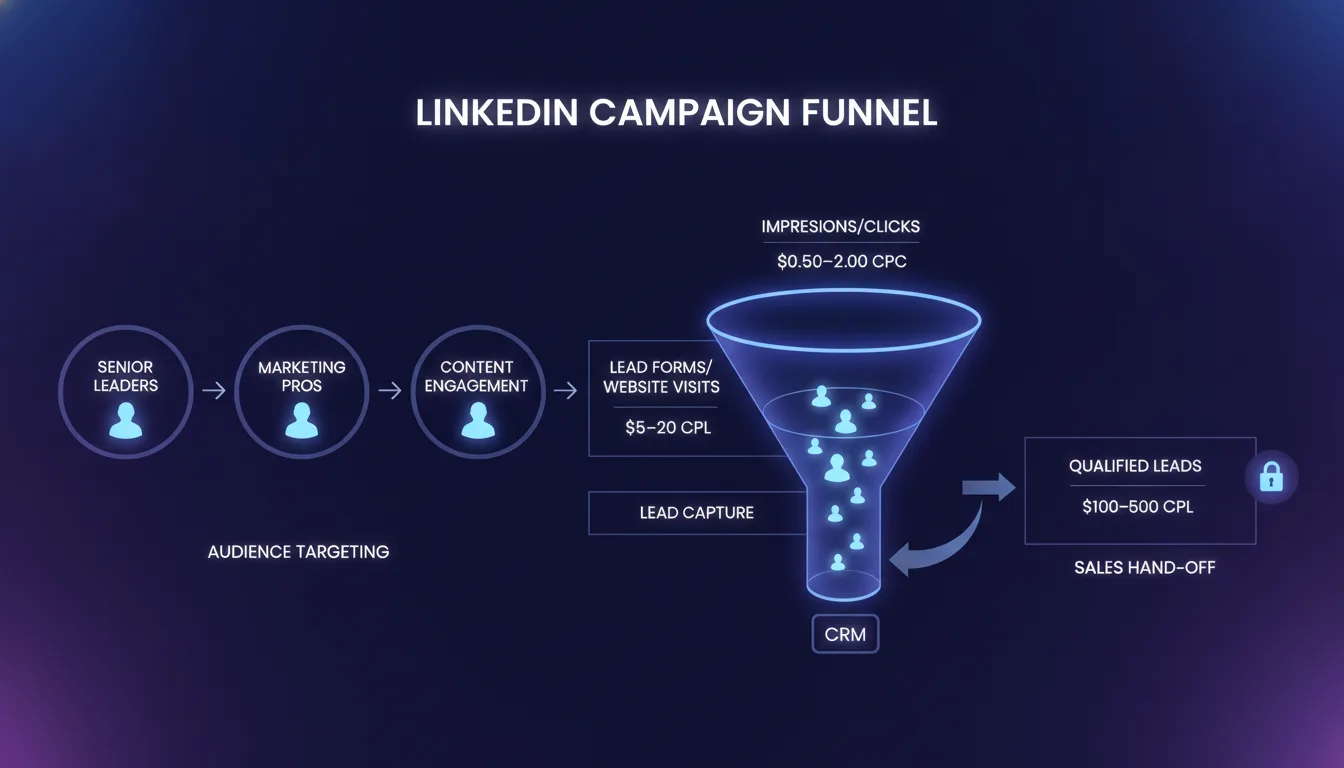
A LinkedIn campaign funnel infographic illustration showing the flow from audience targeting through lead capture to qualified lead hand-off. Make it immediately clear what the viewer is seeing: segmented audiences flowing into a lead gen funnel with cost per lead metrics.
B2B Paid Advertising

LinkedIn Ads for B2B: How to Lower Your Cost Per Qualified Lead

B2B buyers expect precision targeting and seamless funnel experiences. Most LinkedIn Ads campaigns fail because brands optimize for clicks, not qualified leads. This framework fixes that by aligning audience strategy, ad format, lead gen forms, retargeting, and bid strategy into one system.

July 30, 202616 min read
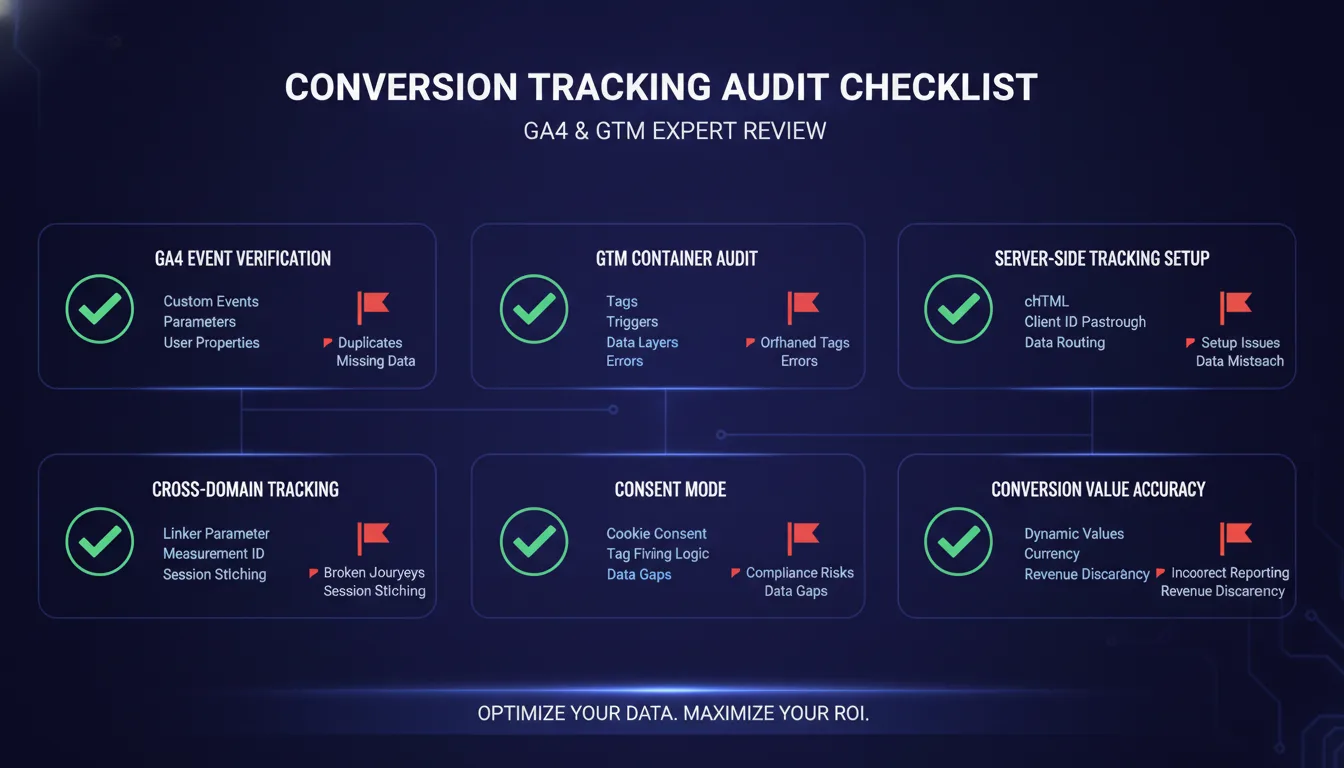
Conversion tracking audit checklist infographic showing GA4 event verification, GTM container audit, server-side tracking setup, cross-domain tracking, consent mode, and conversion value accuracy — with checkmarks and red flags
Conversion Tracking & Attribution

How to Audit Your Conversion Tracking Before You Waste Another Dollar on Ads

Most brands are bleeding money on ads because their conversion tracking is broken, incomplete, or misconfigured. This checklist walks you through a complete GA4 and Google Tag Manager audit that identifies tracking gaps before they cost you thousands.

July 24, 202617 min read
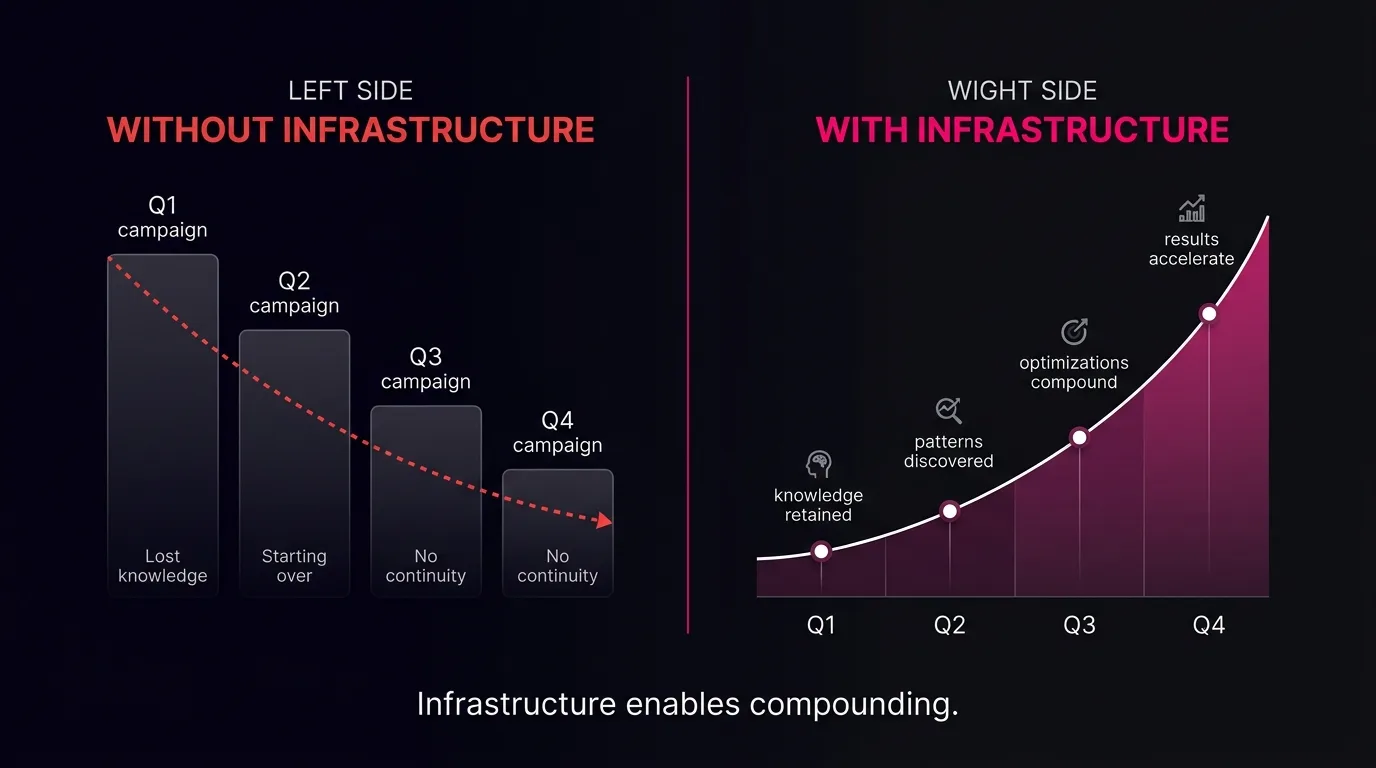
Split visualization showing quarterly campaign restarts on the left side with declining knowledge, versus continuous compounding growth on the right with a unified system
Marketing Infrastructure

Why Your Marketing Campaigns Don't Compound (and How Infrastructure Fixes That)

Most marketing teams run campaigns. Real growth engines compound them. The difference is infrastructure. Learn why your best campaigns disappear each quarter and how managed marketing infrastructure makes every dollar work harder over time.

July 15, 202615 min read
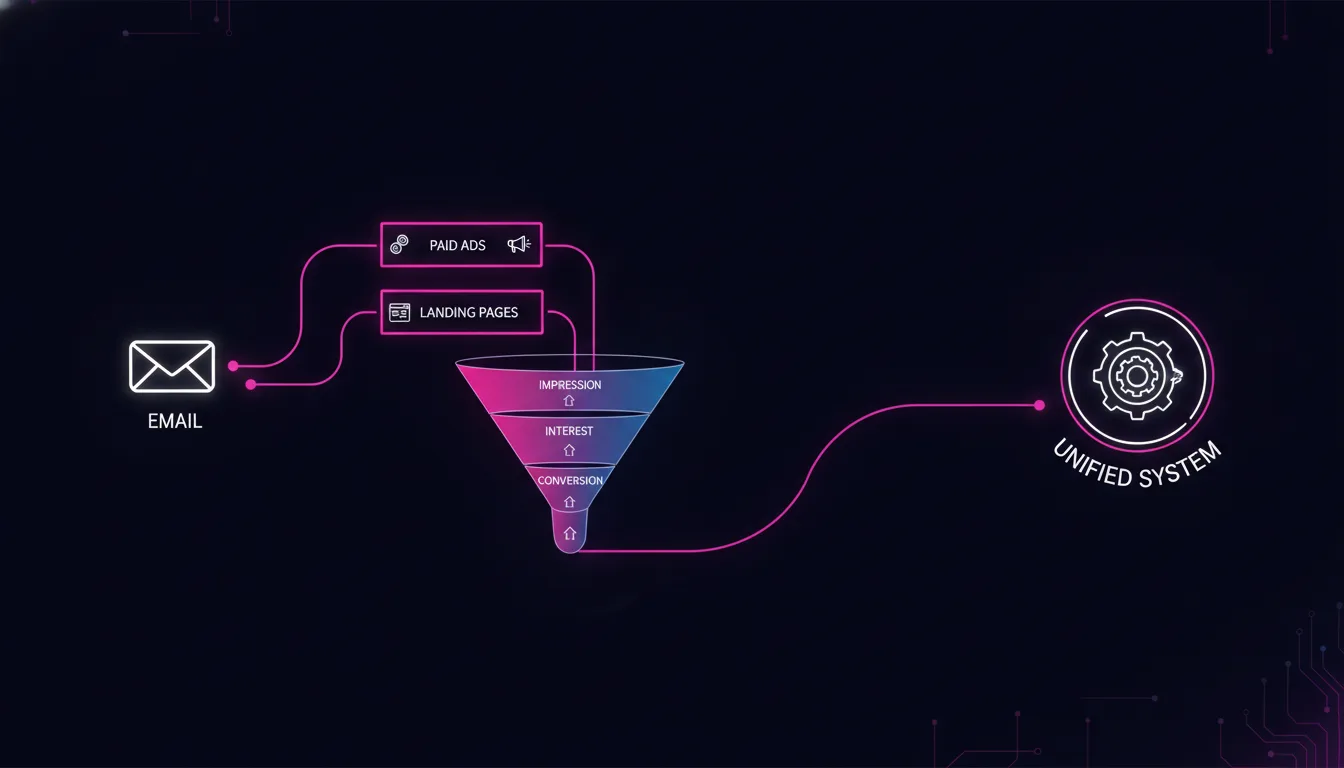
Infographic showing an email icon connected to paid ads, landing pages, and a conversion funnel — all unified under one system on a dark background with magenta accents
Email Marketing & Automation

Email Automation That Actually Connects to Your Ads and Funnels

Most email automation is disconnected from paid ads and landing pages. Learn how true integration connects email sequences to ad performance, tracks attribution across the funnel, and turns email from a support channel into a full-stack growth lever.

July 15, 202615 min read
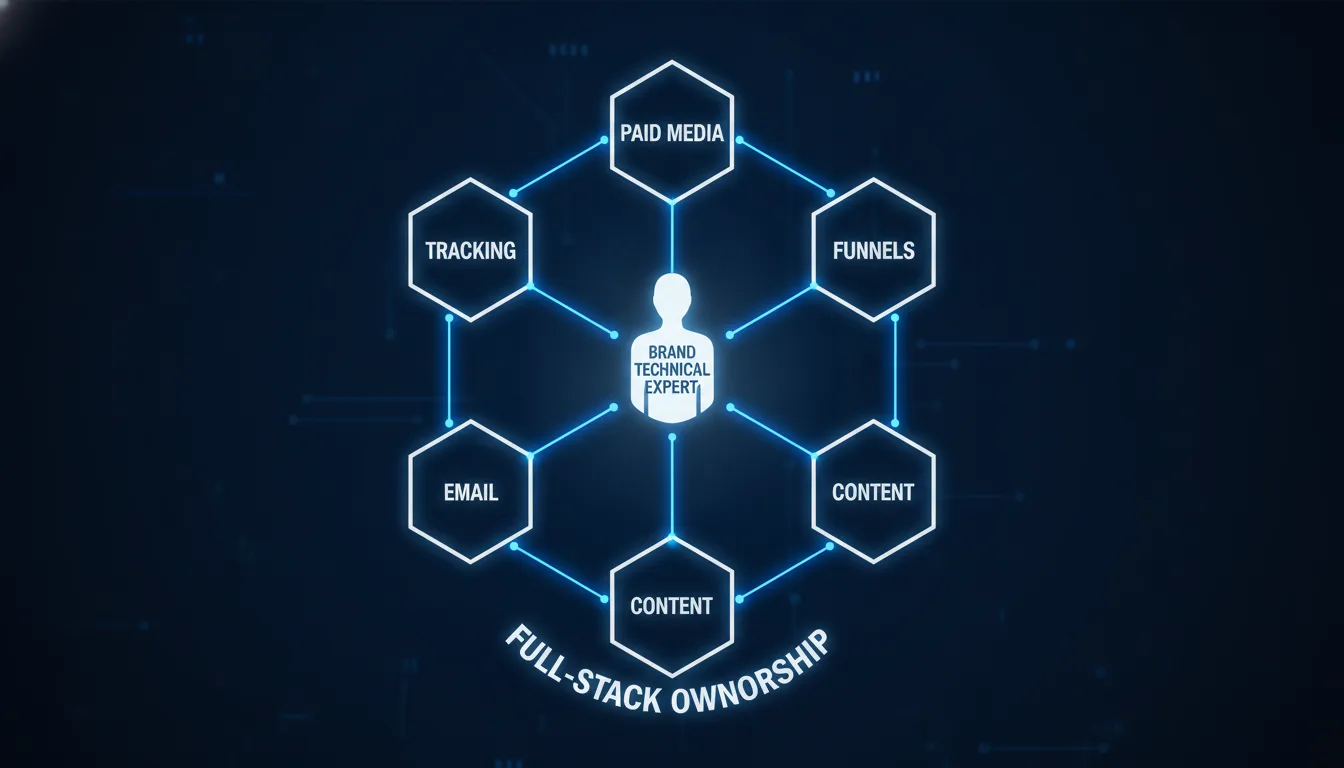
Generate an illustrated image with dark background with aspect ratio 16:9 for the prompt: Diagram of a Brand Technical Expert at the center connected to six labeled responsibility areas — Paid Media, Tracking, Funnels, Email, Content, and Reporting — showing full-stack ownership
Marketing Infrastructure

What a Brand Technical Marketing Expert Actually Does (and Why You Need One)

A Brand Technical Marketing Expert isn't a strategist who disappears after quarterly reviews. They own your entire marketing system end-to-end — from paid ads to funnels, tracking, email, and reporting. Learn what they actually do and why growth-stage brands are hiring them instead of agencies.

July 10, 202610 min read
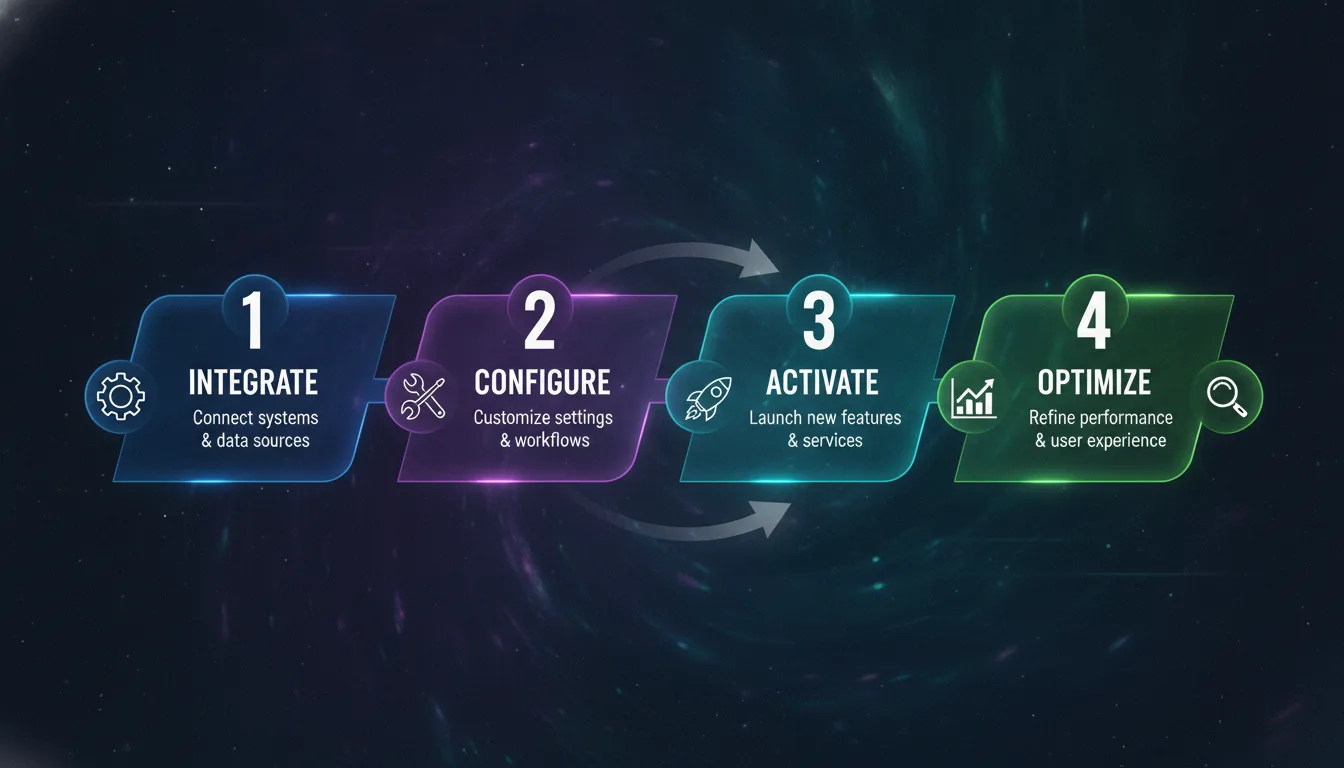
Generate an illustarated image in dark background with aspect ratio 16:9 for the prompt: Horizontal four-phase roadmap showing Integrate, Configure, Activate, and Optimize — each phase with a number, title, and short description showing the engagement progression
Marketing Infrastructure

The 4-Phase Growth System: How to Go from Disconnected Channels to Unified Marketing

Most growth-stage brands know they need to unify their marketing channels. But how? This post reveals the exact 4-phase framework that transforms fragmented vendors into a single, compounding system.

May 15, 202611 min read
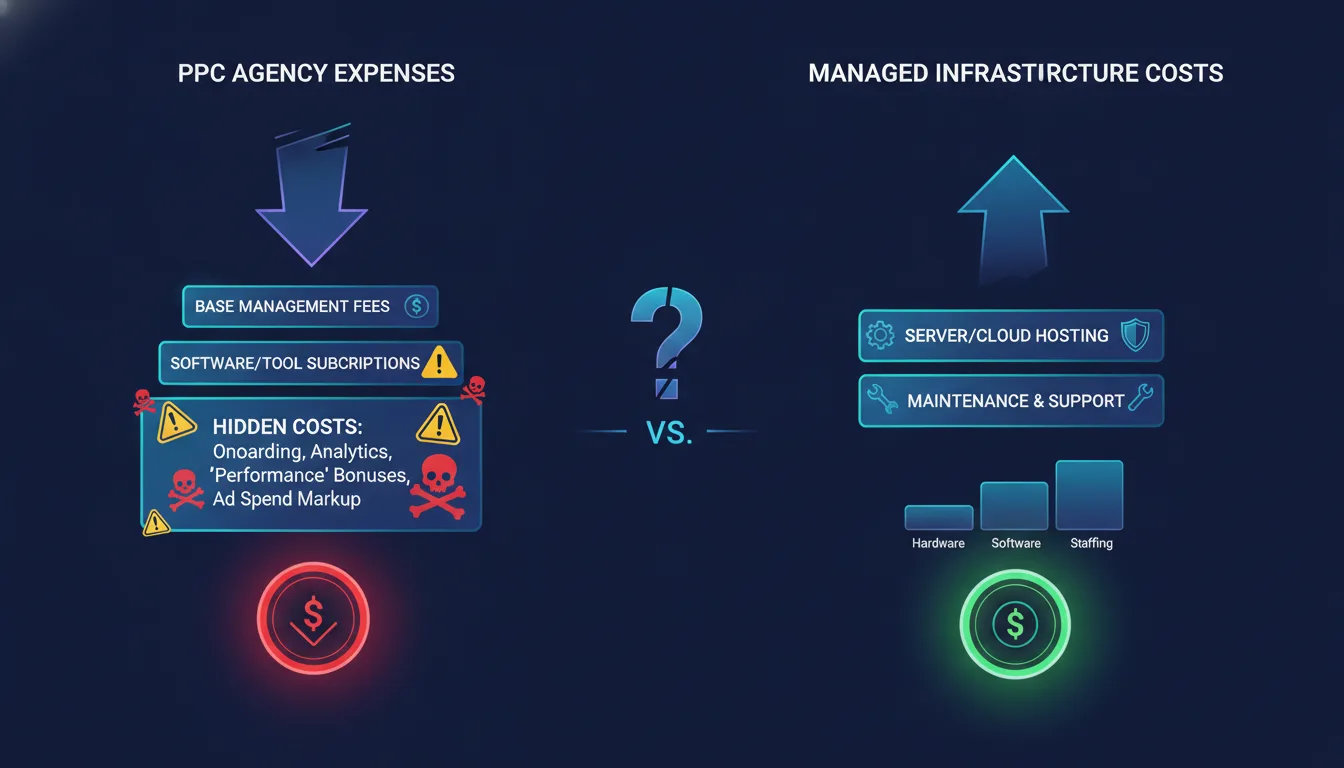
Cost comparison infographic showing PPC agency expenses on the left with warning icons for hidden costs, vs. managed infrastructure costs on the right with clear breakdown
Marketing Infrastructure

The Real Cost of Hiring a PPC Agency vs. a Full-Stack Marketing System

PPC agencies charge $3,000–$15,000+/month with hidden costs and minimal accountability. A full-stack managed infrastructure model costs $2,500–$5,500+/month and includes tracking, funnels, email, and reporting. Compare the true costs.

May 15, 202613 min read
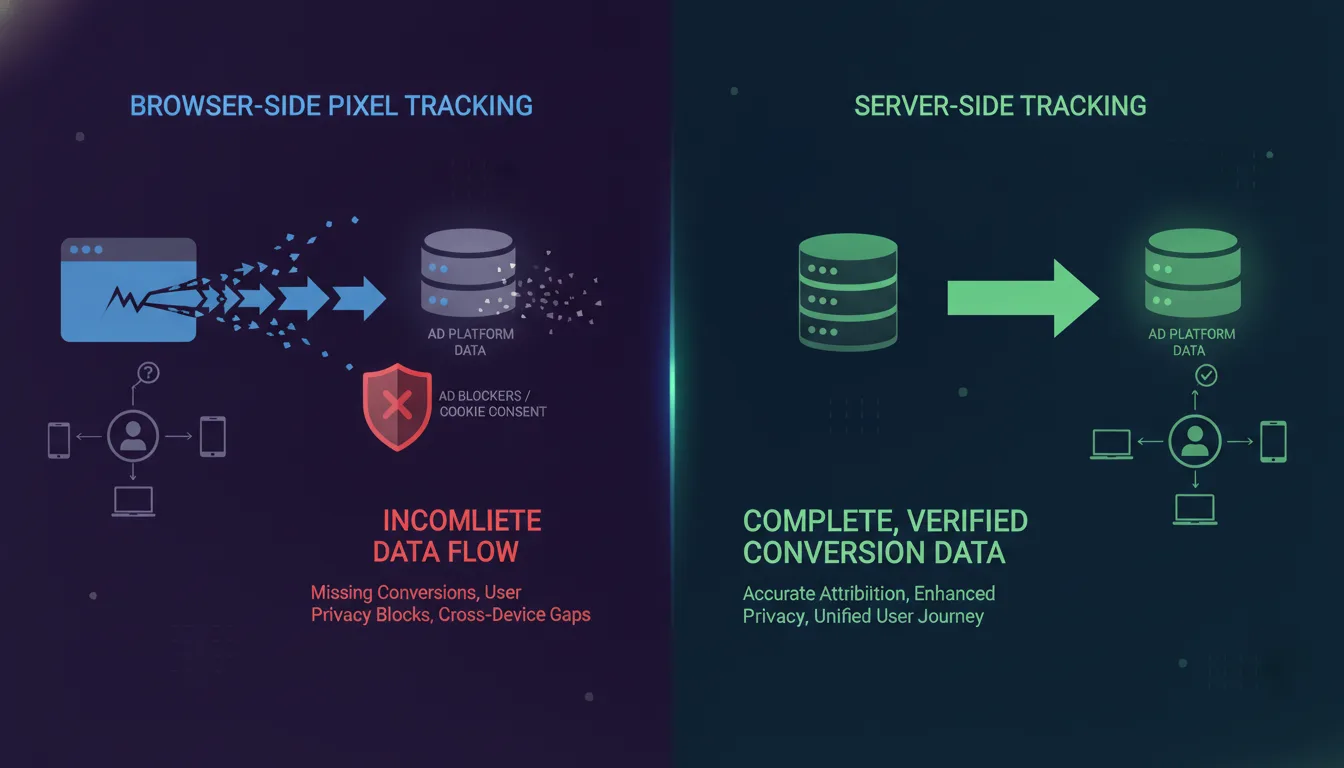
Split-panel infographic comparing browser-based pixel tracking with incomplete data flow and server-side tracking with complete, verified conversion data
Technical Marketing

Server-Side Tracking in 2026: Why Browser-Based Pixels Are No Longer Enough

Browser-based pixels are broken. Cookie deprecation, privacy regulation, and platform limitations have made them unreliable. Server-side tracking fills the gap — and if you haven't implemented it yet, your attribution is incomplete and your ad spend is underoptimized.

May 6, 202618 min read
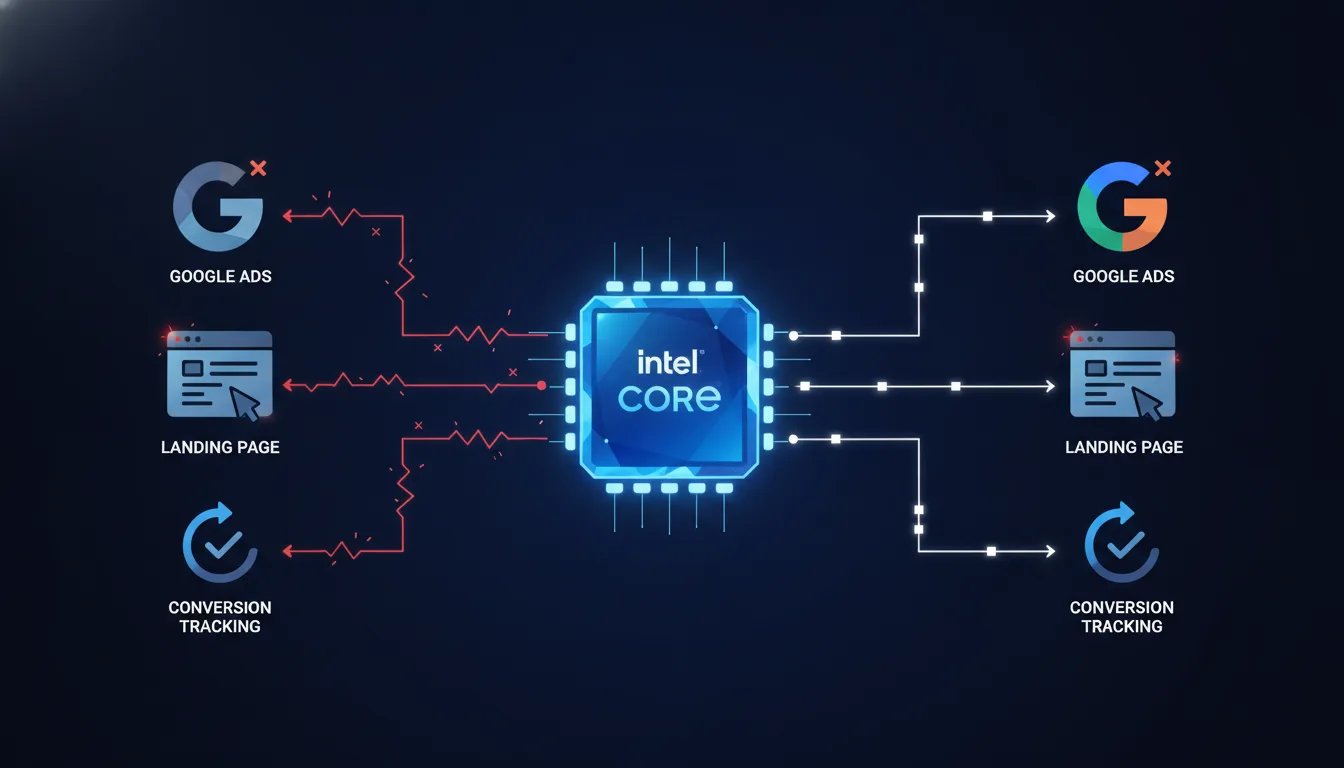
Illustrated infographic showing three disconnected systems (Google Ads, Landing Page, Conversion Tracking) with broken red connection lines on the left, and the same systems integrated through a central Intel Core hub with solid white connections on the right
Conversion Optimization

Google Ads + Landing Pages + Tracking: Why Running Them Separately Is Costing You Leads

Most brands run Google Ads, landing pages, and conversion tracking as disconnected systems. This fragmentation kills conversion rates. Here's why integration matters and how to fix it.

May 6, 202613 min read
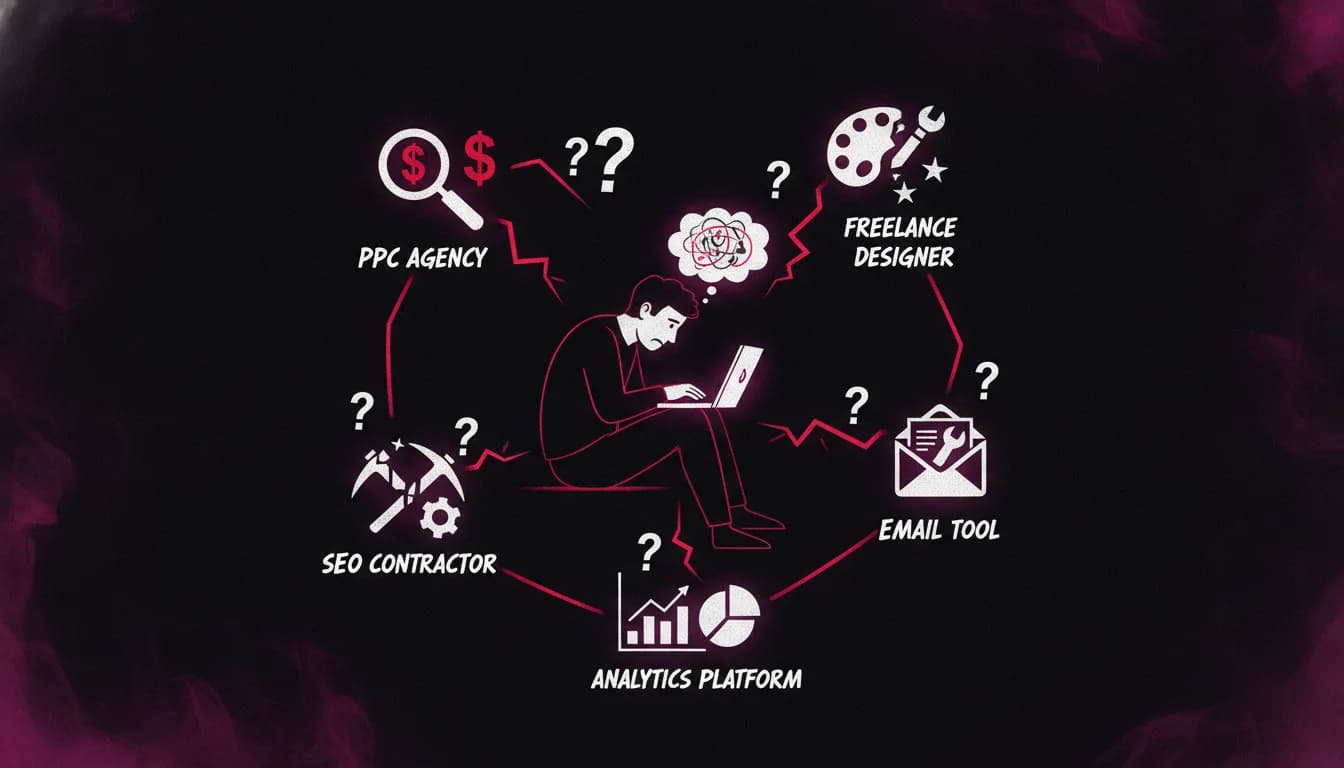
Diagram showing a stressed founder in the center surrounded by disconnected vendors — PPC Agency, Freelance Designer, Email Tool, Analytics Platform, SEO Contractor — with broken red connection lines and question marks
Marketing Infrastructure

How to Fix Fragmented Marketing: One System vs. Multiple Vendors

Growth-stage brands lose time, money, and insight to fragmented marketing. This post breaks down why multiple vendors create coordination chaos, what it costs, and how managed marketing infrastructure solves the problem with one system and one operator.

April 16, 202610 min read
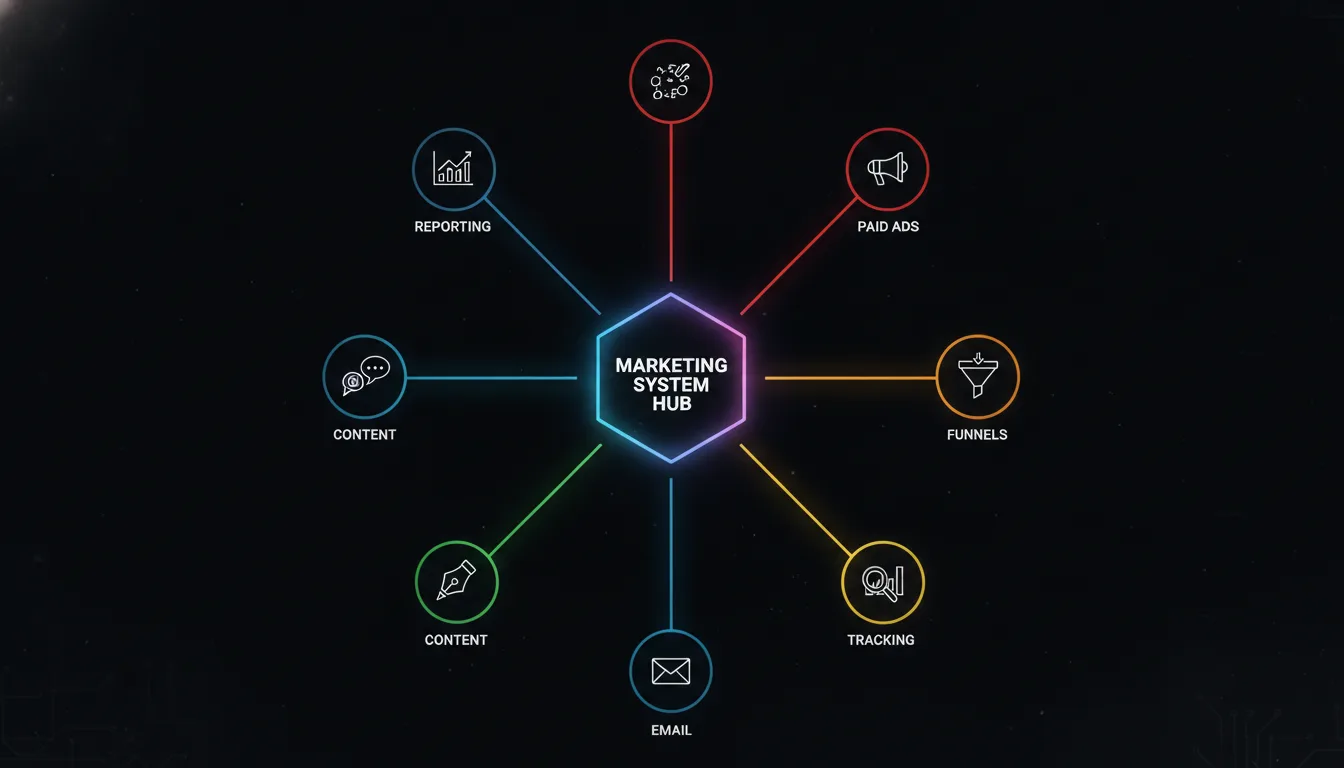
Generate an illustrated image in dark background with aspect ratio 16:9 for the prompt:  Illustrated infographic showing a central marketing system hub connected to six labeled channels — Paid Ads, Funnels, Tracking, Email, Content, and Reporting — on a dark background
Marketing Infrastructure

What Is Managed Marketing Infrastructure (and Why It's Replacing the Agency Model)

Most growth-stage brands don't have a marketing problem — they have an infrastructure problem. Managed marketing infrastructure replaces the fragmented agency model with one system, one operator, and full accountability.

April 6, 20267 min read