How Do Growth-Stage Brands Unify Fragmented Marketing?
Key Takeaway: The 4-phase growth system transforms your marketing from a collection of disconnected vendors into a unified, compounding engine. The phases — Integrate, Configure, Activate, Optimize — work together as one framework that gets your system live in 14 days and improves with every iteration.
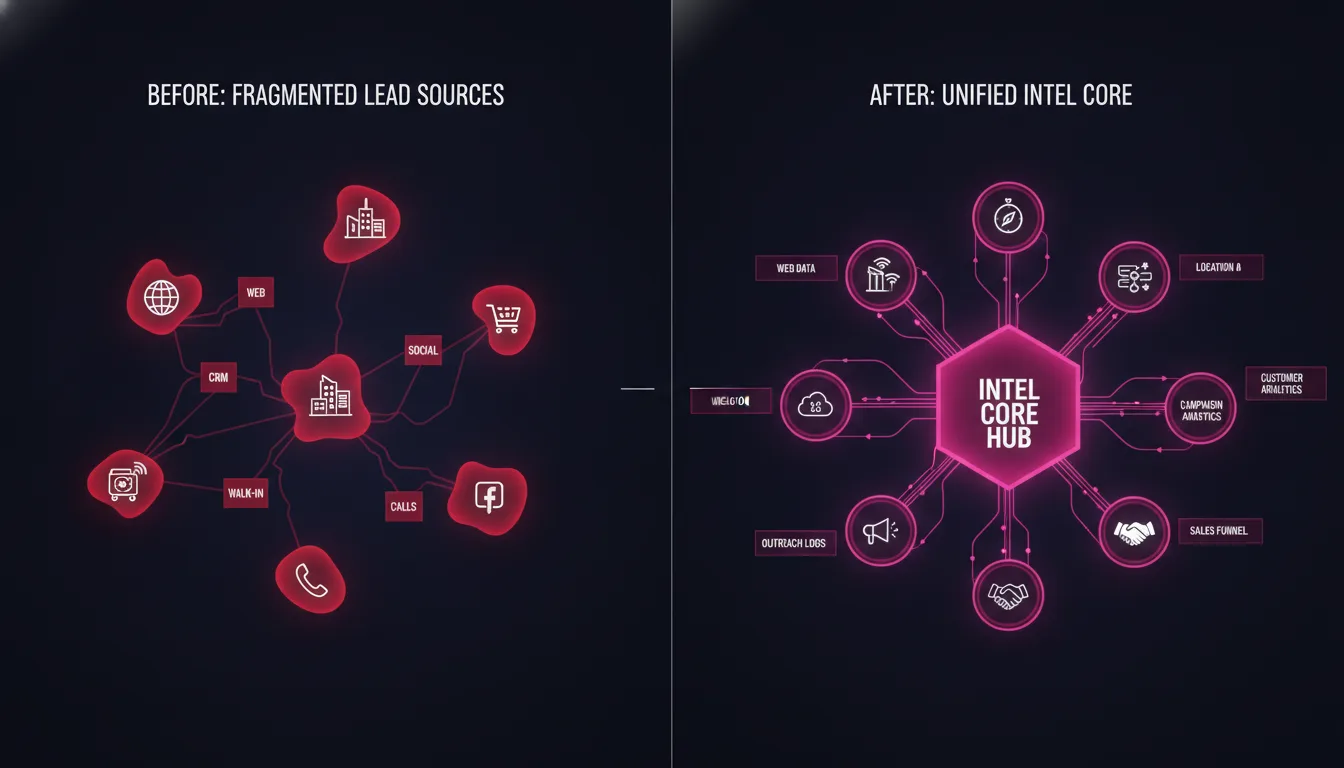
Most growth-stage businesses reach the same inflection point: the marketing stack fractures. You hire an agency for paid ads. Bring in a freelancer for landing pages. Add an email tool. Sign up for an analytics platform. Eventually, you have seven vendors, no integration, and you in the middle trying to stitch it all together.
The question is not "should we consolidate?" — most growth-stage decision-makers know the answer. The real question is "how?"
This is where a framework matters. Not a philosophy. Not a promise. An actual, documented process that moves you from fragmentation to unification in measurable phases.
The 4-phase growth system is exactly that. It is the operational roadmap that turns a collection of disconnected channels into one system where knowledge compounds, signals flow freely, and every decision builds on the last.

Why Do Growth-Stage Brands Need a Framework?
The cost of fragmentation is not just operational. It is strategic.
When marketing is spread across multiple vendors and people, each channel optimizes independently. Your paid ads team optimizes for click-through rate. Your landing page contractor optimizes for form submissions. Your email tool sends sequences that do not connect to ad spend. Nobody owns the full conversion path, so the full conversion path never gets optimized.
According to Gartner's 2025 Marketing Technology Survey, the average enterprise marketing organization uses 91 distinct martech tools, yet marketers use only 33% of their current capabilities. The gap is not a skills problem. It is a structure problem.
A framework addresses the structure. It defines the sequence of work, the dependencies, the handoffs, and the outcomes. Without it, unification becomes a perpetual conversation instead of a project with an end date.
The 4-phase system gives you that structure. It says: "Here is the sequence. Here is the timeline. Here is what done looks like at each step." For growth-stage brands, that clarity is worth more than any tool.
What Is the 4-Phase Growth System?
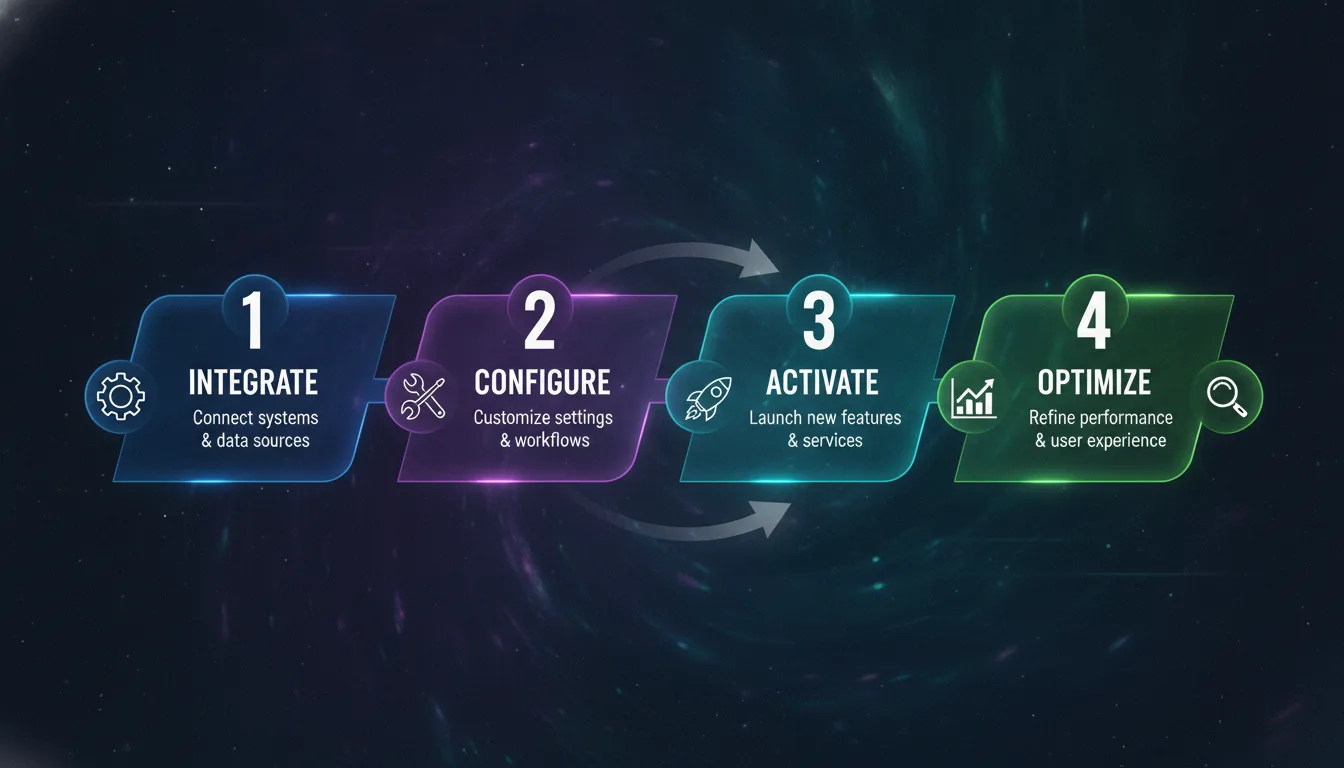
The 4-phase system is a sequenced operational framework that moves your marketing from fragmented to unified in four distinct stages:
Integrate — Audit your current stack. Map data flows. Identify integration points. Establish what unified data looks like.
Configure — Build tracking infrastructure, funnel templates, automation workflows, and analytics dashboards. Set up Intel Core as your intelligence layer.
Activate — Go live with your unified system. Launch campaigns with documented hypotheses. Begin collecting integrated data.
Optimize — Iterate continuously on Intel Core signals. Compound knowledge. Improve the system with every cycle.
Each phase has a clear objective, a set of deliverables, and exit criteria. You do not move to the next phase until the current phase is complete. This sequential approach prevents the common mistake of trying to optimize before you have built anything — or building without a clear integration strategy.
The timeline is aggressive: you go live within 14 days of phase one. This is not a theoretical exercise. By day 14, campaigns are running, data is flowing, and your Brand Technical Expert is activating the system.
Phase 1: Integrate — What Does This Mean?
Integrate is the discovery and unification phase. Your Brand Technical Expert audits your entire current stack — every vendor, every tool, every person touching marketing — and maps how data flows (or does not flow) between them.
The goal is to understand:
What data lives where. Where is your ad spend tracked? Where is conversion data stored? Where does customer lifetime value get recorded?
What is broken. Which integrations are not working? What manual processes exist because systems do not talk to each other?
What the unified version looks like. If all data flowed seamlessly, where would it live? What would be the source of truth?

This is not a weeks-long discovery. It is a focused audit completed in 3-5 days. The output is a single integration map that becomes the blueprint for phase two.
Key deliverable: Integration audit document showing current state, broken integrations, and the unified data architecture.
Phase 2: Configure — Building the Foundation
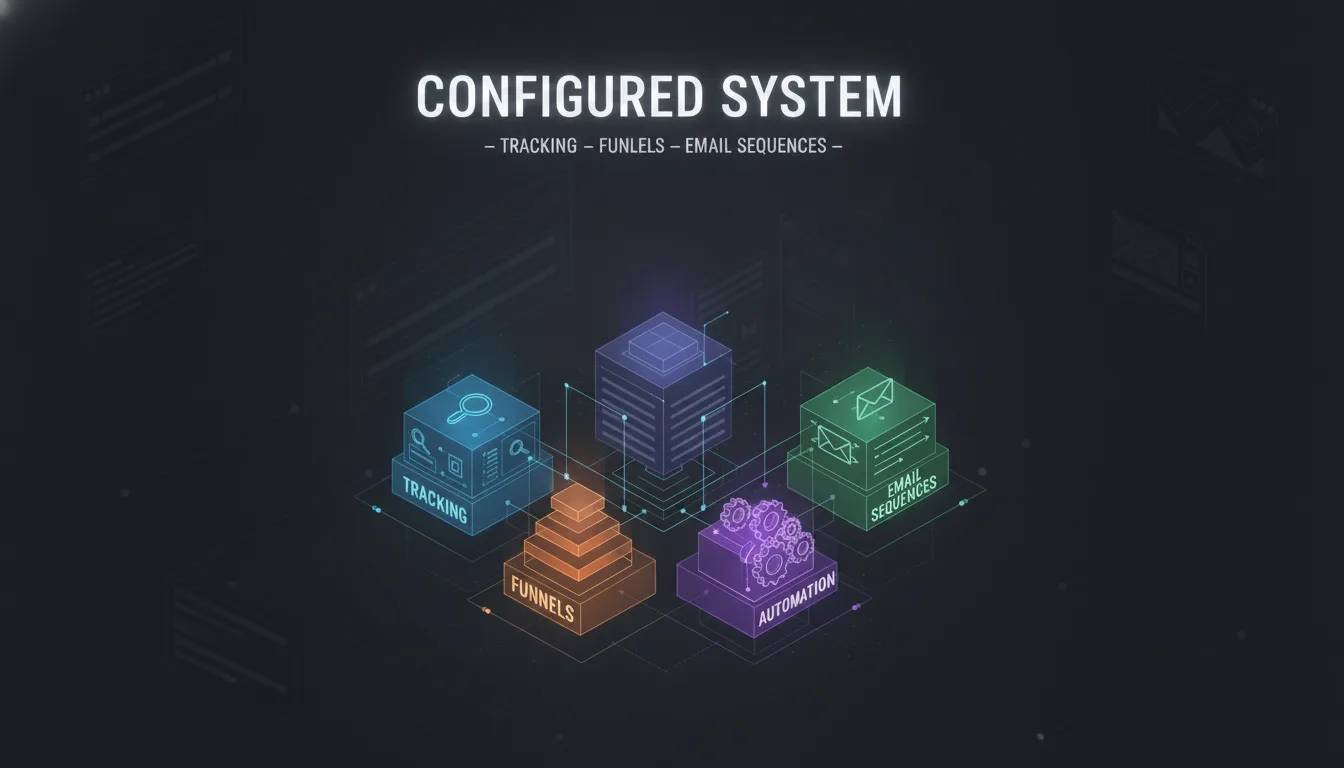
Configure is where you build the operational infrastructure. Using the integration map from phase one, your Brand Technical Expert sets up:
Conversion tracking. GA4, Google Tag Manager, server-side tagging, platform-specific conversion APIs (Meta Conversions API, etc.) — all configured and normalized to a single tracking schema.
Landing page funnels. Templates for your core conversion paths, optimized for your tracking system and ready to test variations.
Email automation workflows. Behavioral triggers, audience segments, and sequences that connect directly to ad performance and funnel data.
Analytics and reporting. Intel Core configured to aggregate signals across all channels and surface patterns. Weekly and monthly reports automated.
Ad account architecture. Google Ads, Meta, LinkedIn — organized by campaign type with standardized naming conventions and conversion mappings.
Unlike traditional agency onboarding, configuration here is rapid because the system is standardized. You are not building a custom solution for every brand. You are implementing a repeatable infrastructure that scales.
Key deliverable: Fully configured marketing system with all integrations live, tracking validated, and templates ready to activate.
Phase 3: Activate & Phase 4: Optimize — Going Live and Compounding Knowledge
Activate is the launch. By day 14 from kickoff, your system goes live. Campaigns begin running. Automations start firing. Data flows into Intel Core.
This is not a soft launch. Every hypothesis is documented. Every decision is logged. You have live reporting from day one. The Brand Technical Expert is actively managing the system, not waiting for a "report next month."
Optimize begins immediately after activation and never stops. Week 2, you analyze the first data signals. Week 3, you run the first test based on those signals. Week 4, you implement the learning and test again.

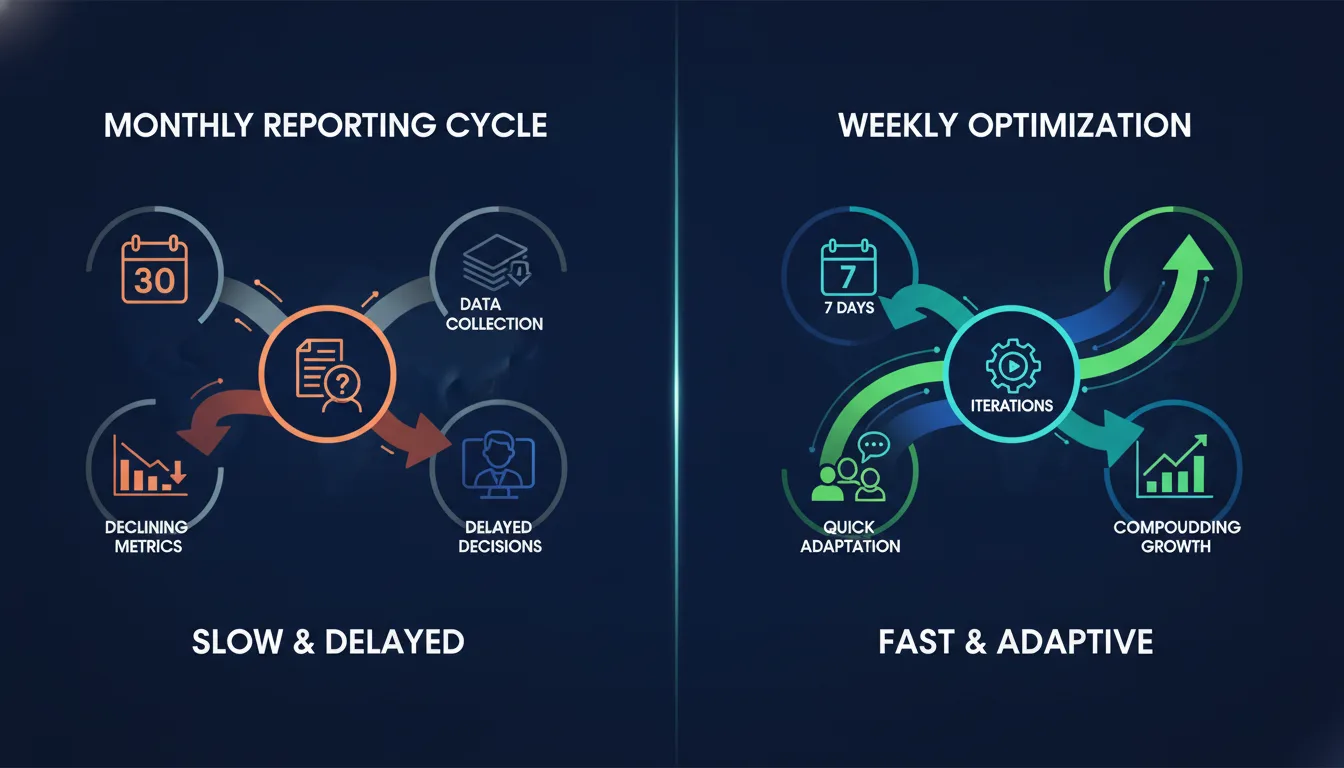
This is where the system compounds. In a traditional agency, you get a monthly report that tells you what happened. In an infrastructure model, Intel Core surfaces patterns in real time. You optimize not once a month, but continuously.
The knowledge lives in the system, not in a person's head. When a test succeeds, that success is documented in Intel Core. Next month, next quarter, next year — that knowledge is still there and still improving the system.
Key deliverables: Live campaigns, automated reporting, documented hypothesis log, active optimization cadence.

What Makes This Framework Different from Traditional Consulting?
Most agency onboarding is open-ended. "We will strategy for 2-3 weeks, then build." By week 8 you are still in discovery. By week 12 nothing is live.
The 4-phase framework is the opposite. You have a timeline, clear phase gates, and measurable exit criteria. You go live on day 14 because that is the design, not because you ran out of time.
This is possible because the system is standardized. You are not building a custom martech stack from scratch. You are implementing a proven infrastructure designed to work this fast.
Traditional consulting also leaves knowledge with the consultant. When the consultant leaves, the knowledge leaves. The 4-phase system is designed so that knowledge compounds in the system itself — Intel Core — independent of any one person.
How Much Does the 4-Phase System Cost?
The 4-phase system is the foundation of Metrics Masters' managed marketing infrastructure service. Pricing starts at $2,500–$5,500+ per month, depending on scope.
What you get for that cost:
One dedicated Brand Technical Expert operating your entire system.
All four phases completed and live within 14 days.
Intel Core as your central intelligence layer aggregating all channel data.
Weekly and monthly automated reporting.
Continuous optimization with documented decision-making.
Full accountability across all channels — no vendor coordination required.
For comparison, a fractional CMO typically costs $5,000–$15,000 per month and provides strategy but not execution. An in-house marketer costs $6,000–$12,000 per month (salary + benefits) but is limited by one person's skill set. The managed infrastructure model delivers both strategy and full-stack execution.
How to Measure Success Across All Four Phases?
Each phase has different success metrics:
Phase 1 (Integrate): Integration map complete. All vendor access granted. Data flow architecture documented. 3-5 day timeline hit.
Phase 2 (Configure): Tracking validated. All integrations tested. Funnels built. Automations set up. Analytics dashboard live. 14-day timeline hit.
Phase 3 (Activate): Campaigns live. Data flowing into Intel Core. First week's performance baseline established. Hypothesis log started.
Phase 4 (Optimize): Week-over-week signal improvement. Test results documented. Learnings applied to next iteration. System improving with each cycle.
The final measure is not a vanity metric. It is knowledge compounding over time. Month 2, you know more than month 1. Month 3, you know more than month 2. The system itself is getting smarter.
What Challenges Do Brands Face When Implementing the 4-Phase System?
The most common challenge is impatience. Brands want to optimize before they have finished configuring. The framework prevents this — you cannot skip phases.
The second challenge is vendor resistance. When you consolidate from seven vendors to one system, those vendors notice. Some vendors will resist data access or integration. The Brand Technical Expert manages these conversations and, when necessary, finds alternatives that integrate cleanly.
The third challenge is organizational alignment. For the system to work, your internal team needs to trust the operator and stay out of day-to-day execution. This requires a clear hand-off — the operator owns execution, you own strategy and goals.
None of these challenges are blockers. They are transition points. Most brands move through them in the first 30 days.
What Happens After the 4-Phases Are Complete?
You do not finish the system and move on. The four phases are not a project with an end date. They are a operating model with a beginning.
After day 14 (when you go live), you stay in phase 4 — the optimization loop — indefinitely. Week 2, month 2, month 6, month 12 — you are continuously iterating on Intel Core signals, running tests, and compounding knowledge.
The engagement evolves. After the first 90 days, your Brand Technical Expert has deep knowledge of your business and your system. Optimizations become more sophisticated. Tests compound on previous learnings. This is when real growth happens — not in the first week, but in months 3-6 when the system has enough data to optimize intelligently.
Is the 4-Phase System Right for Your Business?
The 4-phase system works best for:
Growth-stage brands generating $500K+ annually with a marketing infrastructure problem, not a creative problem.
Founders and CMOs ready to hand off execution and trust a dedicated operator to manage the full stack.
Businesses that have tried the agency route or the freelancer route and are tired of coordinating vendors.
Decision-makers willing to commit to a long-term infrastructure partnership, not a short-term sprint.
It does not work for early-stage companies still finding product-market fit, or for brands that want day-to-day control of campaign execution.
FAQ
How Long Does It Take to See Results from the 4-Phase System?
You see the system live in 14 days. You see the first data signals in week 3-4. You see meaningful optimization results in month 2-3 as patterns emerge and tests compound. Real growth compounds over 6-12 months as knowledge builds in the system.
What If We Already Have Vendors That Are Working Well?
The 4-phase system does not require you to rip and replace. If a vendor is working well and can integrate cleanly, it stays. The goal is to unify what works, not to change for the sake of change. Some brands keep their existing paid media vendor but unify everything else around Intel Core.
Can We Customize the 4-Phases for Our Business?
The phase structure is standardized because the structure is what creates speed. But the scope within each phase is customized to your business. Your phase 2 configuration might prioritize email and funnels. Another brand might prioritize Google Ads and server-side tracking. The phases stay the same. The details inside change.
What Happens If We Want to Add New Channels After Activation?
You add them in the optimization phase. Your Brand Technical Expert configures the new channel, integrates it into Intel Core, and begins testing. Since your infrastructure is already built, adding a channel takes days, not weeks.
How Does the 4-Phase System Compare to Hiring an Internal Team?
An internal team takes months to hire and onboard and is limited by one person's skill set. The 4-phase system gives you a fully operational Brand Technical Expert running your entire stack within 14 days. Plus, knowledge stays in the system, not in a person's head.
Is There a Minimum Revenue Requirement?
Typically, yes. The system is designed for brands generating $500K+ annually. Below that revenue level, the return on infrastructure investment is harder to justify. If you are earlier stage, focus on finding product-market fit first, then invest in infrastructure.
What If We Need to Pause or Cancel?
The engagement is month-to-month after the initial onboarding period. If circumstances change, you can pause or cancel. Your data and system configuration stay with you. Since everything is documented in Intel Core, transitioning knowledge to a new operator (internal or external) is clean.
Ready to Unify Your Marketing?
The 4-phase system turns fragmented marketing into a unified, compounding engine. Stop coordinating vendors. Start operating infrastructure.
Learn how the system works, or start a conversation to see if it is the right fit for your business. We move fast — once you decide, phase one begins immediately.

Jeremiah Shaw
CEO & Technical Marketing Specialist · Metrics Masters | Brandlio
International
Technical marketing specialist pushing boundaries in Google Ads, automation, and AI-driven growth systems. Paragliding and adventure enthusiast.