The short answer
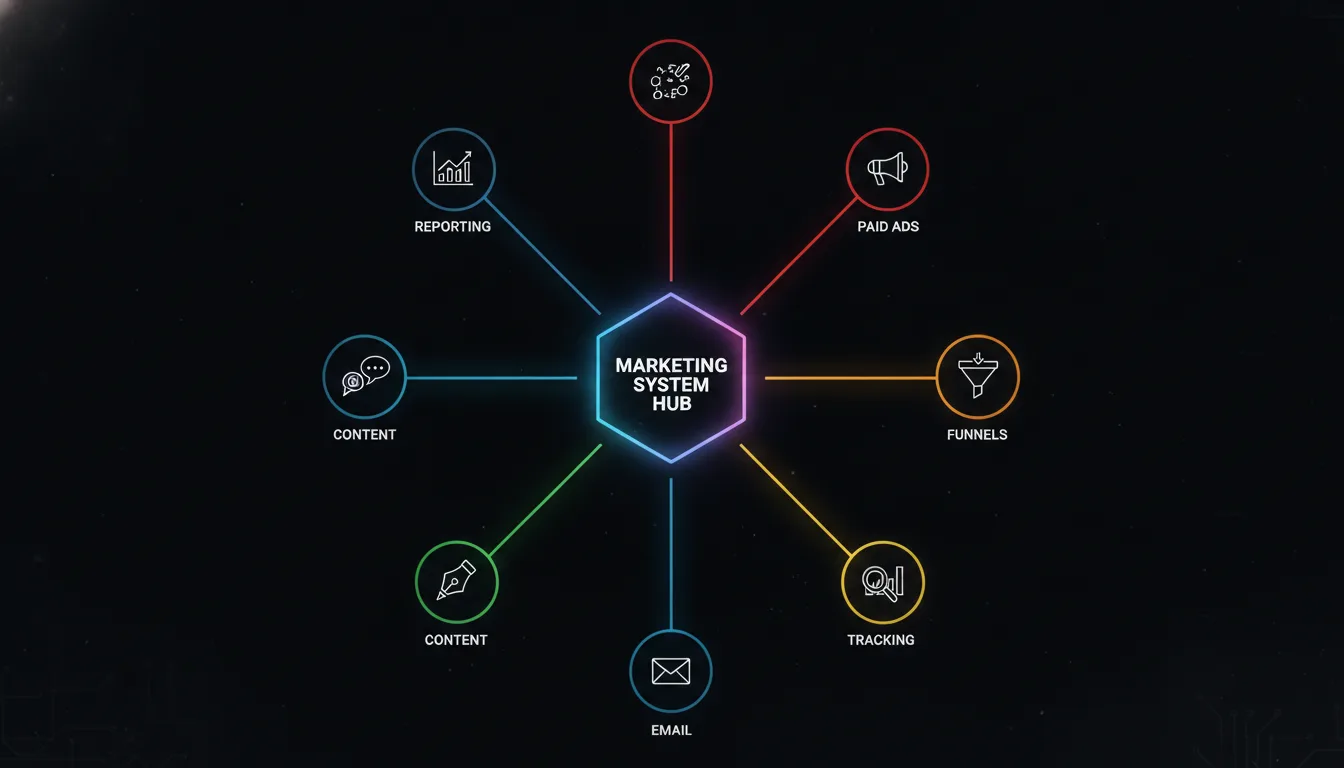
Managed marketing infrastructure is a model where one dedicated operator runs your entire marketing stack — ads, funnels, tracking, automation, content, and reporting — through a single connected system. It is not an agency. It is not a SaaS tool you log into. It is an infrastructure layer, operated on your behalf, with one person accountable for every moving part. If your brand has outgrown the patchwork of vendors and freelancers but you are not ready to build an in-house team, this is the model that replaces all of it.
Why this matters now
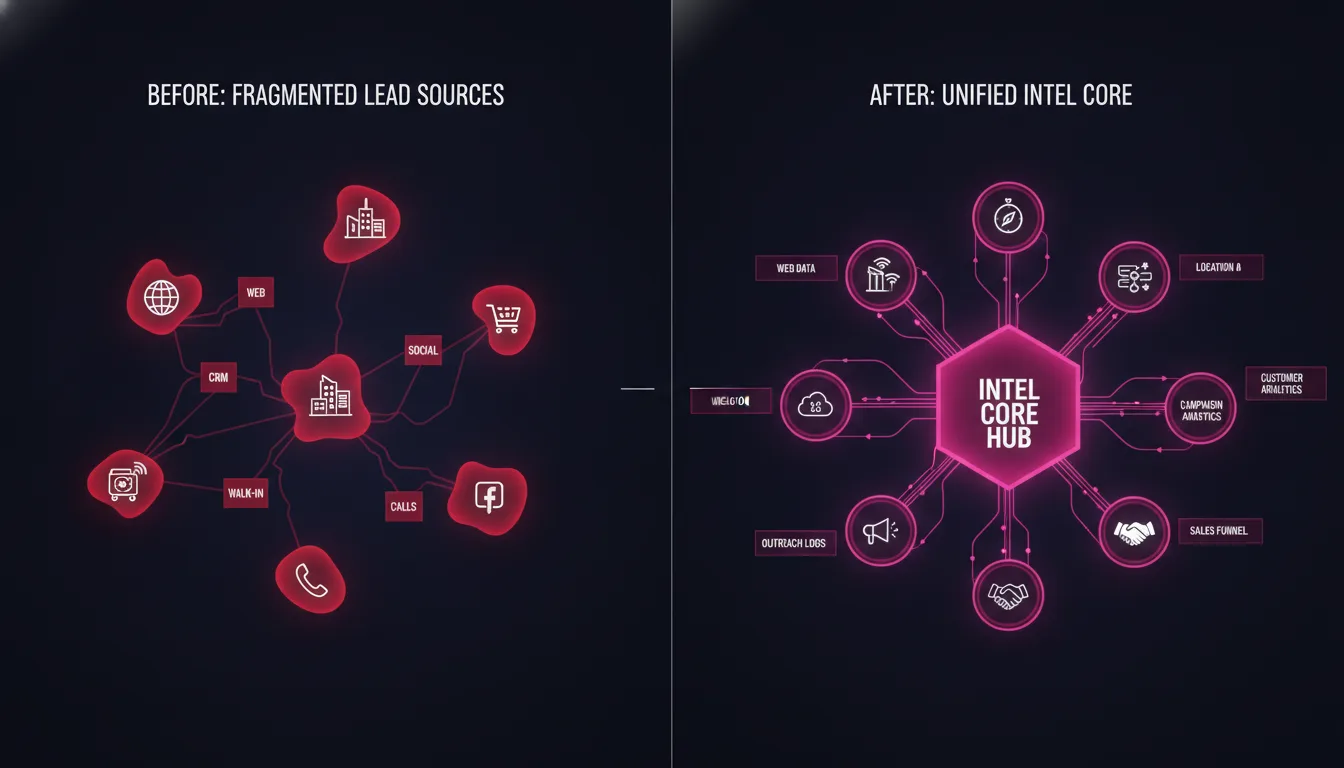
Growth-stage businesses — typically generating $500K or more in annual revenue — hit a predictable wall. The marketing stack fragments. One agency runs paid ads. A freelancer handles email. Someone internal manages the landing pages. A different tool powers analytics. Nobody owns the full picture, and the founder or CMO becomes the unpaid project manager stitching it all together.
This is what we call the fragmentation problem. It is not a skills gap. It is a structural failure. And adding more vendors, more tools, or more meetings does not fix a structural failure — it deepens it.
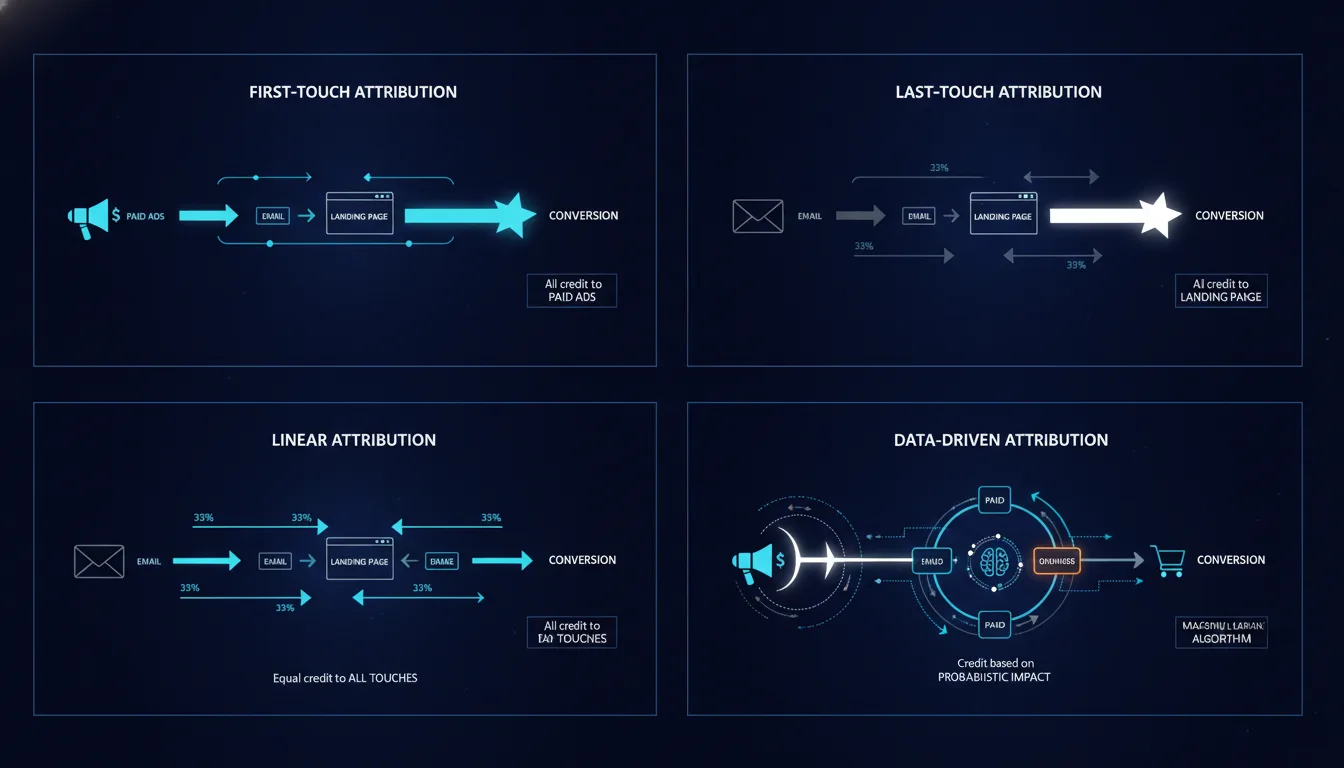
The agency model was designed for a different era: one where channels operated independently, data lived in silos, and "coordination" meant a monthly status call. That era is over. Attribution is cross-channel. Privacy regulations require server-side infrastructure. Automation spans email, ads, and CRM simultaneously. The question is no longer "which agency should we hire" — it is "who operates the system."

What managed marketing infrastructure actually means
The term has three parts, and each one matters.
Managed means it is operated for you. You own direction — brand positioning, goals, budget parameters. The operator owns execution. You are not learning a platform, hiring specialists, or debugging a tracking pixel at midnight.
Marketing means the full stack. Not just ads. Not just content. Paid media, landing pages, conversion tracking, email sequences, audience segmentation, analytics, and reporting — all of it, unified under one engagement.
Infrastructure means the system underneath. This is the critical distinction. Agencies sell services. Tools sell access. Infrastructure is the connective layer that makes every channel, every campaign, and every decision compound over time instead of starting from zero each quarter.
At Metrics Masters, this infrastructure is powered by Intel Core — a proprietary intelligence layer that aggregates signals across ad platforms, analytics, CRM, and automation into a single operating system. It is not a client-facing dashboard. It is the engine that processes data, surfaces patterns, and documents every optimization decision so that knowledge compounds instead of evaporating when a contractor leaves.
How it differs from the agency model
The differences are not cosmetic. They are structural.

Traditional agency model | Managed marketing infrastructure |
|---|---|
Multiple account managers across channels | One dedicated Brand Technical Expert across everything |
Services sold à la carte or in bundles | One engagement — nothing separated, nothing optional |
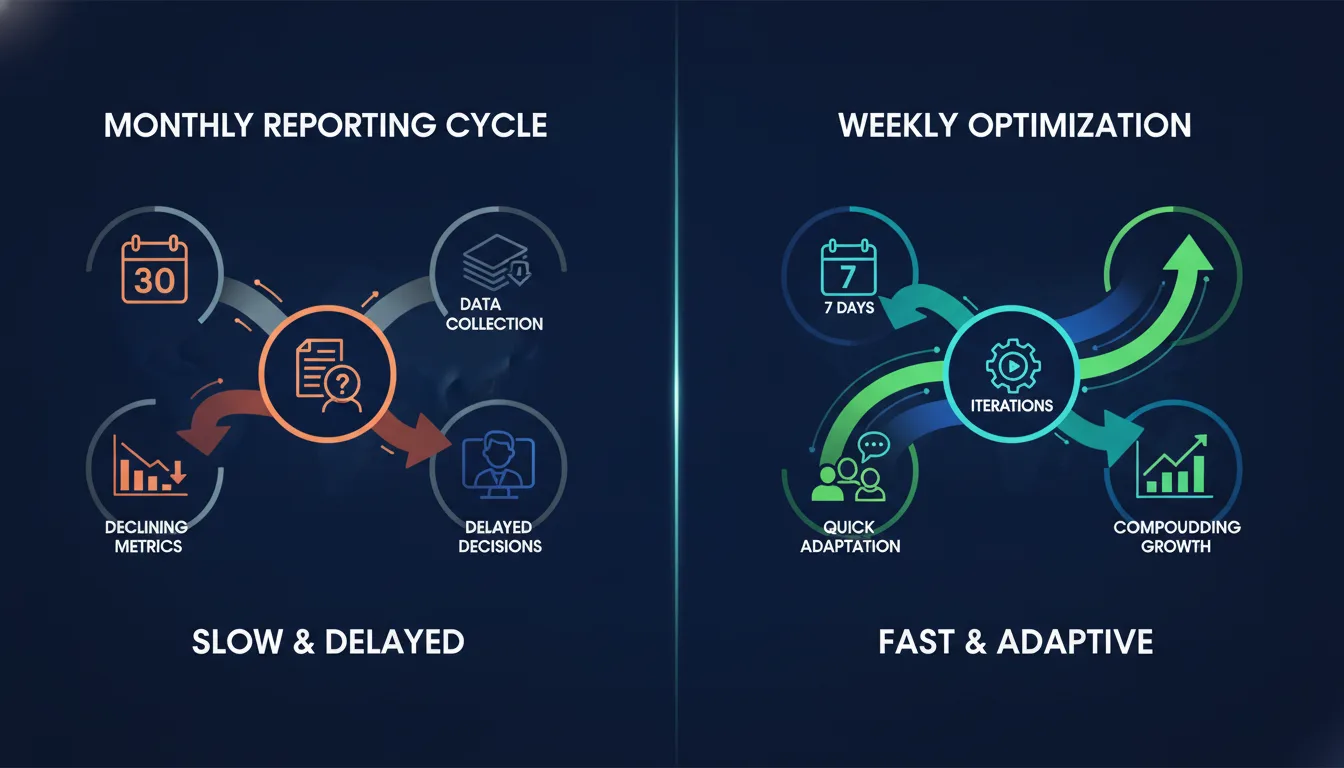
Reporting delivered monthly, often manually compiled | Live reporting powered by direct API connections |
Strategy decks that sit in a shared drive | Documented decisions — hypothesis, action, outcome — logged in Intel Core |
Vendor coordination falls on the client | The operator owns cross-channel execution |
Knowledge leaves when people leave | Knowledge compounds inside the system |
The agency model optimizes for deliverables. Infrastructure optimizes for compounding. That is the fundamental shift.
The role of the Brand Technical Expert

Every engagement is operated by a single Brand Technical Expert — not an account manager, not a team of rotating specialists. One person who understands your business, your data, and your system end to end.
This matters because fragmentation is not just a tool problem. It is a people problem. When five different people touch five different channels, no one holds the full context. Decisions are made in isolation. Optimizations in one channel create problems in another. The Brand Technical Expert eliminates that failure mode by owning the entire stack, informed by the signals that Intel Core surfaces.
They are not a strategist who hands off to a team. They are not an account manager who relays your requests. They are the operator — the person who configures, activates, and optimizes the infrastructure directly.
What the system runs
Managed marketing infrastructure is not a philosophy. It is a defined set of capabilities, all operated as one connected system:
Paid media — Google, Meta, Microsoft (Bing), and LinkedIn, managed through direct API connections rather than platform UIs alone
Landing pages and funnels — built, tested, and optimized as part of the conversion path, not treated as a separate project
Conversion tracking — GA4, Google Tag Manager, server-side tagging, and platform-specific event APIs (including Meta Conversions API)
Email and automation — lifecycle sequences, triggers, and CRM sync that connect directly to ad performance and funnel data
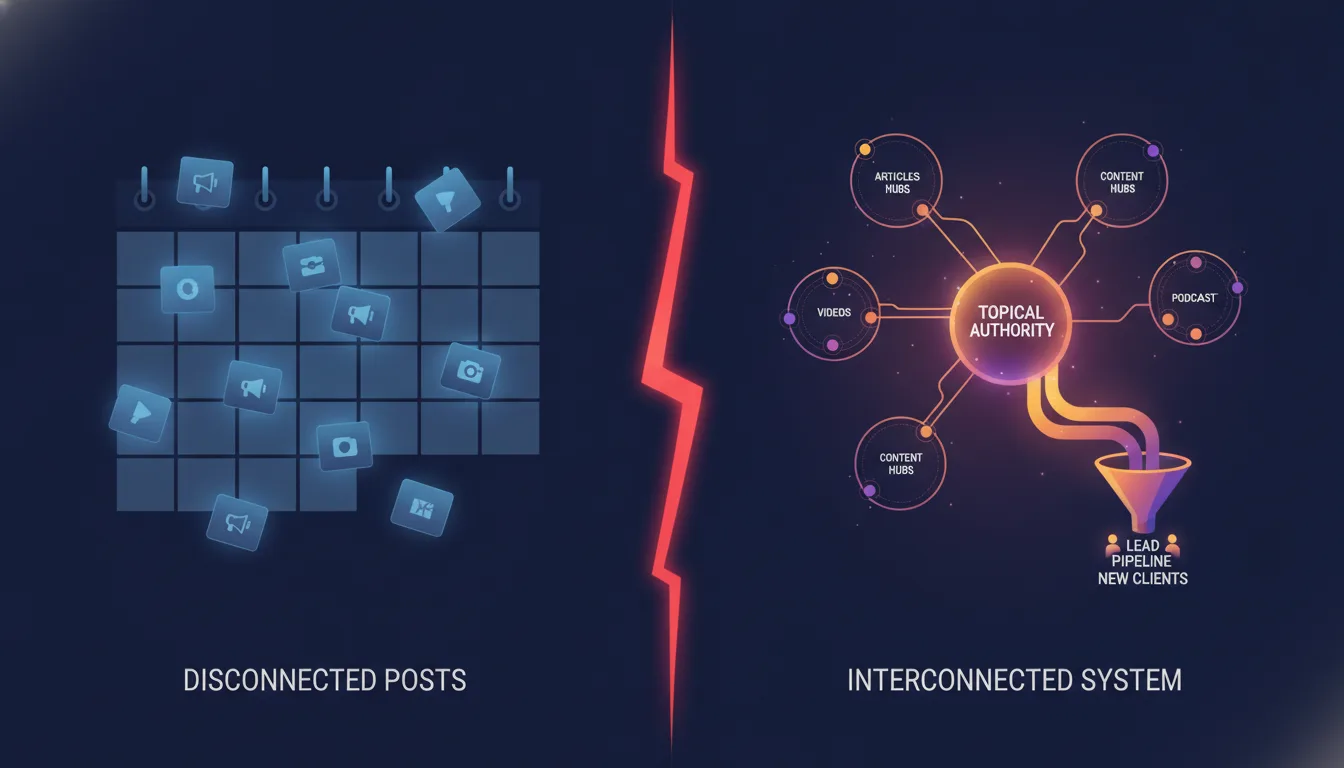
Content systems — structured pipelines for content production, not a calendar of disconnected blog posts
Analytics and reporting — weekly and monthly reporting automated through Intel Core, with anomaly detection built in
Nothing is sold separately. Nothing is optional. The value is in the connections between these systems, not in any single channel.
Why agencies struggle with this
This is not a critique of talented marketers who work at agencies. It is a critique of the model itself.
Agencies are structured around departments: a paid media team, a creative team, a strategy team, an analytics team. Each department has its own processes, its own tools, and its own incentives. Coordination between them requires meetings, project managers, and handoff documents. The client pays for all of that overhead — not in a line item, but in slower execution, diluted accountability, and decisions made without full context.
The infrastructure model collapses those layers. One operator. One system. No handoffs. No translation layers. When the Brand Technical Expert sees a drop in conversion rate, they can trace it from the ad creative through the landing page to the tracking configuration to the email follow-up sequence — in one sitting, with one set of data, and take action immediately.
Speed and context are not nice-to-haves. In a landscape where attribution windows are shrinking, privacy regulations are tightening, and platform algorithms shift weekly, they are the difference between a system that compounds and one that constantly resets.
Who this model is for
Managed marketing infrastructure is designed for a specific kind of business:
You are generating meaningful revenue (typically $500K or more annually) and need marketing that scales with you — not a starter package.
You have tried the agency route, or the freelancer route, or the "hire one internal marketer" route, and the result is the same: fragmentation, unclear attribution, and you stuck in the middle managing it all.
You are a decision-maker — founder, CMO, operator — who wants to own direction and hand off execution entirely.
You are ready to invest in infrastructure, not experiment with another tool.
It is not for early-stage companies still searching for product-market fit. It is not for brands that want to run their own campaigns day to day. It is not for anyone looking for a quick win or a guaranteed return before committing to a system. Serious brands only — because the model requires commitment from both sides.
The engagement runs in four phases

Every engagement follows the same disciplined sequence: Integrate → Configure → Activate → Optimize.
Integrate: Audit the existing stack. Unify data sources. Identify what is broken, what is missing, and what is redundant. This phase replaces the guesswork that most agencies skip in favor of launching quickly.
Configure: Build the tracking infrastructure, funnels, and automation. This is where the system takes shape — server-side tracking, conversion events, audience segments, email sequences, and reporting pipelines, all connected through Intel Core.
Activate: Launch campaigns and automations. Not a soft launch with a "let's see what happens" posture. A structured launch with documented hypotheses, clear baselines, and defined signals to watch.
Optimize: Iterate on the signals Intel Core surfaces. Every optimization is logged — what changed, why, and what happened as a result. This is how knowledge compounds. This is why month six is categorically better than month one.
Tracking and campaigns are live within 14 days of kickoff. That is not an aspiration — it is a documented commitment.
What to take from this
Managed marketing infrastructure replaces the fragmented agency model with one system, one operator, and documented accountability across every channel.
The value is not in any single service — it is in the connections between them and the compounding knowledge the system builds over time.
If your brand has outgrown patchwork marketing but you are not ready to build a full in-house team, this is the model designed for that exact gap.
If this describes where your business is right now, start a conversation with Metrics Masters. No pitch deck. No pressure. Just a direct discussion about whether the model fits.

Jeremiah Shaw
CEO & Technical Marketing Specialist · Metrics Masters | Brandlio
International
Technical marketing specialist pushing boundaries in Google Ads, automation, and AI-driven growth systems. Paragliding and adventure enthusiast.