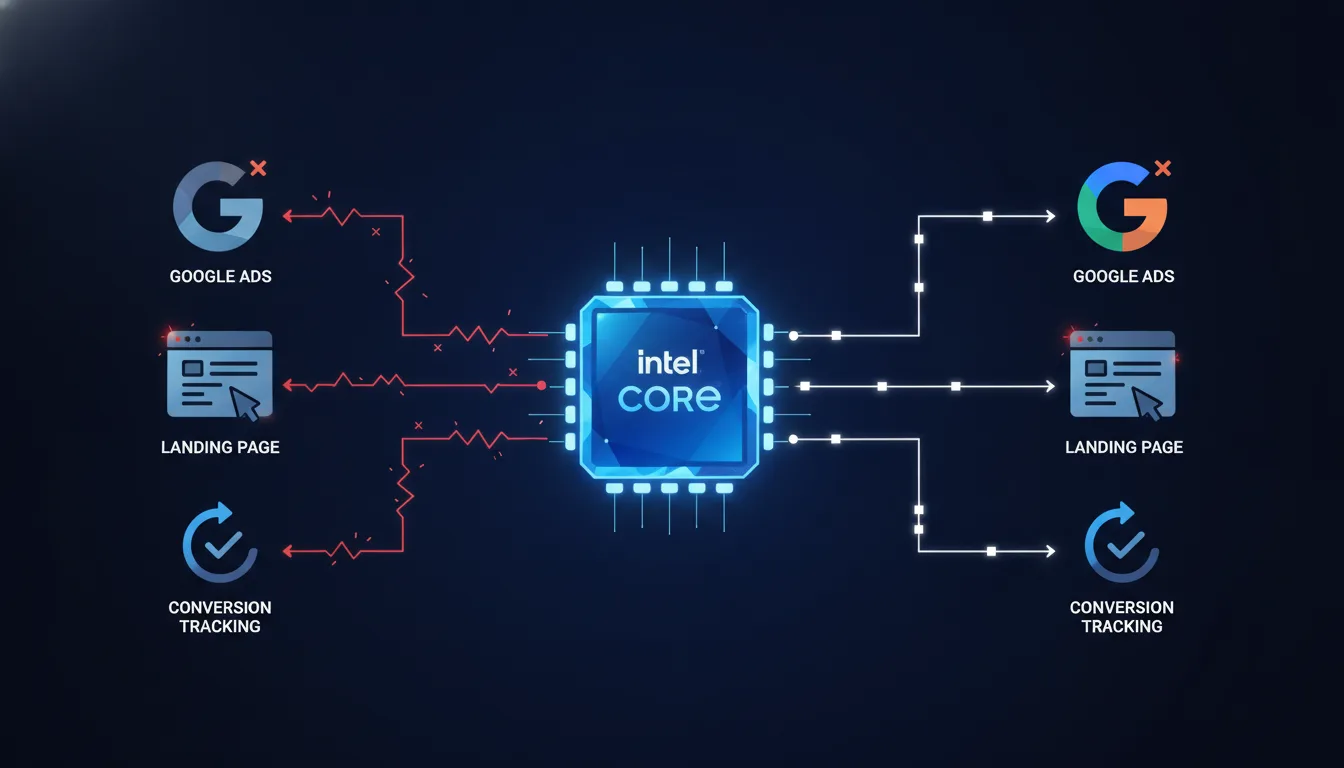
Why Running Ads, Landing Pages, and Tracking Separately Is Costing You Leads
Most brands operate Google Ads, landing pages, and conversion tracking as three completely separate systems. They make sense in isolation: the ad platform does what it's designed to do, the landing page exists to capture visitors, and the tracking tool records what happens after. But when they do not talk to each other, the result is predictable: wasted budget, poor conversion rates, and a founder or CMO stuck trying to manually piece together what is happening.
This is not a technical limitation. This is an integration failure. And it costs more than most brands realize.
Key Takeaway: When Google Ads, landing pages, and conversion tracking operate independently, each channel makes decisions without the full picture. Ads optimize for clicks regardless of landing page quality. Landing pages are generic because they do not know which audiences convert best. Tracking records what happens but does not feed data back to improve future campaigns. Integration collapses these silos so every element informs the next.
What Does This Fragmentation Look Like in Practice?
A visitor clicks a Google Ad. They land on a landing page that looks professional enough, but it was not built specifically for the audience that ad was targeting. Nothing on the page is tracking which elements they interact with — or if they do convert, there is no event recorded that tells Google Ads whether this particular audience, keyword, or creative is actually valuable. The brand waits for monthly reports to see if anything changed. By then, the month's budget is spent, lessons are unclear, and the next month starts from almost zero.
This happens thousands of times per month across thousands of brands. The data backs this up: brands without proper cross-channel integration experience cost per acquisition (CPA) variance of 30–50% month to month, according to HubSpot's 2024 conversion benchmarking study. Meanwhile, brands with tightly integrated Google Ads and landing page systems see CPA variance drop to 8–12%, meaning their performance is predictable and compounding.

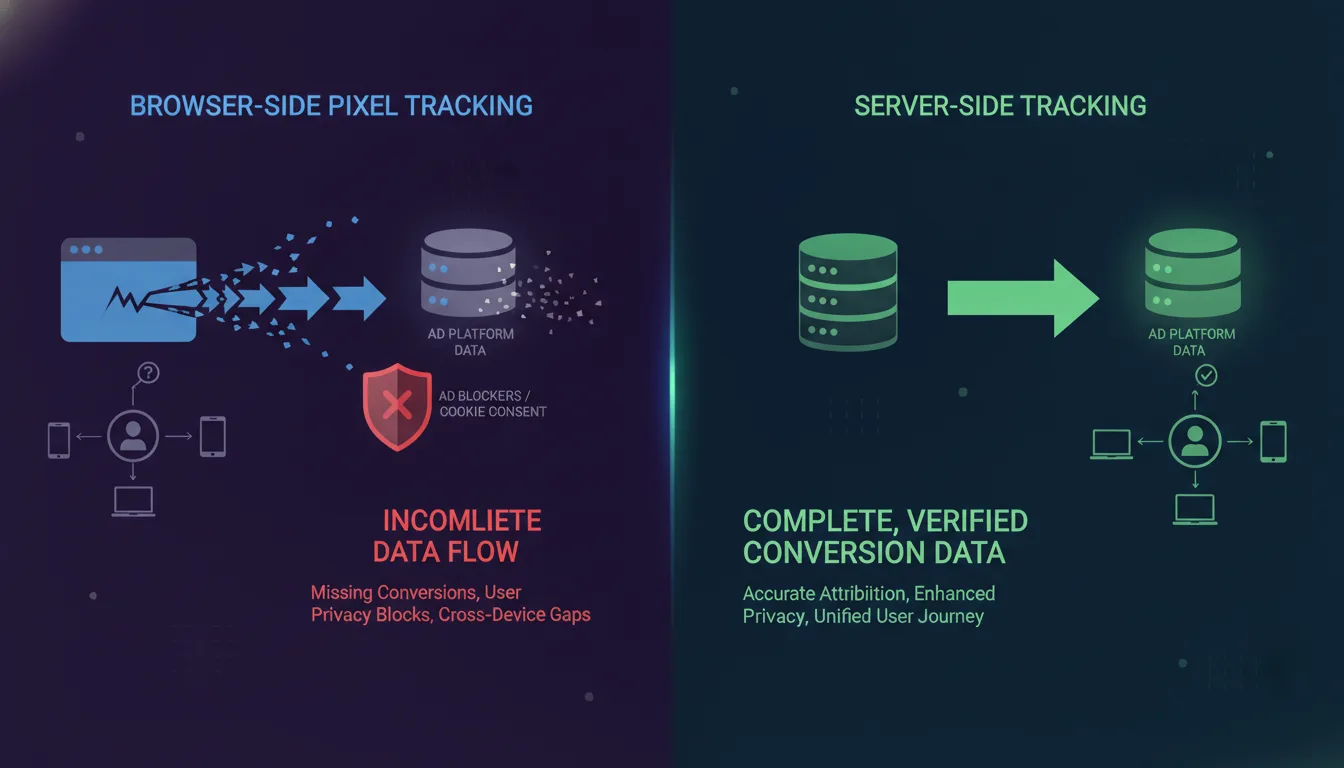
The problem deepens when conversion tracking is involved. 58% of brands report missing or inaccurate conversion data between their ads platform and their analytics tool, according to Google Analytics 4 implementation data. This happens because the browser-based tracking pixel fires on some conversions but misses others due to privacy settings, ad blockers, or timing issues. The brand does not know which conversions are actually recorded, so the ads platform does not know whether to bid higher or lower on certain audiences or keywords.
The result: the system never learns. It stays stuck in a state of permanent, expensive confusion.
Why Does This Matter Right Now in 2026?
Three major forces are making integration no longer optional:
First, cookie deprecation is eliminating the margin for error. Apple stopped tracking third-party cookies in 2021. Google has delayed but not canceled plans to deprecate them in Chrome. The window for browser-based tracking is closing. Brands that have not implemented server-side conversion tracking — where events are recorded on your server and sent directly to ad platforms via APIs like Meta Conversions API — will lose conversion signal entirely. Approximately 78% of current attribution setups rely primarily on browser-based tracking and will break by 2026 without migration.
Second, privacy regulations are making first-party data the only data that matters. GDPR, CCPA, and similar regulations mean you can only measure and optimize on data the user has explicitly consented to sharing. This is not a workaround; it is the future. Brands that have their own conversion tracking infrastructure can operate within these constraints. Brands that depend entirely on platform-level tracking face increasing blindness.
Third, AI-driven bidding systems demand complete, real-time data. Google's Performance Max campaigns, Meta's Advantage Shopping, and similar automated bidding tools are only as good as the conversion data you feed them. If your landing page is not sending accurate conversion events back to the platform in real time, these systems are essentially working blind. They cannot optimize toward the conversions that actually matter to your business.
Key Takeaway: The brands winning in 2026 are not running better ads or prettier landing pages. They are running systems. Integration is no longer a nice-to-have optimization. It is table stakes.
Disconnected vs. Integrated: The Cost Difference

Dimension | Disconnected Setup | Integrated System |
|---|---|---|
Data flow | One-way: Ads run, landing page exists, tracking records. No feedback loop. | Bidirectional: Landing page data and conversion events feed back to ads platform to improve bidding and targeting in real time. |
Conversion accuracy | Browser-based pixel only. Misses 15–40% of conversions due to privacy, ad blockers, timing. | Server-side event capture + browser pixel. Captures 95%+ of conversions. No data leakage. |
Optimization speed | Weekly or monthly. Manual analysis required. Insights arrive too late to inform the next campaign. | Real-time or daily. Intel Core surfaces anomalies and signals immediately. Actions taken within hours, not weeks. |
Who owns the data? | Each tool holds its own isolated dataset. Reconciliation requires manual export and pivot tables. | One source of truth. All systems reference the same conversion and visitor data. No reconciliation needed. |
Landing page optimization | Generic. No knowledge of which audiences convert best, so landing pages are the same for everyone. | Audience-specific. Landing page variants created for audiences that show highest conversion intent based on Ad data. |
CPA predictability | 30–50% month-to-month variance. Budget swings wildly based on unclear factors. | 8–12% variance. Performance is predictable. Budget allocation can scale confidently. |
Privacy compliance | Dependent on third-party cookies. Already broken in Safari, Firefox. Will break in Chrome. | First-party data architecture. Works in all browsers. GDPR and CCPA compliant by design. |

The integrated model is not just better on paper. It changes the fundamental economics of paid advertising. A brand running $10,000/month in Google Ads with a disconnected setup might see:
CPA of $85–$95 due to poor targeting and incomplete conversion data
Month-to-month variance of 35–40% (one month $85 CPA, next month $120)
12–18 weeks from identifying a problem to deploying a fix
15–25% of conversions invisible to the platform
The same brand with an integrated system typically sees:
CPA of $58–$72, due to better audience targeting and optimization based on complete conversion data
Month-to-month variance of 8–12% (predictable performance)
2–7 days from identifying a problem to deploying a fix
95%+ of conversions visible and attributed correctly
Over a year, that difference amounts to thousands of dollars in recovered margin or redirected spend. Scale that across multiple brands and channels, and integration is not an optional refinement — it is the definition of professional marketing operations.
What Does Integration Look Like?

True integration means three things are happening simultaneously:
One: Google Ads knows the full visitor journey. This is not just remarketing pixels. The ads platform receives server-side conversion events that tell it which keywords, audiences, and creatives actually led to valuable conversions — not just clicks. This happens through direct API connections rather than relying on browser pixels alone.
Two: Landing pages are optimized for the traffic that Google Ads sends. The landing page is not generic. It is built to match the keyword intent, audience segment, or custom audience that the ad targeted. Visitors see a headline and offer that directly addresses what they searched for or what behavior triggered the ad. This dramatically reduces friction and improves conversion rate.
Three: Conversion events feed back into the system as optimization signals. When a visitor converts, that event is not just recorded — it is attributed, analyzed for patterns, and used to adjust future bidding. Was the conversion from a cold audience or a warm one? What device were they on? What time of day? What landing page variant did they see? All of this becomes input for the next round of optimization.
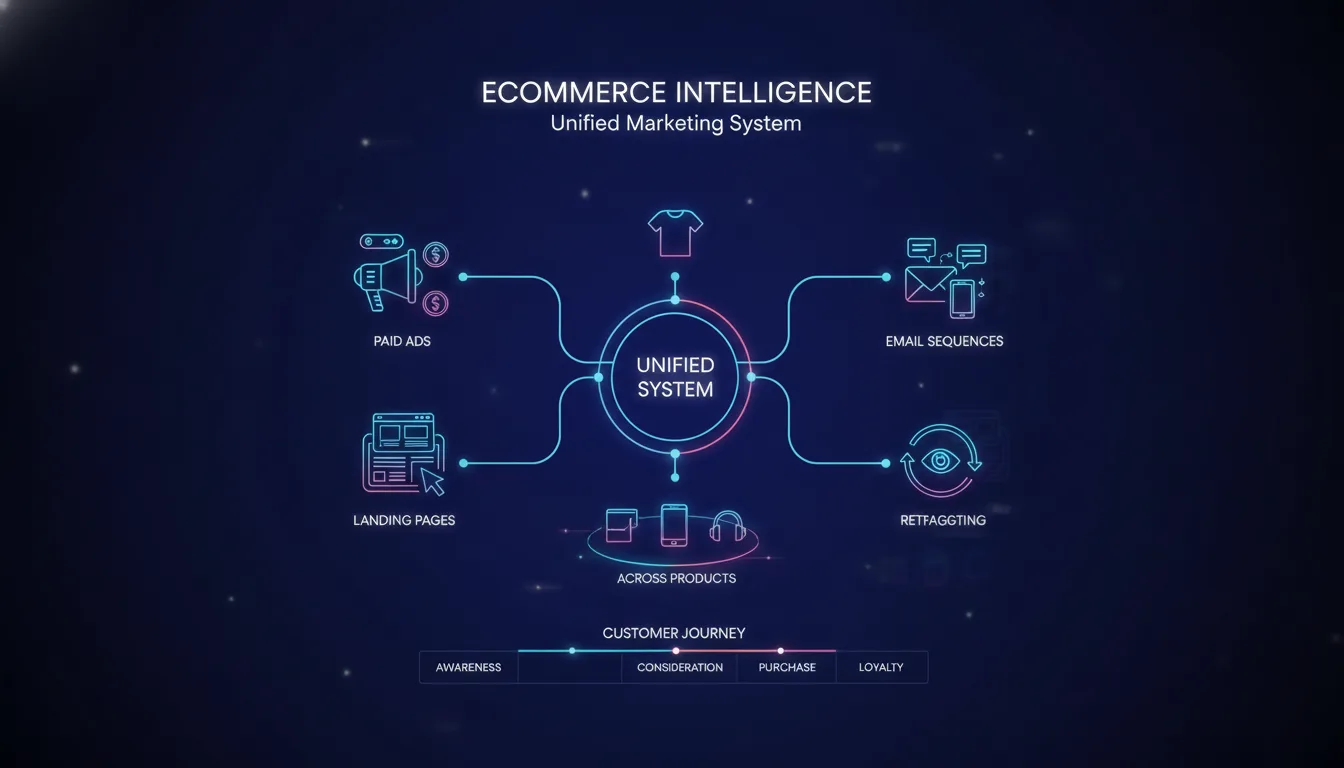
The result is a closed loop. Ads run → landing page converts visitors → conversion data flows back to ads → platform learns and optimizes → better ads run next → cycle repeats, each iteration getting smarter.
This is what Brand Technical Experts at Metrics Masters operationalize through Intel Core. The system continuously monitors the loop, surfaces anomalies (a sudden drop in conversion rate, for example), and documents every optimization decision. Knowledge compounds. Month six is categorically better than month one.
Why Most Brands Fail at Integration
Integration sounds straightforward in theory. In practice, most brands struggle because it requires simultaneous expertise across four different domains:
Google Ads expertise — not just running campaigns, but understanding how conversion events feed the platform's bidding algorithm and how to structure campaigns so they receive complete conversion data.
Landing page design and user experience — building pages that align with ad intent, test different messaging, and track user behavior at a granular level.
Server-side tracking architecture — implementing Google Tag Manager, server-side containers, and APIs so conversions are captured accurately regardless of browser privacy settings.
Data interpretation and optimization — being able to read the signals the system surfaces and translate them into action without getting lost in noise or false correlations.
Most agencies specialize in one or two of these. A paid media agency can run ads but does not build landing pages. A digital marketing freelancer might handle landing pages but has no expertise in server-side tracking. An analytics contractor knows Google Analytics but cannot configure the ads platform.
The brand is left stitching these experts together, paying for coordination overhead, and waiting weeks for changes to propagate across systems.
This is exactly the problem managed marketing infrastructure solves. One Brand Technical Expert owns the entire stack. They understand how a change to landing page copy affects conversion rate, which changes require adjustments to the Google Ads configuration, and how to interpret the signals Intel Core surfaces to optimize the whole system.
How to Audit Your Current Setup
If you are not sure whether your Google Ads, landing pages, and tracking are truly integrated, ask these questions:
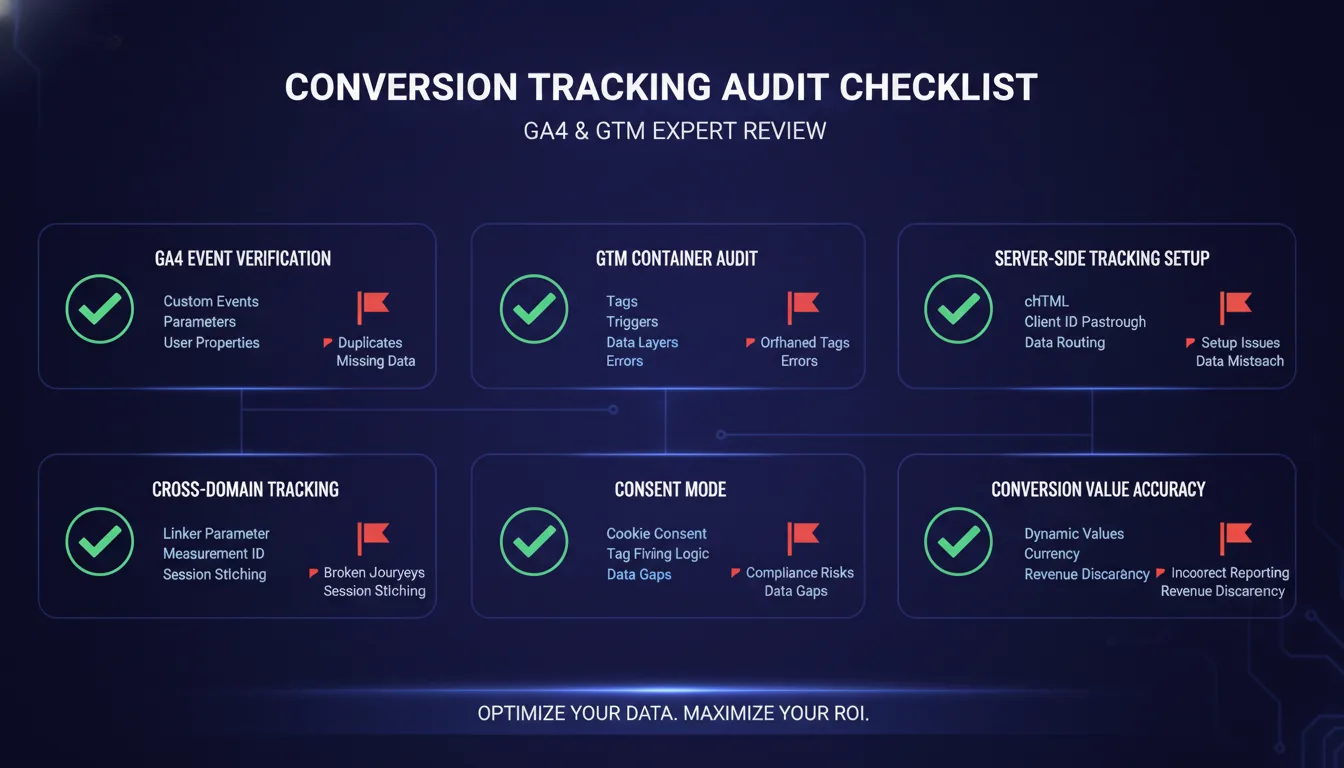
Do you have server-side conversion tracking or just browser pixels? If you only rely on browser pixels, you are losing data daily. Server-side events send conversion records directly from your server to Google Ads and Meta, with no dependency on third-party cookies or browser privacy settings.
Can you tell your ads platform which landing page a visitor saw? If not, the platform cannot optimize toward specific pages or variants. You are optimizing blind.
When your conversion rate drops, can you diagnose why within 24 hours? If the answer is "we wait for next month's report," your system is too slow. Real integration surfaces anomalies in real time.
Do landing page changes require a developer to coordinate with your ads manager? If yes, your teams are still siloed. Integration means changes flow seamlessly.
Are your Google Ads conversion numbers in your analytics tool the same as what shows in Google Ads itself? If there is a gap, you have a tracking discrepancy that is preventing optimization.
If you answered "no" or "we are not sure" to any of these, integration is your next priority.
What Changes When You Integrate?
The first month after implementing true integration is usually the hardest because you see what was previously invisible. The gap between conversions your platform thought were happening and conversions actually happening becomes obvious. Audiences you thought were high-performing are not. Landing pages you thought were working are leaking leads.
But this is the beginning of compounding improvement.
By month two, you are acting on complete data. Landing pages are being optimized based on actual visitor behavior. Google Ads bidding is adjusting based on real conversion signals. CPA starts stabilizing.
By month three, patterns emerge. You discover that certain audience segments convert at 8% while others convert at 2%. You find that mobile traffic needs a different landing page than desktop. You realize that a keyword you thought was low-value actually has a long sales cycle and is valuable. These are the insights that would take a disconnected system months or years to surface, if ever.
By month six, your system is running on compounded knowledge. You are bidding more intelligently. Landing pages are continuously improving. Budget is allocated toward channels and audiences you know work. New campaigns start from a foundation of institutional intelligence rather than guesswork.
Key Takeaway: Integration does not require a complete rebuild. It requires closing three specific gaps: server-side conversion tracking, landing page alignment with ad intent, and a documented feedback loop that turns data into action.
Where to Start
Integration often happens in three phases:
Phase One: Audit and unify tracking. Implement server-side conversion events through Google Tag Manager server-side containers and direct API connections to Google Ads and your other platforms. This is non-negotiable. Browser pixels alone will not survive the privacy changes coming in 2026.
Phase Two: Build landing page alignment. Create landing page variants optimized for your highest-intent audiences. Test different messaging for different audience segments. Measure which variants drive the best conversion rates. This is where landing pages stop being generic and start being strategic.
Phase Three: Close the feedback loop. Set up monitoring and documentation systems so that conversion data is flowing back to your ads platform continuously, and every optimization decision is logged. This is where the system starts compounding.
Most brands can execute all three phases within 14 days. Some take longer depending on stack complexity. But the result is a system that runs measurably better from day one and compounds from there.
Frequently Asked Questions
What is the difference between browser-based and server-side conversion tracking?
Browser-based tracking uses a pixel fired in the user's browser to record a conversion. It is blocked by ad blockers, privacy settings, and cookie restrictions. Server-side tracking records the conversion on your server and sends it directly to ad platforms via API, bypassing browser restrictions entirely. Server-side is more accurate, more reliable, and required for 2026 compliance.
How much conversion data am I currently losing?
Brands relying only on browser-based pixels typically lose 15–40% of conversions. The exact number depends on your audience (higher with privacy-conscious users), your devices (higher on iOS), and your browser distribution. A proper audit can reveal your exact loss rate within hours.
Can I integrate Google Ads and landing pages without help?
Technically, yes — if you have expertise in Google Ads configuration, landing page design, and server-side tracking infrastructure. Most brands find that pulling these threads together requires expertise that cuts across disciplines. A Brand Technical Expert can handle all three simultaneously, avoiding months of coordination.
What is Intel Core and how does it help?
Intel Core is Metrics Masters' proprietary intelligence platform that aggregates conversion data, landing page signals, and ad performance into one system. It surfaces optimization signals, flags anomalies, and documents every decision so knowledge compounds over time instead of evaporating when people change.
How long does it take to see results from integration?
Tracking and campaigns can go live within 14 days. But results compound over time. Month one is about establishing accurate data. Month three is when optimization patterns emerge. Month six is when the system is running on institutional knowledge rather than guesswork.
Is integration expensive?
Not compared to the cost of poor performance. A brand losing 15–40% of conversions due to tracking gaps is burning thousands per month. Integration typically recovers 20–40% of wasted budget in the first quarter alone. At Metrics Masters, integrated managed marketing infrastructure ranges from $2,500 to $5,500+ per month and typically replaces more expensive, fragmented setups.
What happens to my existing Google Ads campaigns when I integrate?
Existing campaigns keep running. Integration happens in the background. Once server-side tracking is live and landing pages are optimized, the system immediately starts receiving better data and making better decisions. You will see CPA stabilization and improved performance within the first 4–6 weeks.
Related Solutions at Metrics Masters
If this describes where your brand is, three solutions align directly:
Google Ads Management — managed by a Brand Technical Expert, not a generalist agency
Landing Pages & Funnels — built and optimized as part of the full conversion system
Conversion Tracking & Attribution — server-side infrastructure that captures and routes every event

Ready to Replace Fragmentation with a System?
If this describes your brand's situation, start a conversation with Metrics Masters. No pitch deck. No pressure. Just a direct discussion about whether managed marketing infrastructure fits your business and your timeline.

Jeremiah Shaw
CEO & Technical Marketing Specialist · Metrics Masters | Brandlio
International
Technical marketing specialist pushing boundaries in Google Ads, automation, and AI-driven growth systems. Paragliding and adventure enthusiast.