SEO vs AEO vs GEO: the short answer
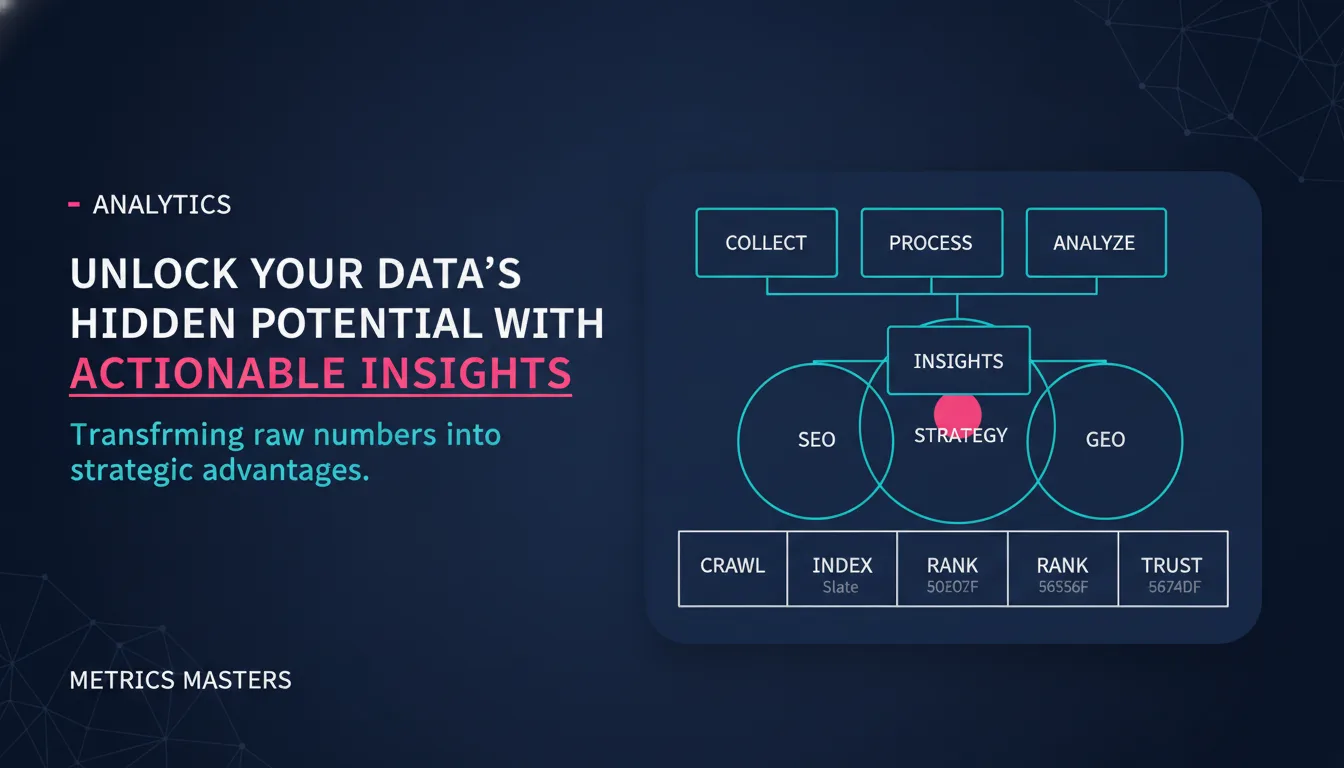
Quick answer: SEO, AEO and GEO share one foundation: pages that can be crawled, indexed, ranked and trusted. What changes is the scoreboard. SEO counts clicks from search results. AEO counts how often your page supplies the direct answer. GEO counts how often AI systems such as ChatGPT, Gemini and Google AI Mode cite or recommend you. In 2026 you need all three scores, but mostly one body of work.
The labels multiplied faster than the tactics. Search "seo vs geo" and you will find AEO, GEO, AIO, LLMO and "AI SEO" used for overlapping things, often by vendors selling a tool for one of them. Meanwhile the ground under organic search did move. At Google I/O in May 2026, Sundar Pichai said AI Overviews has over 2.5 billion monthly active users and AI Mode has passed 1 billion.
Google then did two things that settle part of the argument. In June it launched Search Console reports for generative AI features, and by 31 August they were live for all websites. In July it updated its guide to optimizing for generative AI features. Its answer to "is SEO still relevant?" is yes, because those features run on Google's core ranking and quality systems.
The part that changed is the click. When an AI summary appeared, Pew Research found users clicked a traditional result in 8% of visits, against 15% when none appeared. In August 2026, researchers at the University of Pennsylvania and Northeastern posted a field experiment with 1,100 participants. It is a preprint, not yet peer-reviewed. It found that assignment to AI Mode cut click-through to external sites by 18.8 percentage points.
What SEO, AEO and GEO mean
What is SEO?
Search engine optimization is the work of getting your pages crawled, indexed and ranked, so people click through to your site. The unit of success is a visit. The levers are familiar: technical access, content that matches what people search for, internal links, and authority earned when other sites link to you.
What is AEO?
Answer engine optimization is shaping content so a system can lift a direct answer from it. The term grew up around featured snippets and voice assistants, where one answer is shown above the results or read aloud. In 2026 it is also used for AI Overviews. The unit of success is being the answer, whether or not anyone clicks.
What is GEO?
Generative engine optimization is earning mentions and citations inside answers written by large language models: ChatGPT, Perplexity, Gemini, Copilot and Google AI Mode. The term comes from a 2023 paper by researchers at Princeton and IIT Delhi, later accepted to the KDD 2024 conference. The unit of success is being named or linked in the answer, and ideally being the brand the answer recommends.
AIO, LLMO and AI SEO: same work, different labels
You will also see AIO (AI optimization), LLMO (large language model optimization) and AI SEO. When we pulled Google Autocomplete data on 8 October 2026, it suggested "seo vs geo vs aeo vs llmo" and "seo vs geo vs aeo vs aio". That tells you how confused buyers are.
These are not separate disciplines. They are names for the same shift. Google's guide tells site owners to be wary of third-party "AEO" or "GEO" tools that promise ranking success, and says no third-party tool has access to its internal ranking or AI systems.

SEO vs AEO vs GEO compared
SEO | AEO | GEO | |
|---|---|---|---|
Where you appear | Organic results in Google and Bing | Featured snippets, AI Overviews, voice answers | ChatGPT, Perplexity, Gemini, Copilot, Google AI Mode |
Unit of success | A click to your site | Your text used as the answer | Your brand named, linked or recommended |
What decides inclusion | Crawlability, relevance, links, quality systems | The same, plus a clear answer near the top of the page | Retrieval from search indexes, plus what other sites say about you |
Main metric | Clicks, rankings, conversions | Impressions in AI features | Mention and citation rate across a fixed set of prompts |
Where you measure it | Search Console, GA4, your CRM | Search Console generative AI report | Manual prompt checks, Bing AI Performance, GA4 AI Assistant channel |
What you control most | Your pages | Your pages | Your pages and your reputation elsewhere |
The inputs overlap almost entirely. The rows that really differ are the unit of success and where you measure it.
What doesn't change: the foundations
Every AI engine that cites the web has to retrieve pages first. Access, ranking and authority are the entry ticket.
Crawlable and indexable. Google says a page must be indexed and eligible to show with a snippet to appear in its AI features. OpenAI's crawler documentation says sites that opt out of OAI-SearchBot will not be shown in ChatGPT search answers.
Ranking still feeds the answer. In Ahrefs' March 2026 analysis of 4 million cited URLs, 37.9% appeared in the top 10 results for the query. In July 2025 that share was about 76%. Ahrefs links the drop to Google running more related "fan-out" searches behind each answer.
Authority still decides between sources. SE Ranking's model of ChatGPT citations (vendor data, 129,000 domains) found sites with more than 32,000 referring domains were 3.5 times more likely to be cited than sites with up to 200.
Quality rules still apply. Google says producing many variant pages mainly to manipulate rankings or AI responses breaks its scaled content abuse policy.
If your site has indexing gaps, thin pages or no links from anyone, no GEO tactic will fix it. That is the first thing to check.
What changes: cited, not just clicked
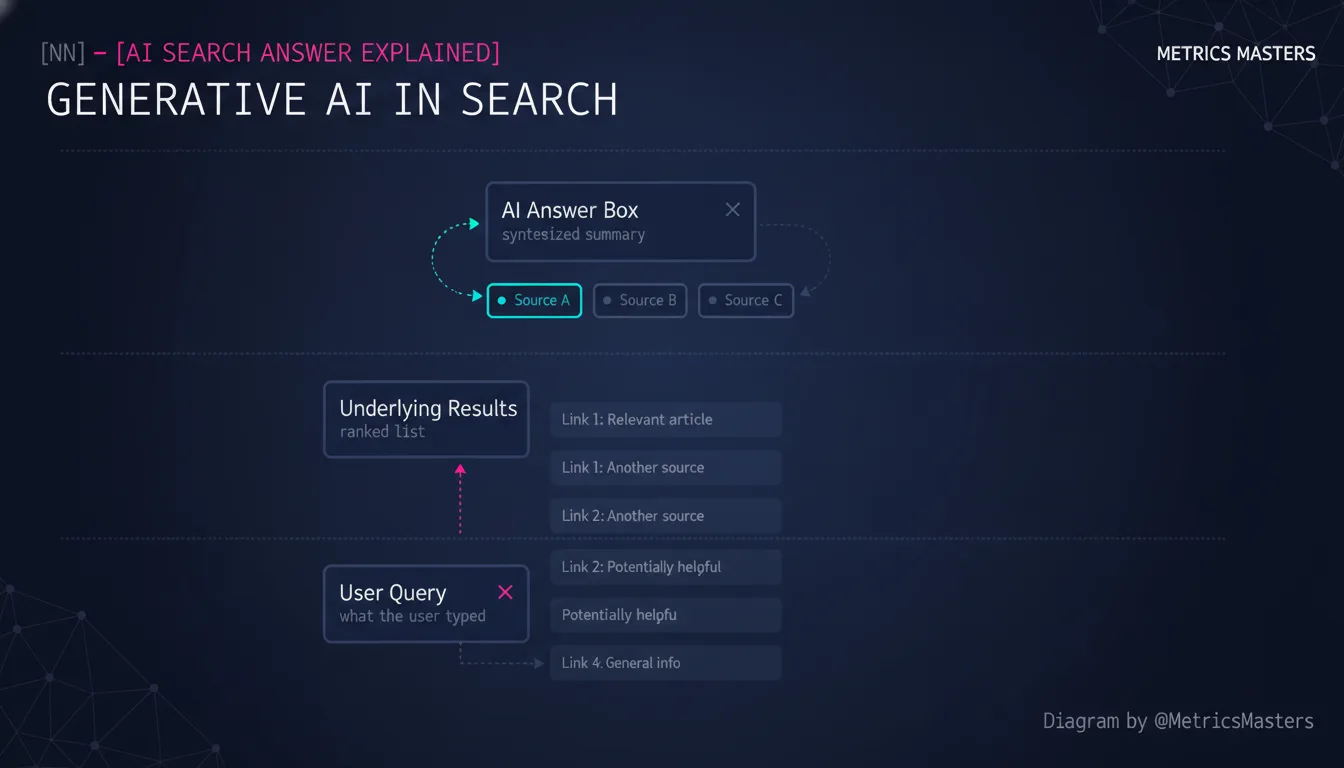
A searcher who reads an AI answer may never visit any site. The data points one way.
Fewer clicks when a summary appears. In Pew's study of 900 US adults, users clicked a link inside the AI summary itself in just 1% of visits.
Lower click-through for the top result. Ahrefs' February 2026 update, based on 300,000 keywords, found an AI Overview now correlates with a 58% lower average click-through rate for the top-ranking page.
AI Mode cuts clicks further. In the Penn and Northeastern preprint, assignment to AI Mode reduced click-through to external sites by 18.8 percentage points.
Being cited softens the loss. Seer Interactive's April 2026 study of 53 brand accounts found that on informational queries, being cited in an AI Overview delivered 120% more organic clicks per impression than not being cited. Cited results still trailed queries with no AI Overview by 38%.
That is the strategic shift. When an AI answer appears, the contest is no longer position one against position four. It is cited against invisible.
Which queries are affected
Not all of them. Ahrefs' November 2025 study of 146 million results pages found AI Overviews on 57.9% of question queries but only 15.5% of other queries. They appeared on 21.4% of informational results, 4.3% of commercial and 2.1% of transactional. Length matters too: 46.4% of queries with seven or more words showed one, against 9.5% of one-word queries.
So your educational content meets the AI answer first. Your pricing and "buy" queries still behave more like classic search, at least in AI Overviews. That split should decide where you spend effort.
Is GEO just SEO with a new name?
For Google, mostly yes. Google's guide says optimizing for its generative AI features is still SEO. It says you do not need llms.txt, AI text files or special schema markup, and that Search ignores them. It says you do not need to break content into small chunks or write in a special style for AI. What it asks for instead is non-commodity content: first-hand experience and expert takes that go beyond common knowledge.
Outside Google, the answer is "mostly, with two real differences."
Each engine leans on different sources. Profound's analysis of about 680 million citations (vendor data, August 2024 to June 2025) found Wikipedia was ChatGPT's most-cited source, while Reddit led for Google AI Overviews and Perplexity. When the answer is a synthesis, what other sites say about you carries more weight than it does in a list of links.
The page has to be quotable, not just relevant. In the original GEO experiments, adding citations, quotations and statistics gave a relative improvement of 30 to 40% in visibility in AI-written answers, on the paper's main measure. Keyword stuffing offered little to no improvement.
So GEO is not a new discipline. It is SEO with a wider definition of authority and a stricter standard of evidence.
What to do differently in 2026
This is the order we work in. Each step depends on the one before it.
Confirm access. Check that key pages are indexed and allowed to show snippets. Check robots.txt and your firewall allow Googlebot, Bingbot and OAI-SearchBot. In Search Console, confirm you have not opted out of generative AI features, a control Google added in June 2026.
Split your keyword list by answer exposure. Tag each target query as informational or commercial. For the first group, where AI answers appear most, citation is the goal. For the second, the click still is.
Rewrite your most important pages answer-first. Put the direct answer in the opening lines, then the evidence. Link and date every statistic. Add what only you know: process detail, pricing logic, what you have seen go wrong.
Earn mentions where engines look. Review platforms, industry lists, trade press and honest participation in the forums and video channels your buyers use. Google warns that chasing inauthentic mentions is less helpful than it might seem, so earn them.
Change the scorecard. Add AI impressions, AI referrals and a monthly citation check alongside rankings and clicks. The next section shows how.
Stop paying for hacks. llms.txt files, AI-only schema and content chopped into fragments do nothing for Google's AI features, by Google's own account.
What we check first
Before any content work, we open three things. Search Console's page indexing report, to find important pages Google is not indexing. The robots.txt file and the CDN or firewall bot settings, because a security rule can block AI search crawlers without anyone noticing. And the query report filtered to questions, to see how much of your visibility sits on queries most exposed to AI answers. That tells you whether you have an access, content or measurement problem.
How to measure SEO, AEO and GEO

A page can hold position two while its clicks fall, because an AI answer sits above it. Measure each scoreboard separately.
Scoreboard | What to track | Where | Watch out for |
|---|---|---|---|
SEO | Organic clicks, rankings, leads and revenue from organic | Search Console Performance report, GA4, CRM | Clicks can fall on AI-exposed queries while rankings hold |
AEO | Impressions in AI Overviews and AI Mode, by page | Search Console generative AI performance report | Reports impressions only, for now |
GEO | Mentions, citations and recommendations across a fixed prompt set; AI referral sessions | Monthly manual checks, GA4 AI Assistant channel, Bing Webmaster Tools AI Performance | AI answers vary run to run, so read trends, not single checks |
Search Console. Google's generative AI performance reports show impressions by page, country, device and date. Google says it plans to add more metrics over time.
GA4. The default channel group now has an AI Assistant channel for sources such as ChatGPT, Gemini, DeepSeek, Copilot and Grok. It excludes Google's AI Overviews and AI Mode, so that traffic still shows as organic search.
Bing. Bing Webmaster Tools added an AI Performance report in February 2026 that counts citations in Copilot and Bing's AI summaries, as PPC Land reported.
Our rule of thumb for the GEO scoreboard: a fixed set of 20 to 30 prompts written in your buyers' words, run monthly in ChatGPT, Google AI Mode and Perplexity, logging whether you are mentioned, cited with a link, or recommended. If GA4 is not yet trustworthy, fix that first. Our conversion tracking audit guide covers the checks.
Common mistakes with AEO and GEO
Buying a separate GEO program before fixing indexing. If AI crawlers cannot reach a page, nothing else about it matters.
Treating llms.txt as a lever. Google says Search ignores it. SE Ranking found it had negligible impact on ChatGPT citations. It is hygiene at most.
Rewriting every heading as a question. In SE Ranking's data, question-style titles averaged fewer ChatGPT citations than plain ones. Write headings for readers.
Faking freshness. Ahrefs found AI assistants cite fresher pages, and also notes Google's John Mueller has warned against changing dates without changing the content. Update the substance, then the date.
Reporting rankings alone. A stable ranking report can hide a falling click curve. Add the AI scoreboards before the next quarterly review.
How Metrics Masters handles SEO, AEO and GEO
We do not sell SEO, AEO and GEO as three programs. They run as one system, owned by one Growth Operator who also owns your measurement. The hard part of AI search is not writing the page. It is knowing which queries are exposed to AI answers, which pages earn citations, and whether any of it reaches your pipeline. When one person owns content and tracking, effort moves to whatever the data supports.
That is how our SEO and content systems work: access and indexing checked first, pages rebuilt answer-first with sourced evidence, a monthly citation check, and every change documented with the reasoning. You own every account and dataset from day one. Engagements start at $2,500 a month. See how it works and how scope is set on our engagement scope page.
What to do this week
Open Search Console and check the generative AI performance report for your top ten pages.
Confirm robots.txt and your firewall allow OAI-SearchBot, Googlebot and Bingbot.
Write down 20 prompts your buyers would ask, and run them once to set a baseline.
Frequently asked questions
What is the difference between SEO, AEO and GEO?
SEO gets your pages ranked so people click through. AEO shapes content so a system can use it as the direct answer, as in featured snippets and AI Overviews. GEO earns mentions and citations inside answers written by AI models such as ChatGPT and Gemini. All three rest on crawlable, indexed, well-ranked and trusted pages. Only the definition of success differs.
Is AEO the same as GEO?
They overlap heavily. AEO started with featured snippets and voice answers, where one answer is lifted from one page. GEO describes being cited or recommended inside AI-written answers that combine several sources. The work is nearly identical: answer clearly near the top, back claims with sourced evidence, and build authority elsewhere. The measurement differs more than the tactics.
Is SEO dead in 2026?
No. Google says AI Overviews and AI Mode run on its core ranking and quality systems, and that optimizing for them is still SEO. What has changed is the payoff. Clicks fall when an AI answer appears, so being cited in the answer now matters as much as ranking below it.
What do AIO and LLMO mean?
AIO usually means AI optimization and LLMO means large language model optimization. Both describe the same work as GEO: getting your brand mentioned and cited in AI-generated answers. "AI SEO" is another name for it. Judge any service by what it changes on your site and how it measures results, not by its acronym.
Do I need llms.txt or special schema for AI search?
Not for Google. Its July 2026 guide says you do not need AI text files, special markup or special schema.org types, and that Search ignores such files. SE Ranking's study of ChatGPT citations found llms.txt had negligible impact. Keep standard structured data for rich results, and spend the rest of your time on content and authority.
How do I measure AEO and GEO?
Use three sources. Search Console's generative AI performance report shows impressions in AI Overviews and AI Mode by page. GA4's AI Assistant channel shows visits from ChatGPT, Gemini, Copilot and similar assistants. A fixed set of 20 to 30 buyer prompts, checked monthly in ChatGPT, AI Mode and Perplexity, shows whether you are mentioned, cited or recommended. Read trends across months, not single checks.
Which queries trigger AI Overviews most?
Questions and long, informational queries. Ahrefs' study of 146 million results pages found AI Overviews on 57.9% of question queries against 15.5% of others, and on 46.4% of queries with seven or more words. Commercial and transactional queries triggered them far less often, at 4.3% and 2.1%.
Should I hire a separate GEO agency?
Usually not as a separate line item. Most GEO work is SEO and content work with a stricter standard of evidence. Google warns against third-party tools that promise ranking success or claim to use internal Google metrics. Ask anyone you hire how they will fix access and indexing first, and how they will measure citations and pipeline, not just mentions.
Not sure where AI search is costing you clicks?
We will check whether AI crawlers can reach your key pages, which of your queries are most exposed to AI answers, and whether your analytics can see AI traffic at all. Then we will tell you plainly what to fix first. Get your free infrastructure audit.