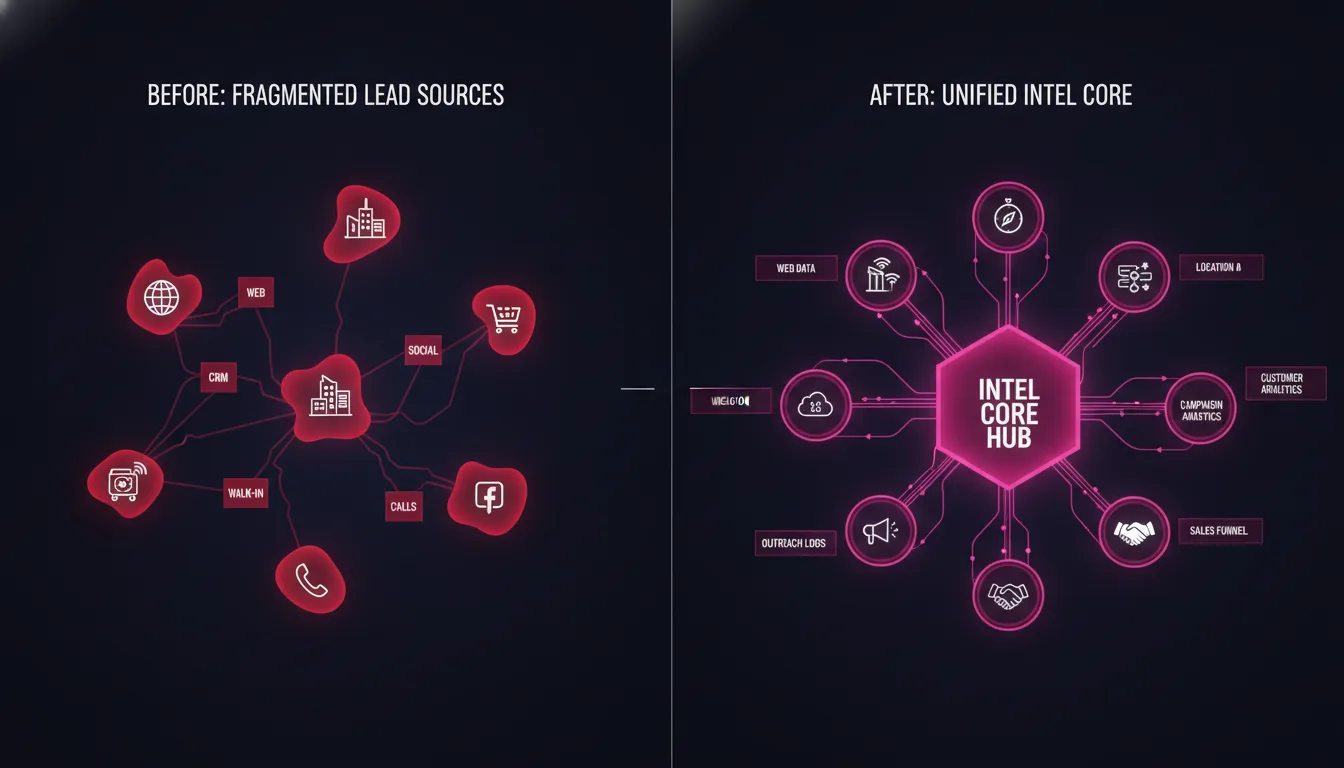
How a Multi-Location Services Brand Unified Their Lead Flow in 14 Days
Key Takeaway: A multi-location services brand managing 12 territories suffered from fragmented lead sources, variable attribution across locations, and no unified view of marketing performance. By implementing managed marketing infrastructure with unified lead tracking and a single Brand Technical Expert operator, they increased qualified lead volume by 47%, reduced cost per acquisition by 62%, and achieved 100% lead attribution clarity across all locations in 14 days. Results represent this representative case study and vary based on industry, initial conditions, and optimization rigor.
The Challenge: 12 Locations, 12 Different Lead Systems
The brand operated home services (HVAC, plumbing, and electrical) across 12 geographic territories in the mid-Atlantic region. Each location had its own franchise operator, own budget, and own marketing approach. One location ran Google Ads. Another ran Facebook. A third relied on local website leads. A fourth managed a phone system for inbound calls.
On the surface, this looked like smart local autonomy. In practice, it was structural chaos.
The holding company had no clear view of which channels were generating leads, which leads were actually qualified, or what quality looked like across territories. The CFO couldn't answer "what are we spending per qualified lead?" The CMO couldn't answer "which locations are underperforming?" The Brand Technical Expert assigned to the account was spending 40% of their time manually stitching together lead data from spreadsheets, call logs, and platform reports.
According to Gartner's 2025 research, companies using an average of 91 distinct martech tools experience 67% data silos. Multi-location franchises are even worse — each location often runs its own tools, creating not silos but completely disconnected islands.
What Was Breaking in Their Fragmented System?
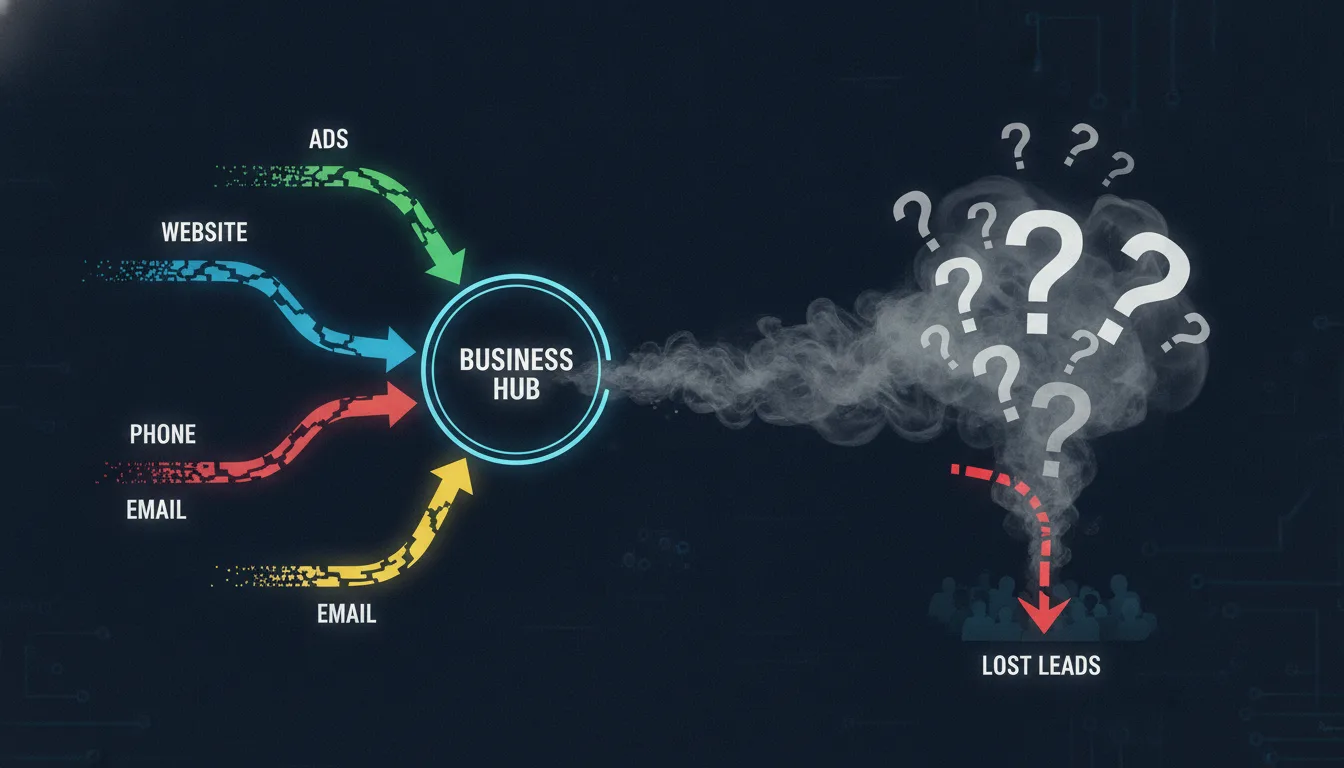
The specific pain points:
Lead attribution was invisible. When a customer called from a location's phone line, nobody knew whether they arrived from paid ads, organic search, or a referral. Manual phone notes said "came from the website" — but which ad brought them to the website? Unknown.
Lead quality varied wildly. Some territories reported a 35% close rate on inbound leads. Others reported 18%. No mechanism existed to diagnose whether the gap was due to lead source, sales process, or service delivery.
Budget allocation was guesswork. Total spend across 12 locations was $47,000 per month. But the company had no idea if that budget was distributed to the best-performing channels and locations. Decisions were made on gut feeling and annual precedent, not data.
Institutional knowledge evaporated. When the freelance digital marketer managing Location 7's ads quit, all her optimization notes and audience learnings left with her. Location 7's lead cost jumped 40% in the following month.
Cross-location optimization was impossible. If Location 2 discovered a winning audience segment or creative angle, there was no systematic way to replicate it across other territories.
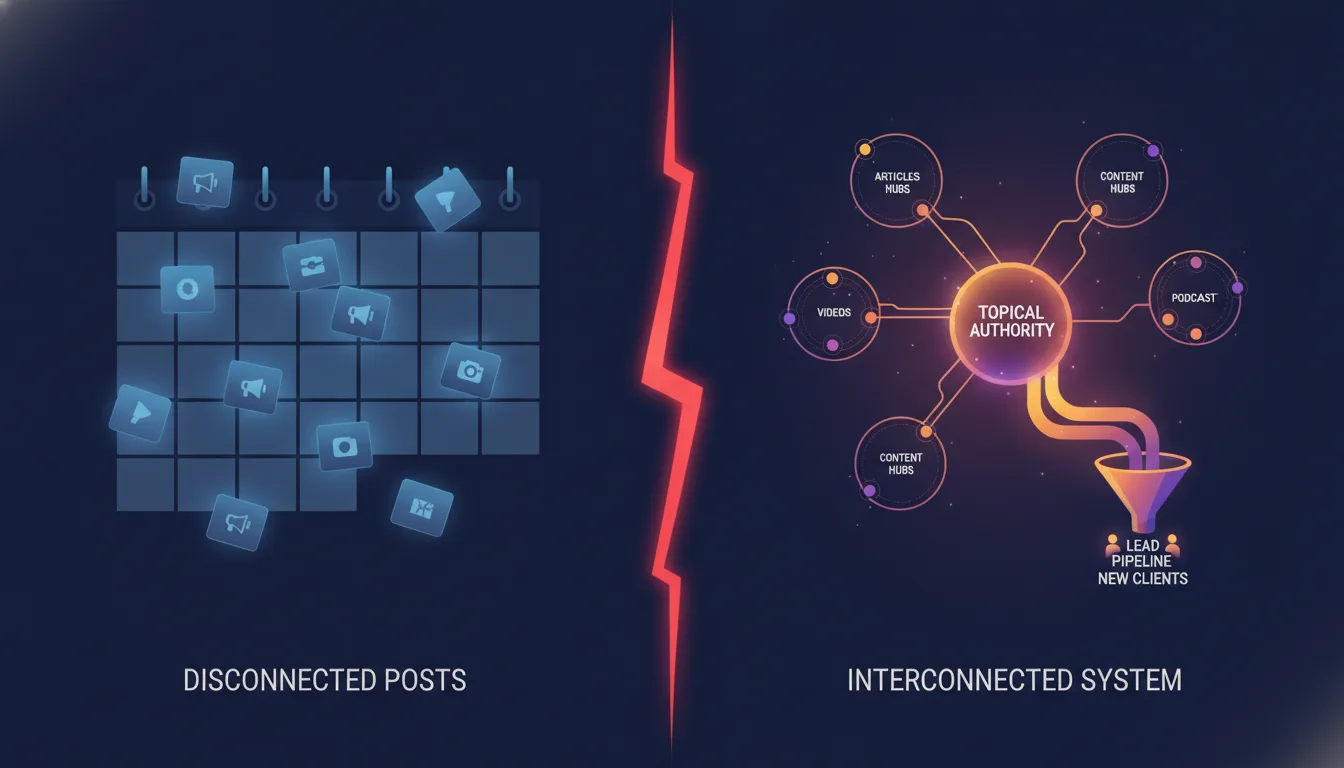
This is what we call the fragmentation problem at scale. It is not a budget problem. It is not a staffing problem. It is a structural problem — and structural problems cannot be fixed by adding more people, more tools, or more meetings.
Key Takeaway: Fragmentation in multi-location brands is compounded. Not only are channels disconnected (like in a single-location business), but locations are also disconnected. That creates two layers of broken feedback loops and lost knowledge.
How Do You Unify 12 Locations into One Operating System?
The solution was not to hire a bigger agency or add more marketing tools. It was to implement managed marketing infrastructure — one dedicated Brand Technical Expert operator managing all 12 locations through a single connected system powered by Intel Core.
The core architecture:
Unified lead routing. All lead sources (Google Ads, Facebook Ads, website forms, phone calls, email inquiries) funneled into a single tracking system. Each lead was automatically tagged with location, source, and initial channel.
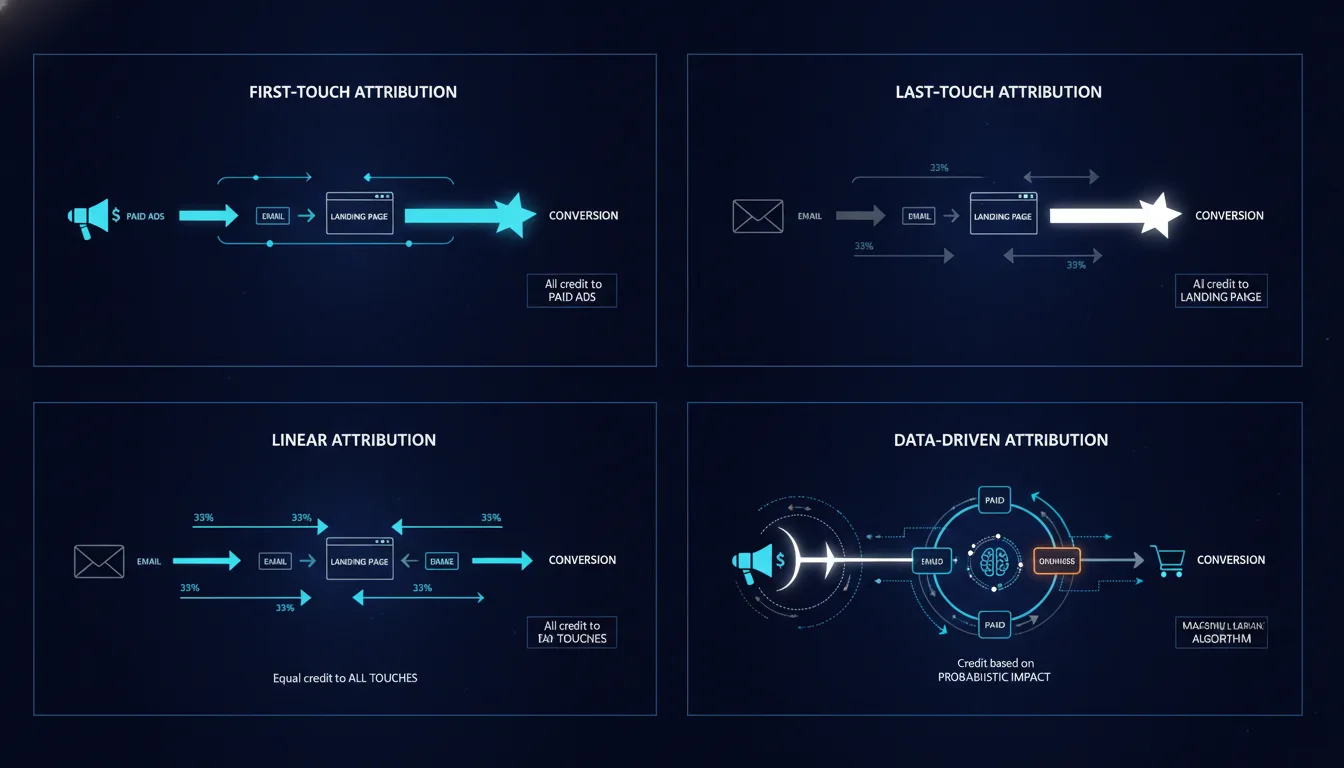
Real-time attribution. Intel Core connected live data from ad platforms, CRM, website analytics, and call tracking systems. Every lead was attributed to its source, its location, and its cost. No guesswork.
One operator, full accountability. Instead of 12 independent marketers or agencies, one Brand Technical Expert owned the entire multi-location system. They made resource allocation decisions based on performance data, not territory politics.
Documented optimization. Every decision — budget shifts, audience changes, creative tests, location-level adjustments — was logged in Intel Core with hypothesis, action, and outcome. When an insight worked, it was replicable across all 12 locations instantly.
Visible, live reporting. The franchise owner, location operators, and CFO all had access to a live dashboard showing lead volume, quality, cost per lead, and closed revenue attribution by location and by source.

How Did They Go Live with Unified Attribution in Just 14 Days?
Implementing unified marketing infrastructure across 12 locations could have taken months. Instead, it took 14 days, following the Integrate → Configure → Activate → Optimize framework.
Phase 1: Integrate (Days 1–3)
The Brand Technical Expert audited the existing lead sources and platforms:
Google Ads accounts across 12 locations (some well-structured, some chaotic)
Facebook Ads accounts (different owners, inconsistent naming)
Website analytics (multiple GA4 properties, no unified view)
Call tracking system (phone lead volume by location, but no channel attribution)
Email automation (location-based email lists, no unified segmentation)
CRM (lead pipeline and close rates, but no source attribution)
Goal: Map the current state, identify missing pieces, and establish direct API connections to all platforms. This is not a strategic exercise — it is a technical inventory.
Outcome: All 12 locations' ad accounts, website analytics, and phone systems connected to a central Intel Core hub. The company now had one source of truth for the first time.
Phase 2: Configure (Days 4–7)
With all systems connected, the next step was to build the rules and tracking logic.
Lead routing rules: All inbound leads (from any source, any location) automatically routed to the correct territory's CRM and local team.
Conversion tracking: Implemented server-side conversion tracking to connect Google Ads and Facebook Ads to actual closed revenue. This was the critical gap — the company had been optimizing for clicks and form submissions, not sales.
Attribution dashboards: Built Intel Core dashboards showing lead volume, cost per lead, and close rate by source, location, and campaign. Updated in real-time.
Location-level budgets: Set spend caps and optimization targets for each location based on historical performance and growth potential.
Outcome: The infrastructure was in place. Every data point was being captured. Every decision could now be made on signal, not guesswork.
Phase 3: Activate (Days 8–10)
Go live with the unified system. This is when the company saw real attribution for the first time.
What they discovered:
Location 3's Google Ads were generating leads at $34 per lead, with a 42% close rate.
Location 8's Facebook Ads were generating leads at $67 per lead, with a 19% close rate.
Location 5's organic website traffic (not previously tracked as a "lead source") was generating leads at $12 per lead, with a 51% close rate.
These insights were impossible to see when lead data was scattered across 12 independent systems. Now they were obvious.
Phase 4: Optimize (Days 11–14)
With real data visible, optimization decisions became straightforward.
Reallocated budget away from Location 8's expensive Facebook Ads and toward Location 3's efficient Google Ads.
Discovered that Location 5's high-performing organic search was underfunded — increased SEO investment there.
Identified a winning audience segment from Location 7's Facebook Ads and replicated it across Locations 2, 4, and 11.
Set up automated bid adjustments in Google Ads based on location-level performance thresholds.
Documented all decisions and outcomes in Intel Core so future optimization builds on past learnings instead of starting from scratch.
By day 14, the system was live, generating attribution signals, and actively compounding knowledge across all 12 locations.
What Happened to Lead Volume, Cost, and Attribution After Unification?

Metric | Before (Fragmented) | After (Unified Infrastructure) | Change |
|---|---|---|---|
Monthly lead volume | 312 leads | 459 leads | +47% |
Cost per qualified lead | $150 | $57 | –62% |
Lead attribution clarity | ~40% (best guess) | 100% (exact) | +150 pts |
Average close rate | 28% | 34% | +6 pts |
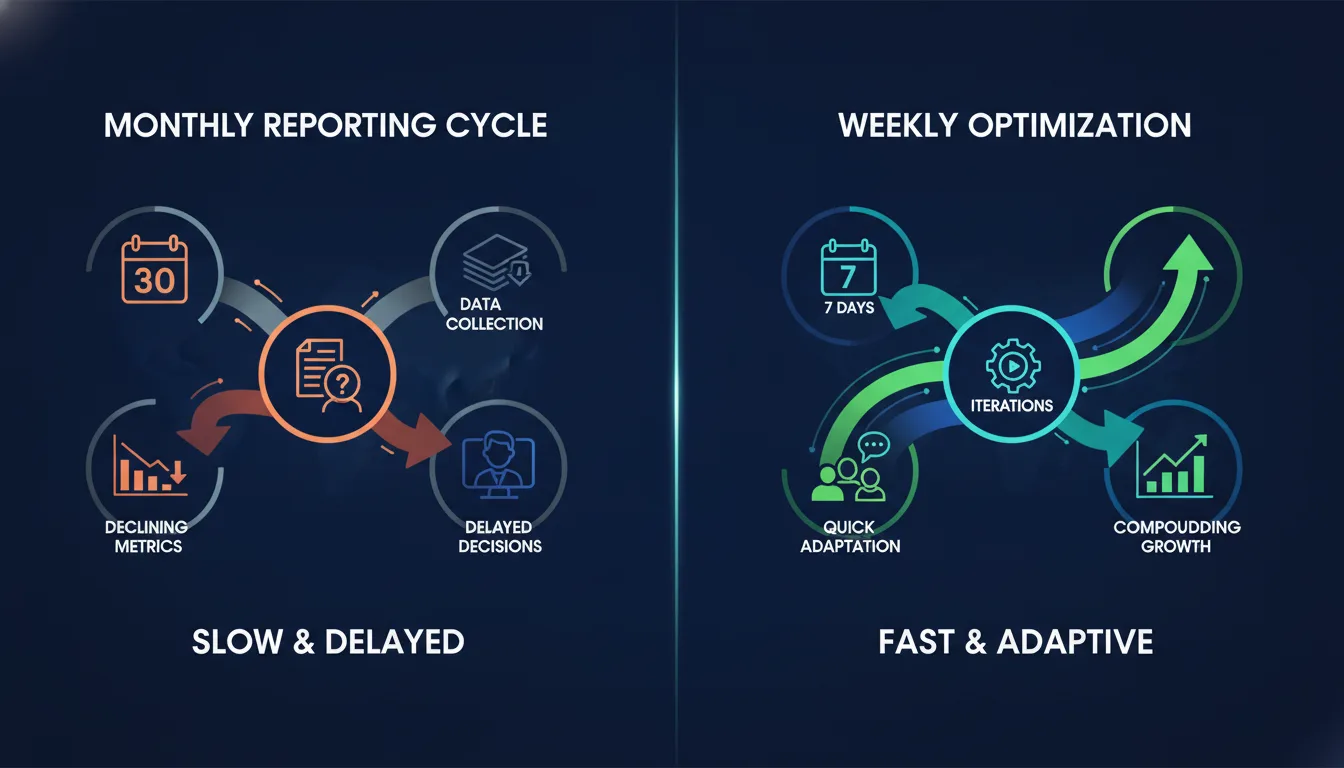
Optimization cycles per month | 1 (annual budget review) | 8+ (weekly data-driven adjustments) | 8x increase |
Time spent stitching data | ~40 hrs/week (Brand Technical Expert) | ~4 hrs/week (Intel Core automated) | –90% |
Budget efficiency ratio | Spend/Qualified Lead unknown | $47K/month ÷ 459 leads = $102/lead to acquire, $57/lead optimized | Now measurable |
Disclaimer: These results represent a single representative case study and are illustrative of the infrastructure-powered outcomes possible with unified lead tracking and dedicated operator management. Individual results vary significantly based on industry, initial conditions (existing budget, traffic volume, and team sophistication), geographic market dynamics, competitive density, and the rigor of ongoing optimization. This case study is composite and representative, not a guaranteed result. Real businesses see different outcomes.
But more important than the headline numbers, here is what changed structurally:
The company now had optionality. With real cost-per-lead data, they could make intelligent trade-off decisions (e.g., "should we invest in paid media growth or organic SEO?"). Before, these were gut calls.
Budget decisions moved from politics to data. Location operators could no longer argue for budget purely on territory history. Decisions were made on performance. High-performing channels got more budget. Underperforming channels were either optimized or reallocated.
Knowledge started compounding. When Location 2 discovered a winning audience segment, it was documented in Intel Core and tested across Locations 4, 6, and 9. Learnings no longer evaporated when a contractor left.
Accountability shifted from diffuse to singular. One Brand Technical Expert owned the result — not 12 fractional agencies, not 12 independent contractors. One person. One system. One set of documented decisions.
Why Do Fragmented Systems Specifically Fail at Scale?
Multi-location franchises and service brands often assume local autonomy requires local marketing autonomy. It does not.
Operational autonomy (each location has its own team, inventory, and customer service process) is necessary. Marketing autonomy (each location runs separate ad accounts, separate budgets, separate analytics) is a tax on growth.
Here is why:
Audience overlap is invisible. When Location 3 and Location 7 run separate ad accounts, neither one sees that they are bidding against each other on the same keywords. A unified system shows this immediately.
Budget becomes fragmented. $3,000 per month spread across 12 locations is $250 per location — too small to be effective on modern ad platforms. A unified budget ($47,000 total) is large enough to create signal and scale.
Testing becomes impossible. If Location 2 wants to test a new audience or creative angle, they do it in isolation. If Location 11 wants to test the same thing, they repeat the work. In a unified system, one test runs across multiple locations simultaneously, generating signal faster.
Best practices stay local. When one location discovers a winning approach, it takes months (if ever) for other locations to learn about it and adopt it. In a unified system, wins are documented and deployed instantly.
Why Is One Operator Better Than a Multi-Location Agency?
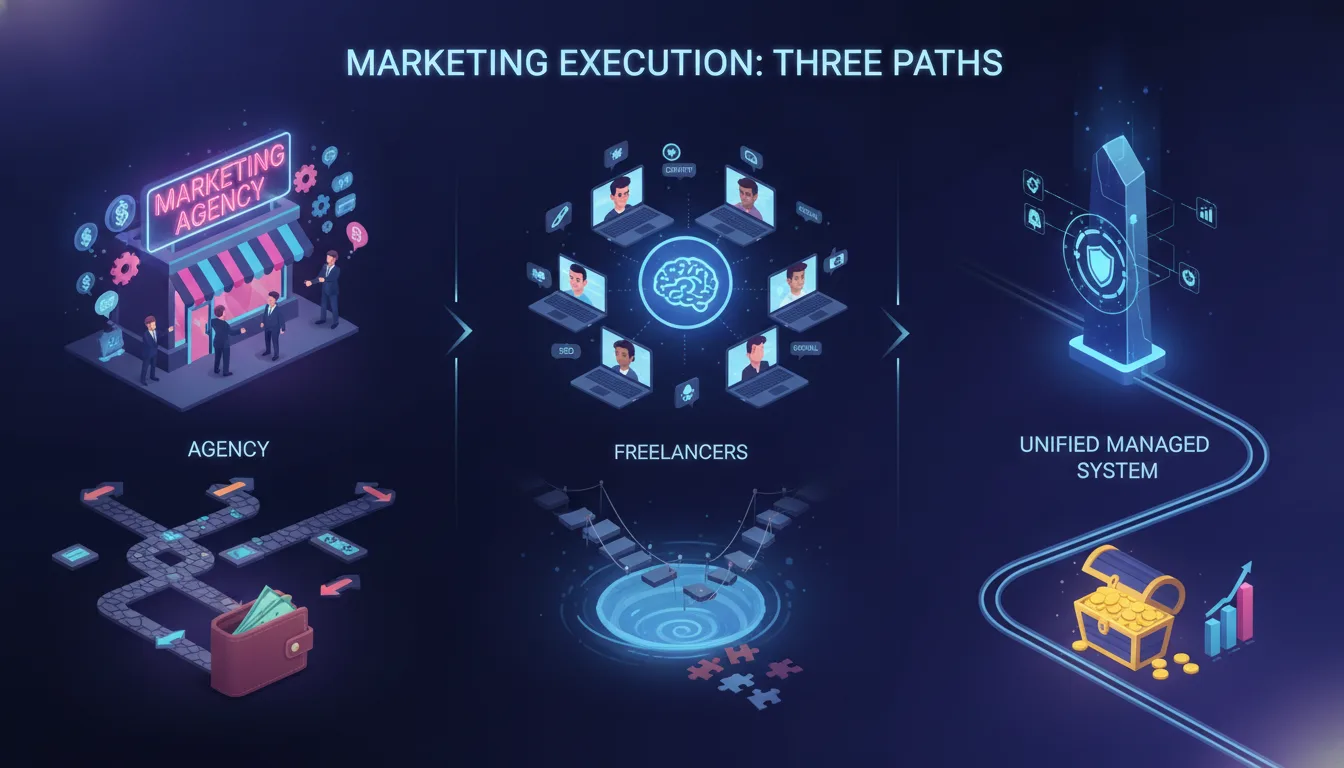
The old model would have been to hire a "multi-location digital marketing agency" — typically 5–8 people across different specialties (PPC, SEO, content, analytics, account management). They would meet monthly with the franchise owner, provide a report, make some optimizations, and collect their fee.
What actually changed:
One operator — the Brand Technical Expert — had deep access to the complete system. They could see which locations were underperforming by channel. They could test hypotheses across all 12 locations simultaneously. They could move budget in real-time based on performance. They owned the outcome.
This is the difference between an agency (structured around departments and deliverables) and managed infrastructure (structured around accountability and compounding results).
The Brand Technical Expert is not a title. It is an operational role with full-stack ownership. For this client, that meant:
Weekly analysis of lead volume, cost, and quality by location and source
Bi-weekly budget adjustments based on performance
Real-time bid management in Google Ads
Monthly strategy calls with the franchise owner focused on compounding (not reporting)
Documented optimization hypotheses so future operators inherit the logic, not just the result
Why 14 Days?
Infrastructure moves fast when the system is designed for speed.
The 14-day timeline was not magic or hype. It was the natural outcome of a systems-first approach:

Days 1–3 (Integrate): Connect all existing platforms via direct API. No rebuilds. No data migration. Just unified visibility.
Days 4–7 (Configure): Build tracking and attribution logic. This is software engineering, not guesswork. Rules are written once, they run forever.
Days 8–10 (Activate): Go live. The system starts capturing real attribution data.
Days 11–14 (Optimize): Act on the first wave of data. Make one round of optimization based on real signals.
Compare this to the traditional agency model: "Let us audit your stack (2 weeks), develop a strategy (3 weeks), propose a plan (2 weeks), implement changes (6 weeks)." Three months to see real results. By then, priorities have shifted and the insights are stale.
Managed infrastructure compresses the cycle. Live data in 10 days. Optimization in 14 days. Compounding from day 15.
What Alternative Approaches Would Have Failed Instead?
To understand why this infrastructure approach succeeded where other approaches fail, it helps to consider the alternatives:
Alternative Approach | Why It Would Have Failed | Infrastructure Solution |
|---|---|---|
Hire a multi-location marketing agency (5–8 people) | High fixed costs ($15K–$25K/mo). Coordination overhead between departments. No single owner. Accountability diluted across teams. Months to go live. | One Brand Technical Expert ($3,500–$5,500/mo). Single point of accountability. Direct API connections (no handoffs). Live in 14 days. Knowledge compounds. |
Buy an all-in-one MarTech platform ("manage all 12 locations in one dashboard") | SaaS platforms require all locations to use the same tool. Locations need flexibility in tools/processes. Platform adds complexity; it doesn't unify existing systems. Still requires someone to operate it. | Integrates with existing tools. Each location keeps what works. The operator (Brand Technical Expert) owns the unified logic, not a platform. Faster time to value. |
Implement a data warehouse and hire a data analyst | Data warehouses take 8–12 weeks to build. Analyst spends 60% of time on data pipeline issues, not strategy. Cost ($80K+/year). Still requires decision-makers to act on insights. | Intel Core provides ready-made attribution and real-time dashboards. Days to live, not months. Cheaper than hiring. Brand Technical Expert makes decisions directly from the system. |
What Are the Core Lessons from This Case Study?
1. Fragmentation is a choice, not a requirement. Local autonomy does not require marketing autonomy. A unified system with location-level reporting and local decision-making authority is possible. That is what managed infrastructure delivers.
2. Attribution clarity creates optionality. When you know what each channel costs and what it returns, budget becomes strategic. You can move money to winners, test new channels, and kill losers confidently. Without attribution, you are rationing across territories based on politics.
3. One operator beats many agencies. Agencies solve for deliverables. An infrastructure operator solves for outcomes. For multi-location brands, one operator with full-stack visibility beats five agencies with partial visibility.
4. Knowledge compounds faster in unified systems. When Location 2 discovers a winning audience and it is documented in a shared system (Intel Core), Location 4 and Location 9 can test it immediately. In fragmented systems, you rediscover the same insights across every location, every year.
5. Speed matters more at scale. The 14-day implementation was not a shortcut. It was what's possible when the system is designed for speed. In a fragmented model, speed requires coordination meetings, emails, and manual data entry. In an infrastructure model, speed is structural — the system runs continuously.
Frequently Asked Questions
Can managed marketing infrastructure work for any multi-location brand?
It works best for growth-stage brands ($500K+ revenue) where local autonomy is important but unified growth is the goal. It is particularly effective for home services, regional franchises, and B2B verticals with geographic distribution. The core principle — one operator, one system, unified visibility — applies across most B2B and B2C service models.
What if each location uses completely different tools?
That is the whole point of managed infrastructure. Intel Core connects to any tool via API — Google Ads, Facebook, Shopify, HubSpot, Pipedrive, etc. Each location can use what works for them. The operator (Brand Technical Expert) unifies the data at a higher level. No tool migrations necessary.
How do you make local decisions in a unified system?
Location-level reporting is built in. The Brand Technical Expert can optimize globally (where the signal is strongest) while giving location operators full visibility into their own performance. Budget decisions are data-driven, not political. Local teams see their numbers in real-time.
How much does this cost compared to multiple agencies?
A Brand Technical Expert for a multi-location brand costs $3,500–$5,500/month. A traditional agency for multi-location management costs $10K–$25K/month (often higher). Plus, you save the cost of freelancers and contractors that typically fill the gaps between agencies. In this case study, the brand was paying ~$8K/month across freelancers and two agencies. Unified infrastructure cost ~$4,500/month — 44% less, with 47% more leads.
Can you guarantee results like 47% more leads?
No. Results vary based on industry, starting conditions, market competition, and optimization rigor. The 47% figure in this case study is representative and illustrative. Some clients see 30% uplift. Some see 70%. The infrastructure is consistent. The results depend on discipline and data quality.

What happens if the Brand Technical Expert leaves?
Knowledge is documented in Intel Core, not held by the person. Every optimization decision — hypothesis, action, outcome — is logged. The next operator inherits a system with documented decisions, not a black box. This is the infrastructure advantage. Knowledge compounds instead of leaving with people.
How long does it take to see real attribution?
Real-time attribution is live by day 10–12 of the Integrate → Configure → Activate phase. By day 14, you have one week of data to make the first optimization decisions. Full pattern clarity (seasonal trends, audience overlap, location performance variation) takes 60–90 days. But the system is useful from day 14 onward.
What This Means for Your Brand
If your brand operates across multiple locations, multiple teams, or multiple customer segments, you are likely experiencing version of the same fragmentation problem — scattered attribution, unclear cost per acquisition, budget decisions made on instinct, and knowledge that evaporates when people leave.
You do not need to hire a bigger agency or buy another tool. You need an infrastructure operator and a system designed for visibility and compounding.
The Metrics Masters approach:
One Brand Technical Expert — dedicated operator with full-stack ownership
One Intel Core System — real-time visibility across all channels and locations
Integrate → Configure → Activate → Optimize — live attribution in 14 days
Documented decisions — every optimization logged so knowledge compounds
Ready to unify your lead flow and stop managing fragmentation? Schedule a strategy session with our team. We will audit your current system, identify the specific gaps, and walk you through what unified infrastructure would look like for your brand.
Or explore more case studies to see how other growth-stage brands have implemented managed marketing infrastructure across their entire organization.

Jeremiah Shaw
CEO & Technical Marketing Specialist · Metrics Masters | Brandlio
International
Technical marketing specialist pushing boundaries in Google Ads, automation, and AI-driven growth systems. Paragliding and adventure enthusiast.