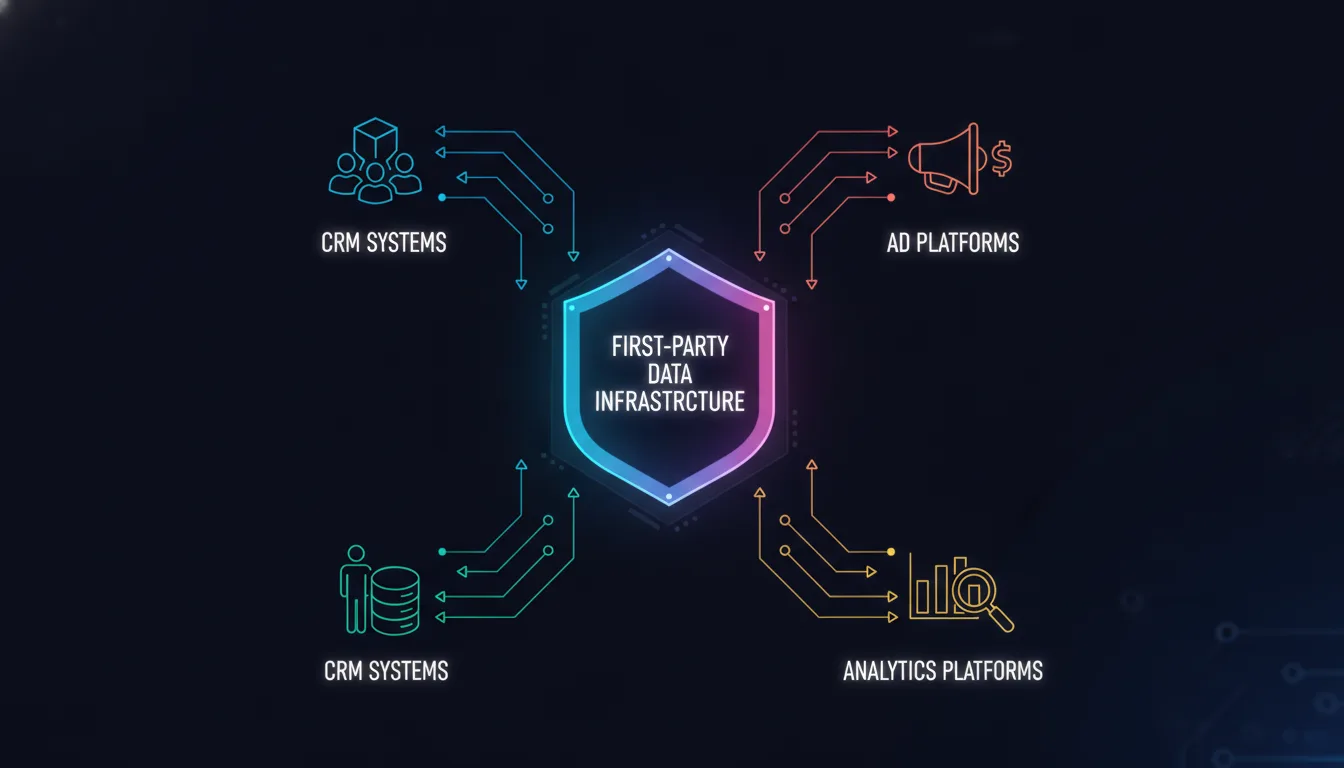
What Is First-Party Data Strategy?
Key Takeaway: A first-party data strategy is an infrastructure approach where you collect, own, and activate customer data directly from your properties — your website, app, CRM, and email — instead of relying on third-party cookies or vendor pixels. It is the foundation for privacy-first marketing and sustainable attribution in 2026 and beyond.

First-party data is information you collect directly from customers and prospects through your owned properties: website interactions, email engagement, CRM records, purchase history, and app behavior. It is data you own, control, and can activate independently of platform policy changes.
A first-party data strategy is not a tool or a platform. It is a structural shift: from relying on third-party infrastructure (cookies, pixels, shared data) to building an owned, server-side infrastructure that powers your marketing independently.
This strategy has three components. First is collection — capturing behavior directly through server-side events, not third-party pixels. Second is activation — using that data to build audiences, power email automation, and drive ad targeting without relying on platform data graphs. Third is compounding — treating your data as an asset that compounds over time, powering increasingly accurate attribution and personalization as the data set grows.
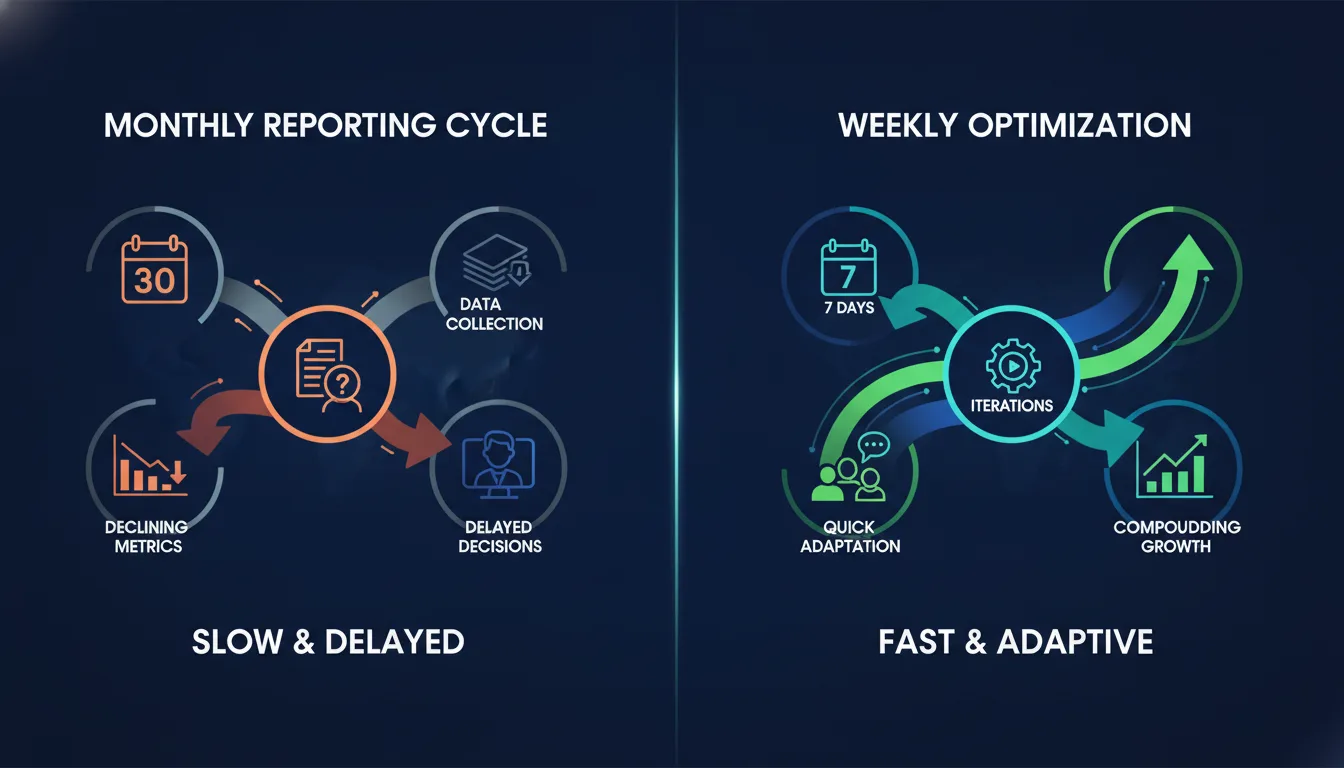
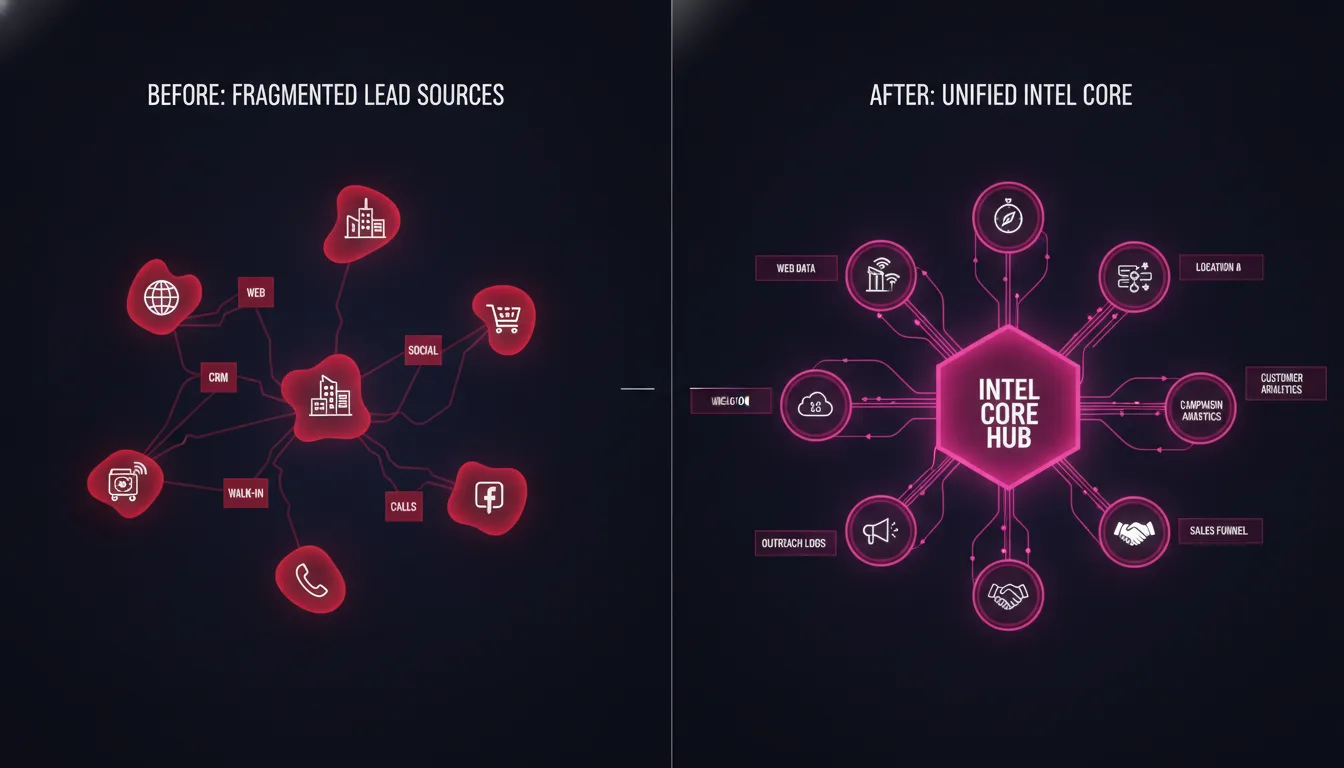
At Metrics Masters, we operate first-party data strategy as part of the managed infrastructure model. Intel Core aggregates your first-party signals into a single operating system, making that data actionable across paid media, email, analytics, and CRM. Your Brand Technical Expert uses those signals to make documented decisions and compound knowledge instead of starting from zero each quarter.
Why First-Party Data Strategy Matters in 2026?
Third-party cookies are not disappearing slowly — they are disappearing definitively. Google Chrome's full third-party cookie deprecation is scheduled for 2026, and approximately 78% of current attribution models will fail when cookies go away. Privacy regulations are tightening simultaneously. Europe's Digital Markets Act, California's CPRA, and similar regulations globally are raising the compliance bar for customer data handling.
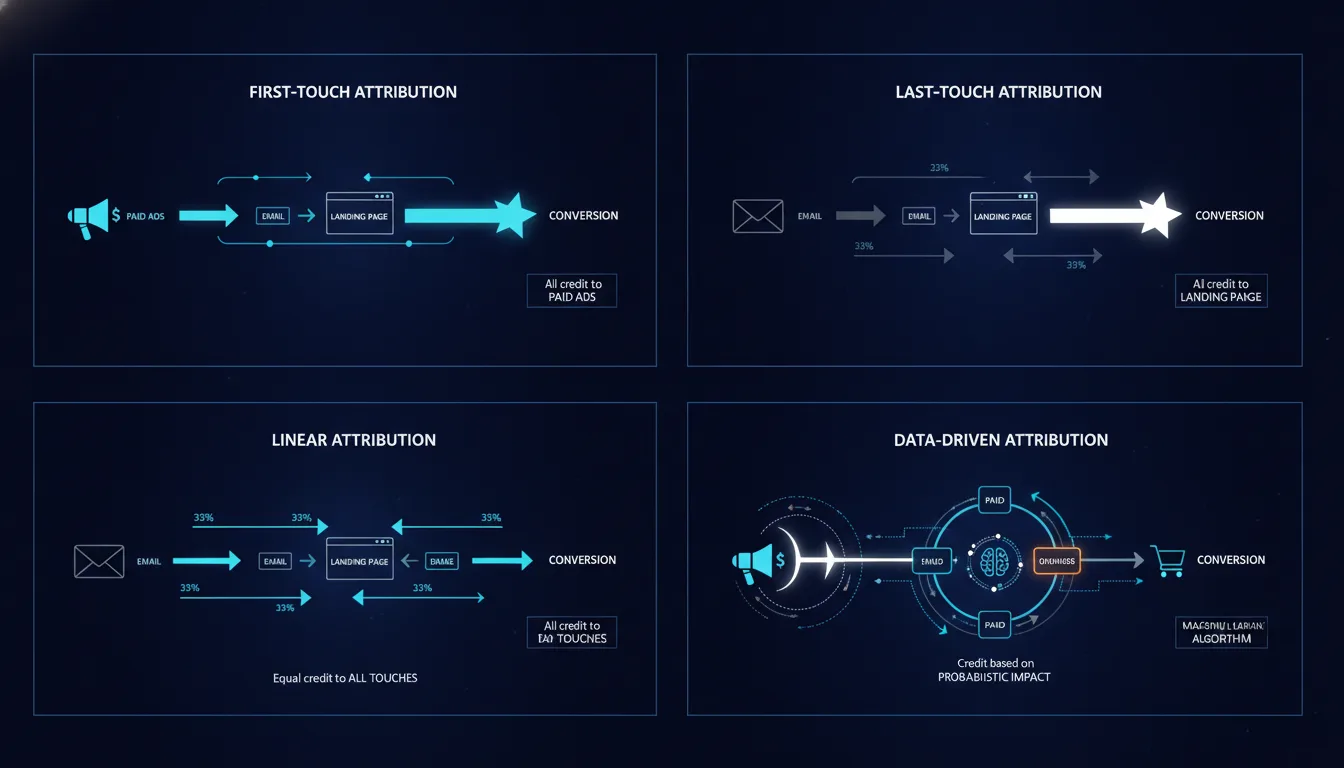
The result: growth-stage businesses face a compounding problem. The tools and strategies you built your attribution on are becoming unreliable, increasingly expensive, and legally riskier. A study by McKinsey examining first-party data strategies found that brands with mature first-party data programs show 3-4x higher attribution accuracy than those still relying on third-party signals. Yet only 31% of marketing teams say they have a documented first-party data strategy in place.
The urgency is real, but most growth-stage businesses are still waiting. They are monitoring the situation. They are planning to migrate. But they are not building. This is a timing failure, not a capability failure.
The window to build first-party infrastructure is narrow. Cookie deprecation happens once. Privacy regulations are ratcheting — never loosening. The brands that move now will have 12-18 months to stabilize their systems, train their teams, and compound knowledge before the deprecation impact fully hits. The brands that wait will scramble.
How First-Party Data Strategy Differs from Third-Party Reliance

The difference is not incremental. It is structural.
Dimension | Third-Party Reliance | First-Party Data Strategy |
|---|---|---|
Data ownership | Platforms own the data graph; you have access | You own and control the data |
Collection method | Third-party pixels, platform cookies, shared data APIs | Server-side events, direct API calls, owned infrastructure |
Attribution accuracy | Probabilistic, heavily reliant on cookies, degrading | Deterministic, based on known user actions, compounding |
Privacy risk | High — depends on platform compliance and regulatory changes | Low — you set the privacy rules; full compliance control |
Audience targeting capability | Limited to platform data graph and lookalike modeling | Your own audience segments, uploaded directly to platforms |
Cost trajectory | Rising — as data becomes more limited, CPMs increase | Stable — you are not bidding on limited third-party signals |
Sustainability | Sunset risk — systems break when platforms change | Long-term — infrastructure you control outlasts platform changes |
The third-party model was built for an era when cookies were reliable, regulation was light, and platform data graphs were accurate. That era is ending. The first-party model is built for privacy-first marketing, where you own the source of truth about your customers and can act independently of platform policy shifts.
Key Takeaway: Third-party reliance is structurally fragile — it depends on platforms maintaining the same data policies, regulators permitting the same practices, and cookies remaining stable. None of these assumptions hold in 2026. First-party data strategy is structurally resilient — it depends only on infrastructure you control.
What Is Server-Side Tracking?
Server-side tracking is the technical foundation of first-party data strategy. Instead of your website browser sending data to third-party platforms through pixels and cookies, your server sends it directly through API calls.

Here is how it works in practice. A user completes a purchase on your website. Instead of a client-side pixel firing and sending that event to Google, Meta, or another platform, your server captures the event and sends it directly through Meta Conversions API, Google's server-side measurement protocols, or similar direct API connections. Your server maintains the context — you know who the user is, what they did, and what happened.
The advantages are substantial: no third-party cookies required, faster data transmission, higher match rates when uploading audiences, better privacy compliance, and direct control over what data leaves your infrastructure.
Server-side tracking requires technical setup — you need a backend engineer or infrastructure partner to implement it. This is why conversion tracking and attribution is a core capability, not an afterthought, in managed infrastructure. The operator owns the setup, configuration, and ongoing optimization of server-side tracking so your team does not have to.
How Does Consent Mode v2 Work?

Consent Mode v2 is Google's framework for legally collecting and using customer data under privacy regulations like GDPR and CPRA. It is not optional — it is becoming regulatory standard.
Here is the structure: when a user visits your site, you present a consent banner asking permission to track. If they grant consent, you collect full data: conversion tracking, audience data, everything. If they deny consent, you operate in limited mode — you still send events to Google and other platforms, but you send aggregated, non-individual data that preserves privacy while allowing the platform to learn from patterns.
This is not a binary choice. Consent Mode v2 also supports granular consent — users can permit analytics tracking but deny advertising tracking, or vice versa. Your server adjusts the data it sends based on what the user permitted.
The implementation requires three things. First, a consent management platform that legally captures user preferences. Second, server-side infrastructure that responds to those preferences dynamically. Third, a documented privacy policy that explains what data you collect and how you use it. Google's Consent Mode v2 documentation provides the technical specification, but the operational burden is real.
How Do You Activate First-Party Data Through CRM?
Collecting first-party data is only half the problem. The other half is using it to drive revenue.

CRM activation is the process of using customer data stored in your CRM system to build audiences, trigger email sequences, and upload targeting data to ad platforms. Here is the sequence:
Unified customer view. Your CRM consolidates data from web behavior, email engagement, purchase history, and support interactions into a single customer record. This is the source of truth about each customer.
Audience segmentation. You define segments based on customer attributes and behavior: high-value customers, users at churn risk, engaged prospects, repeat purchasers. Each segment is a list of customers in your CRM.
Email activation. Segments trigger automated email sequences. A churn-risk customer automatically receives a win-back campaign. An engaged prospect receives nurture sequences leading to sales conversation requests.
Ad platform upload. Segments are converted to first-party audience files and uploaded to Google Ads, Meta, LinkedIn, and other platforms. These platforms use your audience to find lookalike users and optimize ad delivery to your known good customers.
The feedback loop is critical. Actions you take in email or ads update customer records in your CRM, which refines segmentation, which triggers new sequences and new ad audiences. This is closed-loop marketing without relying on third-party data or platform data graphs.
The result: your segments get smarter over time. After six months of email engagement data and purchase outcomes, you have a precise model of who your best customers are. After a year, you can predict future behavior with high accuracy. The system compounds — the data gets more valuable as it accumulates.
How Do You Build a First-Party Data Strategy?

Building first-party data infrastructure is a four-phase process. This is not a one-month sprint. This is a structured program.
Audit your stack. You need to document what data collection is already happening (web analytics, platform pixels, CRM integrations, email tracking), where data lives, and where the gaps are. Most growth-stage businesses are surprised to discover they have 60-70% of what they need already in place, but it is fragmented across eight different tools. This phase takes 2-3 weeks and produces a decision document about what to keep, what to consolidate, and what to build.
Design your data architecture. With your Brand Technical Expert, you map out the system: what data you will collect server-side, how it flows through your infrastructure, where it activates (ad platforms, email, CRM), and what compliance rules apply. This is not a technical specification — it is a decision document. You are defining what success looks like. This phase takes 3-4 weeks.
Build server-side infrastructure. Your engineer or partner implements server-side event collection, sets up API connections to platforms, configures Consent Mode v2, and validates data flow. This is the heavy lift — expect 4-8 weeks depending on complexity. At the end, you have live conversion tracking flowing through your own infrastructure instead of third-party pixels.
Activate audiences. With server-side tracking live, you start building and uploading first-party audiences to ad platforms. You implement email automation rules in your CRM. You start documenting what is working and iterating. This phase is ongoing — you are not done after 90 days, you are just getting started.
The full cycle typically takes 60-90 days for a growth-stage business with existing infrastructure. Fast-moving brands can compress this to 45-60 days. Either way, the urgency is real. The data you collect starting today becomes the foundation for your attribution and audience building over the next 18 months.
What Are the Limitations of First-Party Data Strategy?
First-party data strategy is the right move for growth-stage businesses, but it has real constraints that you should understand.
Requires technical infrastructure. You cannot build first-party strategy without engineering resources or an infrastructure partner. If your team has zero engineering capability, you will need to hire or outsource.
Data quality depends on your implementation. If your server-side tracking is misconfigured, your data is garbage. There is no platform safety net. This is why the audit and design phases are non-negotiable.
Audience size starts small. Your first-party audiences are only as large as your customer base and website traffic. In the early phase, they may be too small for effective ad targeting. This resolves over time as you accumulate more customer data, but there is a lag period (usually 30-60 days) where you have to live with smaller, less-optimized audiences.
Privacy regulations are still evolving. GDPR, CPRA, and emerging regulations in other markets are still being interpreted and enforced. Your privacy strategy will need ongoing updates. This is not a build-once situation.
These are not reasons to delay. They are reasons to start immediately. The longer you wait, the larger these constraints become.
How Much Does First-Party Data Infrastructure Cost?
First-party data strategy requires investment in three areas: technical implementation, ongoing operations, and compliance.
Technical implementation typically runs $15,000-$35,000 depending on stack complexity. This covers the audit, architecture design, server-side tracking setup, and initial API integrations. If you have an engineering team, they can absorb this cost internally. If not, you will need to hire a contractor or infrastructure partner.
At Metrics Masters, this implementation is included in the managed infrastructure engagement ($2,500-$5,500+/month). Your Brand Technical Expert owns the audit, design, and implementation. Your engineering team stays focused on product. You get ongoing optimization and documentation instead of a one-time project.
Ongoing operations include data storage, API costs, consent management platform licensing, and staff time to maintain and optimize. Budget $2,000-$5,000 monthly for these costs depending on scale.
Compliance is harder to cost. Privacy audits, legal reviews, and regulatory monitoring are ongoing. Most growth-stage businesses underestimate this. Budget for an annual privacy audit and legal review — $5,000-$15,000 depending on your industry and geography.
The alternative cost is higher. As third-party data becomes more limited and expensive, CPMs rise and attribution becomes less reliable. A business spending $100,000/month in paid ads will see costs increase 20-40% over the next 18 months if they do not build first-party infrastructure. That math is clear.
Who Is First-Party Data Strategy Designed For?
First-party data strategy is designed for growth-stage businesses that meet all of these criteria:
You are generating meaningful revenue — typically $500K+ annually — and have active paid media budgets ($5,000+/month in ad spend minimum).
You have a CRM system in place (Salesforce, HubSpot, Klaviyo, or similar) and actual customer data you can activate.
You want to future-proof your attribution before third-party cookies disappear entirely.
You are willing to invest in infrastructure — not looking for a quick fix, but building a system that compounds.
You have access to engineering resources (either internal or outsourced) to implement and maintain server-side tracking.
It is not for early-stage businesses still in product development. It is not for brands with minimal data history. It is not for anyone trying to avoid technical implementation. Serious brands only.
Key Takeaway: First-party data strategy is the baseline requirement for sustainable growth marketing in 2026. The businesses that move now will have a 18-month head start on attribution accuracy and audience sophistication. The businesses that wait will scramble when cookies deprecate.
Frequently Asked Questions
What is the difference between first-party and zero-party data?
First-party data is information you collect from user behavior: website interactions, email opens, purchase history. Zero-party data is information users provide directly: survey responses, preference centers, account settings. Both are valuable. Zero-party data is often more accurate (users tell you what they want), but first-party data is easier to collect at scale. A complete first-party data strategy includes both.
Can we implement first-party data strategy without a technical team?
Not fully. You need engineering resources (internal or external) to set up server-side event collection, validate data flow, and maintain the system. You can outsource this to an infrastructure partner like Metrics Masters, but someone needs to own the technical implementation. Do not try to do this with off-the-shelf tools alone.
How long does it take before first-party audiences are large enough to activate?
Typically 30-60 days. In the first month, you are building audiences from historical customer data and live website traffic. By day 60, you have audiences large enough for meaningful ad optimization. After 6 months, your audience segmentation is usually mature and accurate enough for sophisticated personalization.
What happens to our attribution after Google deprecates third-party cookies?
If you have first-party data infrastructure in place, your attribution stays mostly intact. You lose some cross-domain tracking capability, but you gain deterministic first-party tracking through server-side events. If you do not have first-party infrastructure, your attribution falls to a probabilistic model — Google's AI estimates which conversions came from which ads. Attribution accuracy typically drops 15-40% depending on your industry. The gap only widens from there.
Is Consent Mode v2 legally required?
It depends on your jurisdiction and customers. If you operate in the EU or California, or have EU/CA customers, regulatory compliance increasingly requires Consent Mode v2 or similar mechanisms. Even if not technically required, adopting it now reduces future compliance risk and builds customer trust.
How do we ensure our first-party data is compliant with GDPR and CPRA?
Compliance requires three things: legal privacy policy documenting what data you collect and why, consent mechanisms that actually work (Consent Mode v2), and data handling practices that follow the regulations. Work with a lawyer to review your privacy policy and implementation. Many infrastructure partners (including Metrics Masters) can advise on compliance, but final responsibility is yours.
Can we run first-party data strategy and third-party tracking simultaneously?
Yes — in fact, this is the recommended transition approach. Build first-party infrastructure while maintaining existing third-party tracking. Monitor both to validate that first-party data is accurate. Once you have confidence in first-party attribution, reduce reliance on third-party signals. The overlap period is typically 60-90 days, and it reduces the risk of a complete attribution breakdown during the migration.
First-party data strategy is the foundation of sustainable growth marketing. Your Brand Technical Expert at Metrics Masters can audit your current infrastructure, design your architecture, and build the system that compounds.
Start a conversation about your first-party data strategy. We will walk through your current setup, identify gaps, and outline a clear path to privacy-first, owned-data infrastructure.

Jeremiah Shaw
CEO & Technical Marketing Specialist · Metrics Masters | Brandlio
International
Technical marketing specialist pushing boundaries in Google Ads, automation, and AI-driven growth systems. Paragliding and adventure enthusiast.