Content Systems vs. Content Calendars: Why Volume Doesn't Equal Pipeline
Key Takeaway: Content calendars optimize for consistency and volume. Content systems optimize for strategic intent, topical authority, and pipeline impact. Most brands spend enormous energy publishing content that doesn't move the needle because they've optimized for publishing, not for generating qualified leads.

A brand publishes 52 blog posts this year. Traffic grows 20%. Email subscribers double. The marketing team feels productive.
But attributed leads stay flat. Deal cycles don't shorten. Customer acquisition cost doesn't improve. By November, the founder asks: "Why are we spending so much time on content if it's not driving revenue?"
The answer is not that content doesn't work. The answer is that the brand built a content calendar, not a content system.
This distinction is structural, not semantic. It determines whether your content compounds or dissipates.
What's the Difference Between a Content Calendar and a Content System?
A content calendar is a publishing schedule. It answers: "What do we publish, and when?" It tracks consistency and volume. It lives in a spreadsheet or a project management tool. Most teams have one. Most teams use it to plan blog posts, social media posts, and emails in isolation from one another.
A content system is an infrastructure layer. It answers: "What is our content strategy, and how does every piece of content contribute to topical authority, qualified lead generation, and customer value?" It tracks intent, interconnections, distribution, attribution, and impact. It lives in your content architecture, your measurement framework, and your Brand Technical Expert's operating discipline.

Dimension | Content Calendar | Content System |
|---|---|---|
Organizing principle | Dates. "What ship when?" | Strategic intent. "Why does this exist, and what does it drive?" |
Structure | Linear. Individual posts across channels. | Clustered. Content interconnected around core topics. |
Measurement | Posts published. Traffic. Engagement. Subscribers. | Attributed leads. Deal influence. Content-to-close time. CAC impact. |
Repurposing | Ad-hoc. "Should we email this?" Often orphaned across channels. | Systematic. One core piece flows into multiple formats. All attributed as one cluster. |
Compounding | Minimal. Each post starts from zero authority. | Significant. Related content clusters build topical authority. Effort compounds. |
Accountability | Publishing schedule. "Did we hit the calendar?" | Pipeline impact. "What qualified leads did this cluster generate?" |
The calendar feels productive because you can see it: 52 posts, 2 million impressions, 4,000 new email subscribers. The system feels harder to measure because it requires attribution infrastructure. But the system is the only one that moves revenue.
Why Do Most Brands Default to Calendars Instead of Systems?
Three reasons.
First: Calendars are easier to build and manage. A calendar is a spreadsheet. "Blog: Monday. Email: Wednesday. Social: Friday." Anyone can fill it. Accountability is clear: "Did the post go live?" You don't need a system architect. You don't need attribution infrastructure. This makes calendars the default for teams without dedicated operators.
Second: Calendars feel like progress. A published post is visible. A sent email exists. Metrics go up. The founder sees movement. Systems require patience. Building topical authority takes months. Attribution infrastructure takes weeks to stabilize. Boards and executives ask, "What's the ROI of this content investment?" Calendars have an immediate answer: "Look at the traffic." Systems require you to say, "It's working. Here's the data."
Third: Most content tools are built for calendars, not systems. Your editorial calendar tool tracks due dates, not strategy. Your CMS publishes individual posts, not related clusters. Your analytics tool measures traffic per post, not pipeline influence per topic cluster. The entire stack incentivizes calendars. You are using tools designed for volume to execute a calendar-based strategy.
At Metrics Masters, we build content systems, not calendars. The difference in outcomes is measurable: 67% of brands say they struggle to measure content ROI, according to MarketingProfs. But brands running content systems — those with topical authority, clear distribution strategy, and attribution infrastructure — report that content-attributed leads grew by an average of 156% year-over-year, per the Demand Gen Report.
What Builds Topical Authority, and Why Does It Matter?
Topical authority is the opposite of topic spray.
Topic spray is what calendars create: 52 random pieces of content across 47 different topics. One post on "content marketing best practices." Another on "email deliverability." Another on "paid media trends." Another on "Google Analytics 4." No theme. No connection. Search engines see 52 low-signal posts from a fractured brand.
Topical authority is what systems create: deep, interconnected content coverage around 3-5 core topics that matter to your ICP. You don't write 52 shallow posts. You write 12-15 interconnected posts about one core topic, building depth. Your pillar article on "content marketing strategy" supports 4 related pieces on "SEO for content systems," "content repurposing," "attribution in content," and "topical authority." Search engines see a brand that owns a topic. Prospects see clarity. AI models cite your content because it's the most comprehensive resource in the category.
![Comparison showing depth-focused topical authority tree on]\left (concentrated, interconnected) vs. scattered shallowtopics on right (spread thin, disconnected)](https://storage.googleapis.com/metrics_masters_website_upload/2026/09/3f6044796e555e6f2d81a47f10bf0c80-1788858512980-h6rjj9.webp)
According to Semrush's topical authority research, sites with strong topical authority see 40-50% higher organic visibility than brands practicing topic spray. More importantly: they see higher conversion rates because the audience has been educated at every stage of their decision journey.
This is GEO (Generative Engine Optimization) in practice. When prospects ask their AI assistant "How do we build a content marketing system that generates leads?", they see your pillar article. When they ask "What's the difference between SEO and GEO?" they see your supporting post. When they're in the consideration phase and ask "How do you measure content ROI?" they see a third piece. You've become the default answer because you've built authority, not volume.
How Should You Measure Content Performance: Volume or Pipeline?
This is where most brands are stuck. They measure the calendar. They should measure the system.
Volume Metrics (Calendar) | Pipeline Metrics (System) |
|---|---|
Blog posts published per month | Attributed leads generated per content cluster |
Page views and traffic | Lead quality score and deal influence |
Email subscribers added | Email-to-lead conversion rate by segment |
Social media impressions | Social-attributed pipeline value |
Average engagement rate | Content-to-close time by persona |
Words written per quarter | Customer acquisition cost by content source |
Volume metrics are vanity. Pipeline metrics are accountability.
A content system requires that you track: Which content pieces drive attributed leads? Which content clusters influence deals? What's the time from content touchpoint to closed deal? Which topics and formats have the highest CAC impact? Are you building topical authority in your core ICP segments, or are you spreading effort across topics that don't convert?
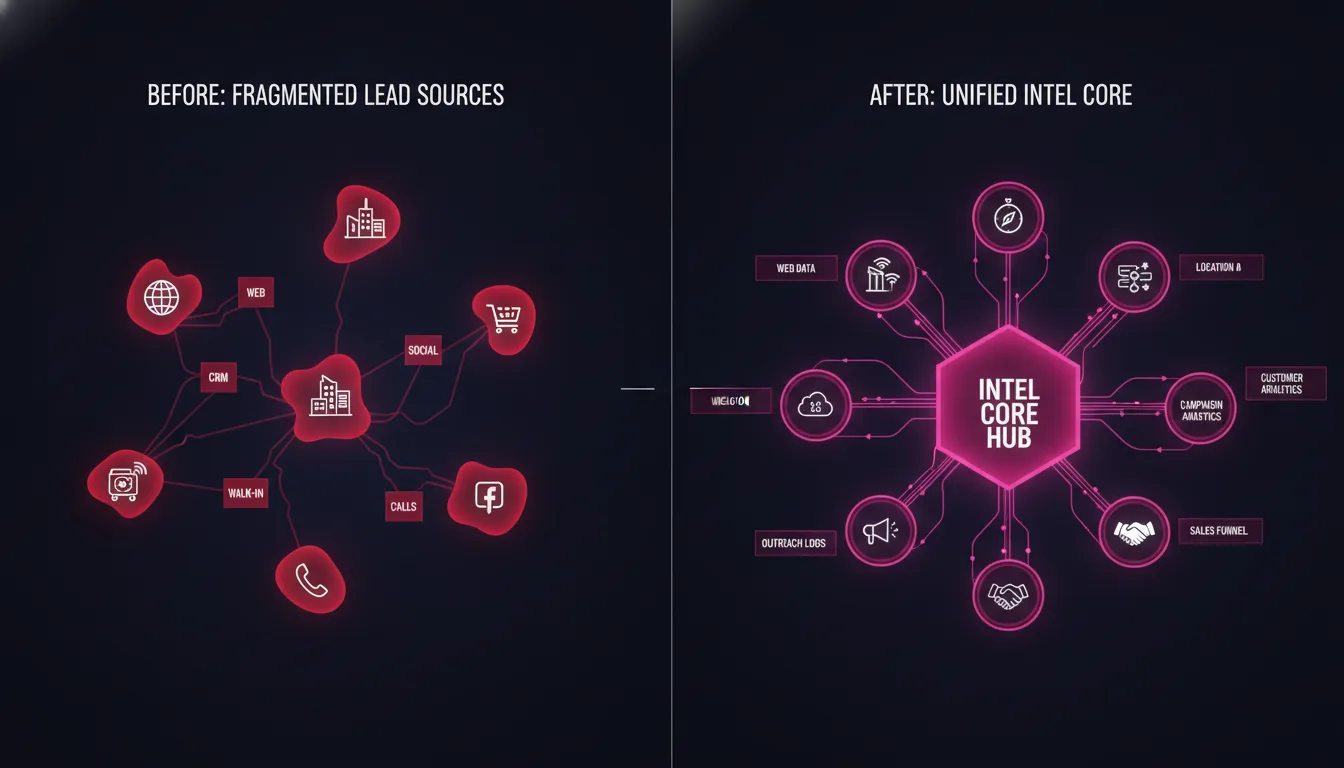
This requires direct attribution infrastructure. It requires your content to be connected to your email automation, your CRM, and your paid media platforms. It requires documented decisions: "This content cluster is responsible for X attributed leads because we tracked the following touchpoints." Calendar-based measurement is static. System-based measurement is dynamic and compounding.
How Does Content Repurposing Fit Into a System?
In a calendar, repurposing is an afterthought. "We published this blog post. Should we email it? Should we turn it into a video?" Maybe. Maybe not. It's ad-hoc.
In a system, repurposing is the architecture.

You create one pillar piece: a comprehensive 3,000-word guide on "How to Build a Content Marketing System That Generates Leads." This is your core intellectual property. Then, systematically:
You extract the key framework and turn it into a video (YouTube, social, email).
You break the 12 sections into 12 short-form posts (LinkedIn, Twitter, email micro-content).
You turn the case studies embedded in the guide into a dedicated case study page.
You build an email sequence that walks leads through each framework layer.
You create a workbook/guide that helps leads apply the framework to their own situation.
You host a webinar presenting the framework to your audience.
Each of these formats reaches your audience at different moments in their journey. Email reaches them in their inbox. Video reaches them on YouTube. Short-form reaches them on social. Paid amplifies these across channels. And because they are all connected to one pillar piece, you measure them as one cluster.
This is why content systems compound. One piece of intellectual property becomes 6-8 touchpoints across 4-5 channels. Your effort multiplies. Your authority in the topic deepens. Your attribution clarity increases.
The Content Marketing Institute found that brands using integrated content strategies (across formats and channels) see 2.3x higher ROI than brands treating each channel independently. That's not because they're publishing more. It's because they're publishing smarter.
What Role Does SEO Play in a Content System?
SEO is the visibility layer of your content system. It is not the purpose of the system, but it is essential infrastructure.
A content system that ranks doesn't guarantee leads. But a content system that doesn't rank guarantees invisibility. SEO infrastructure — keyword strategy, technical SEO, topical authority architecture, link equity — determines whether your content reaches people searching for solutions to problems your ICP faces.
This is why content systems require strategic keyword research at the cluster level, not the post level. You don't ask, "What keyword should this blog post rank for?" You ask: "What is our core topic area? What sub-topics dominate within that area? What keywords do our ICP use when searching at awareness, consideration, and decision stages? How do we structure our content to rank for the entire cluster of related keywords?"
Your pillar article targets your highest-intent, highest-volume keyword. Your supporting articles target lower-volume, related keywords that feed into the pillar. Your technical SEO ensures Google understands the relationship between all pieces. Your content architecture reinforces topical authority at scale.
GEO — the ability to earn citations from AI models — works the same way. When you've built topical authority and comprehensive coverage of a topic, AI models trained on your content cite you. You become the default answer. This is not a replacement for SEO. It is an extension of it.
How Do You Measure Content-to-Pipeline Impact?
Most brands measure attribution at the channel level: "How many leads came from blog organic?" Some measure at the content level: "How many people who read post X became customers?" Systems measure at the cluster level: "How many leads were influenced by our 'content systems' topic cluster, and what did they close for?"
This requires three foundational pieces:

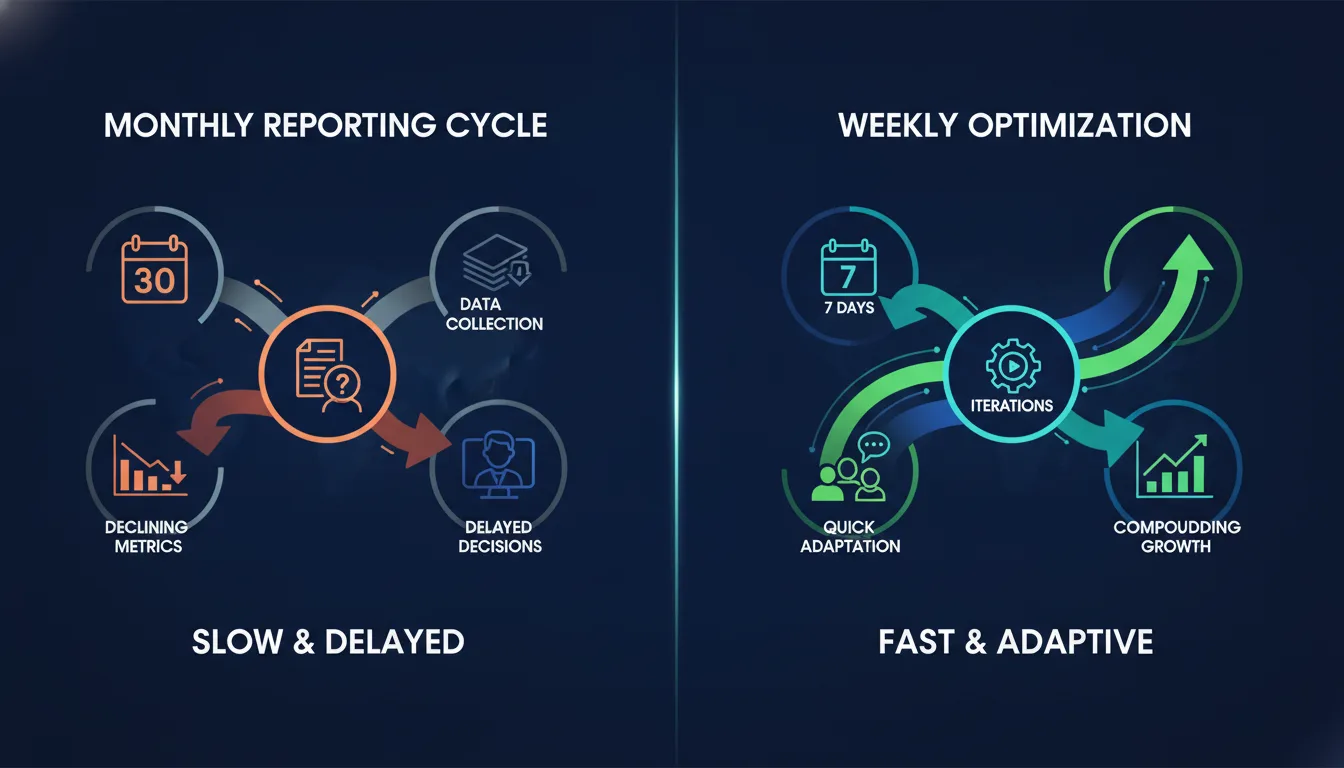
First: Direct API connections to your data sources. You need real-time data flow from Google Analytics to your CRM. From your email platform to your lead scoring system. From your paid media platforms to your attribution engine. Calendar-based teams often accept a seven-day reporting delay. System-based teams operate on live data. The difference in decision speed and accuracy is enormous.
Second: A documented content-to-lead attribution model. When someone visits your pillar article and then your supporting article and then subscribes to your email and then books a demo, which piece gets credit? All of them. Your attribution model must show how each content touchpoint influenced the outcome. You move away from "first-touch" and "last-touch" credit and toward "multi-touch" credit that reflects the actual customer journey.
Third: A consistent measurement cadence. You measure weekly, not quarterly. You ask: "What qualified leads did this content cluster drive? What was their deal value? What's our CAC impact? Are we improving our topical authority in this area?" Weekly discipline builds institutional knowledge. You learn what works and what doesn't fast enough to iterate.
Brands executing this are seeing measurable impact. According to HubSpot's 2024 Content Marketing Report, brands with documented content attribution see 40% shorter sales cycles compared to brands that don't track attribution. Shorter sales cycles mean faster cash flow and more efficient customer acquisition.
What Happens to a Content Calendar That Becomes a System?
Most brands don't replace their calendar. They build the system within it.
The calendar remains the publishing schedule. "This pillar article ships Monday. Supporting piece ships Thursday. Email sequence goes out Saturday." But the calendar now serves a strategy, not defines it. The strategy is the system: topical authority in X, Y, and Z. Distribution across owned, earned, and paid. Attribution layered across every piece. Measurement tied to pipeline, not just traffic.
The transition looks like this:
Month 1: Audit your current content. What topics have 3+ pieces? Those are your nascent topical authority areas. What topics have 1 piece? Those are clutter. Decide: Do we build depth in topic A or abandon it? This forces strategic clarity.
Month 2-3: Build your content system architecture. Define 3-5 core topics. Map the keyword and intent clusters within each. Identify gaps. Plan your pillar articles and supporting pieces. This takes more planning upfront, but the execution is faster because the strategy is clear.
Month 4+: Publish with intention. Your calendar now reflects your system. You publish pillar articles and related pieces as clusters. You distribute each cluster across multiple formats and channels. You measure as a cluster. You iterate based on pipeline impact, not just traffic.
By month 6, you'll see the difference. Your traffic may stay flat or grow slightly. But your attributed leads will increase. Your CAC will decrease. Your sales team will stop asking, "Why are we investing in content?" and start asking, "Can we get more of these clusters?"
FAQ: Content Systems vs. Content Calendars
Q: Can a small team run a content system, or is it only for larger organizations?
A: A small team with clear strategy runs a better system than a large team with scattered calendars. You don't need 50 content creators. You need one Brand Technical Expert, clear topical authority areas, and attribution infrastructure. A solo marketer with topical focus and repurposing discipline outperforms a team of five publishing across 20 random topics. Systems scale through leverage, not headcount.
Q: How long does it take to see results from a content system?
A: Attribution infrastructure takes 4-6 weeks to stabilize. Topical authority takes 3-6 months to compound into visible search impact. Pipeline impact — attributed leads directly tied to content — typically emerges within 8-12 weeks if your sales cycle is 2-4 months. Patience is non-negotiable. But the compounding effect means month 6 outperforms month 3, month 12 outperforms month 6, and so on. Calendars show results immediately (traffic). Systems show results over time (revenue).
Q: What if we're already publishing 30+ blog posts a month? Should we slow down?
A: Not necessarily. You should redirect. Instead of publishing 30 random posts, publish 5-8 intentional pieces that are deeply researched, comprehensively linked, and strategically repurposed into 25-30 total content assets across formats and channels. You maintain volume. You eliminate waste. You shift from calendar discipline to system discipline. The total assets increase. The quality increases. The attribution clarity increases. This is the transition most teams need.
Q: How do we decide which topics to build topical authority in?
A: Three filters. First: Topics your ICP actively searches for when solving the problems you solve. Second: Topics where you have unique perspective or proprietary knowledge. Third: Topics that influence deals in your sales cycle. The intersection of these three is where you build topical authority. Most teams pick topics based on what feels trendy or what their competitors are writing about. System-based teams pick topics based on ICP search behavior, competitive white space, and revenue influence.
Q: How does a content system integrate with paid media?
A: Direct API connections allow your paid media platforms to serve your content system. You know which content clusters drive leads. You amplify those clusters with paid spend. You retarget audiences who engaged with pillar content toward supporting pieces. You build lookalike audiences based on content-engaged segments. Paid amplifies the system. The system justifies the paid spend through clear attribution. Without the system, paid media teams are shooting in the dark. With it, they optimize toward documented outcomes.
Q: What role does AI play in content systems?
A: AI is excellent at generating first drafts, frameworks, and outline structures. It accelerates content creation. But AI cannot replace strategic intent. It cannot decide which topics build topical authority in your market. It cannot set up attribution infrastructure. It cannot measure pipeline impact. Use AI to speed execution. Use strategy to direct that execution. The best content systems use AI for leverage, not for substitution.
Q: How do we get buy-in from sales and leadership to shift from calendar to system?
A: Show them pipeline data. "We published 52 blog posts and got 45 attributed leads." Now show them the system version: "We built 8 topical authority clusters and got 127 attributed leads with a 34% lower CAC." Pipeline language converts skeptics. Don't ask for permission to change strategy. Show the outcomes the new strategy produces. Leadership funds what moves the needle.

Systems Drive Revenue. Calendars Drive Activity.
The shift from content calendar to content system is not semantic. It is structural. It requires different planning. Different execution. Different measurement. Different accountability.
The calendar asks: "Did we publish on schedule?" The system asks: "Did we generate qualified leads and reduce CAC?"
The calendar optimizes for consistency. The system optimizes for intent.
The calendar lives in a spreadsheet. The system lives in your content architecture, your attribution infrastructure, and your Brand Technical Expert's operating discipline.
Most brands default to calendars because they're easier. But easier is not better. The brands that build content systems — with topical authority, strategic distribution, and clear attribution — compound their efforts. Their content works harder. Their sales team closes faster. Their CAC declines.
Your content deserves to be treated as infrastructure, not as calendar items. The compounding returns will prove it.
Ready to Build a Content System?
Content calendars are easy. Content systems compound. If you're ready to shift from publishing activity to pipeline impact, we can help. At Metrics Masters, we build managed marketing infrastructure that treats your content as a strategic asset, not a schedule.
We handle the system architecture: topical authority strategy, content-to-pipeline attribution, repurposing frameworks, and continuous optimization. Your Brand Technical Expert owns the entire stack. Your content works harder.
Let's talk about your content strategy. Or learn more about how we build content systems.
See also:

Jeremiah Shaw
CEO & Technical Marketing Specialist · Metrics Masters | Brandlio
International
Technical marketing specialist pushing boundaries in Google Ads, automation, and AI-driven growth systems. Paragliding and adventure enthusiast.