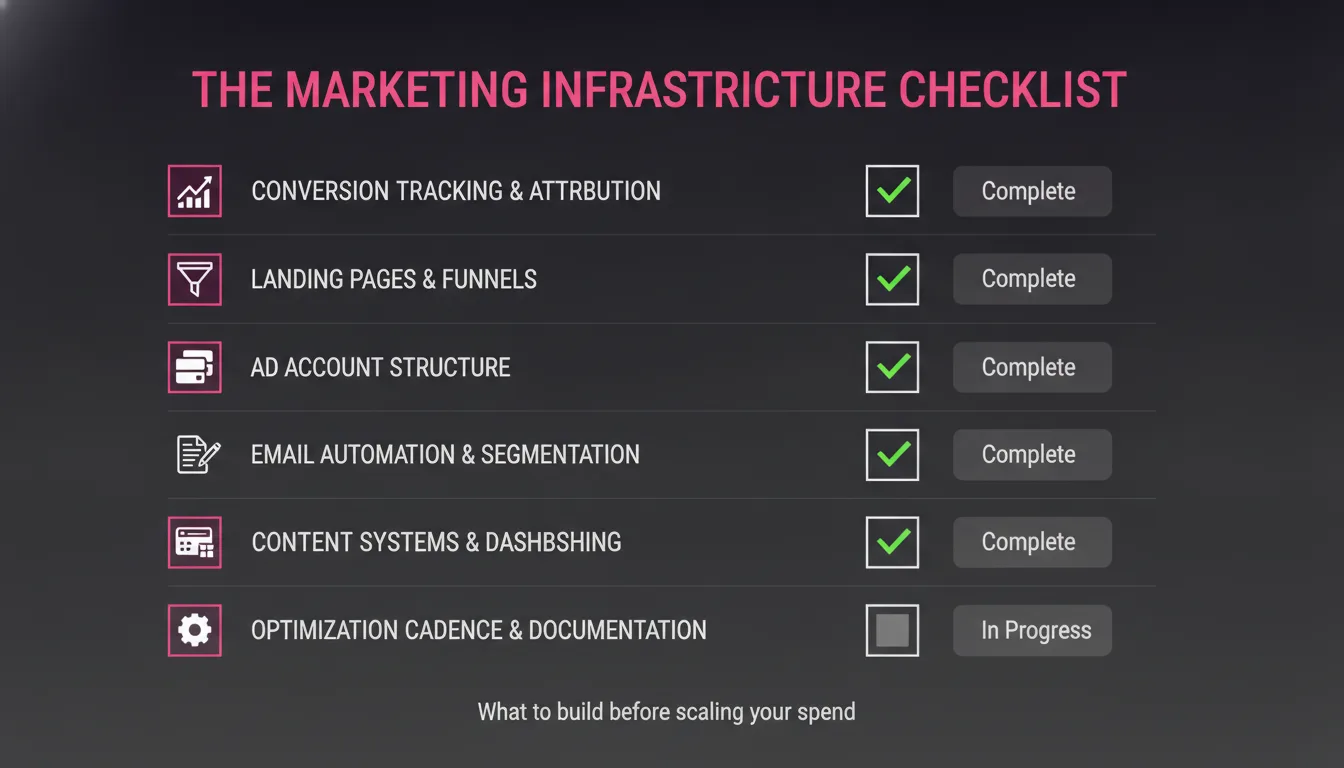
The Marketing Infrastructure Checklist: What to Build Before You Scale Spend
Key Takeaway: Most growth-stage brands waste 40–60% of ad spend because they scale before their infrastructure is ready. This checklist covers the seven systems you must build before you spend another dollar on paid media, email, or content. Without them, you are not scaling — you are just getting louder with broken mechanics.
You have a clear growth target. Your ads are generating leads. Your email list is growing. Everything feels ready to scale.
And then your analytics breaks. Your tracking pixel starts firing late. Your landing pages are not properly tagged. Your email sequences are not connected to your ad campaigns. Your reporting requires manual work every Friday night.
This is not a scaling problem. This is an infrastructure problem. And scaling on top of broken infrastructure does not just waste money — it corrupts your data, makes optimization impossible, and leaves you unable to prove ROI on any channel.
This checklist is built for growth-stage brands ($500K to $10M in annual revenue) who are ready to scale but need to know exactly what systems to build first. We have distilled seven years of managed marketing infrastructure implementation into this single diagnostic tool.
Go through each category. Mark what is already in place. Identify the gaps. Then prioritize based on impact and dependency order. By the time you finish, you will know exactly what to build before you scale.
Why Does Infrastructure Matter Before Scaling?
The data on this is unambiguous. A 2024 Gartner study found that organizations with mature marketing infrastructure use 42% more of their martech capabilities than those with fragmented stacks. Organizations with documented processes and connected systems see 3.2x faster time to insight and 2.1x better attribution accuracy.
But the real cost is hidden. When infrastructure is incomplete, every dollar of new spend multiplies the problem. Tracking becomes noisier. Attribution becomes unreliable. The incentive to optimize disappears because you cannot prove what is working. You stop making decisions based on data and start guessing.
Growth-stage brands that skip infrastructure building typically experience:
40–60% wasted ad spend due to poor tracking and attribution
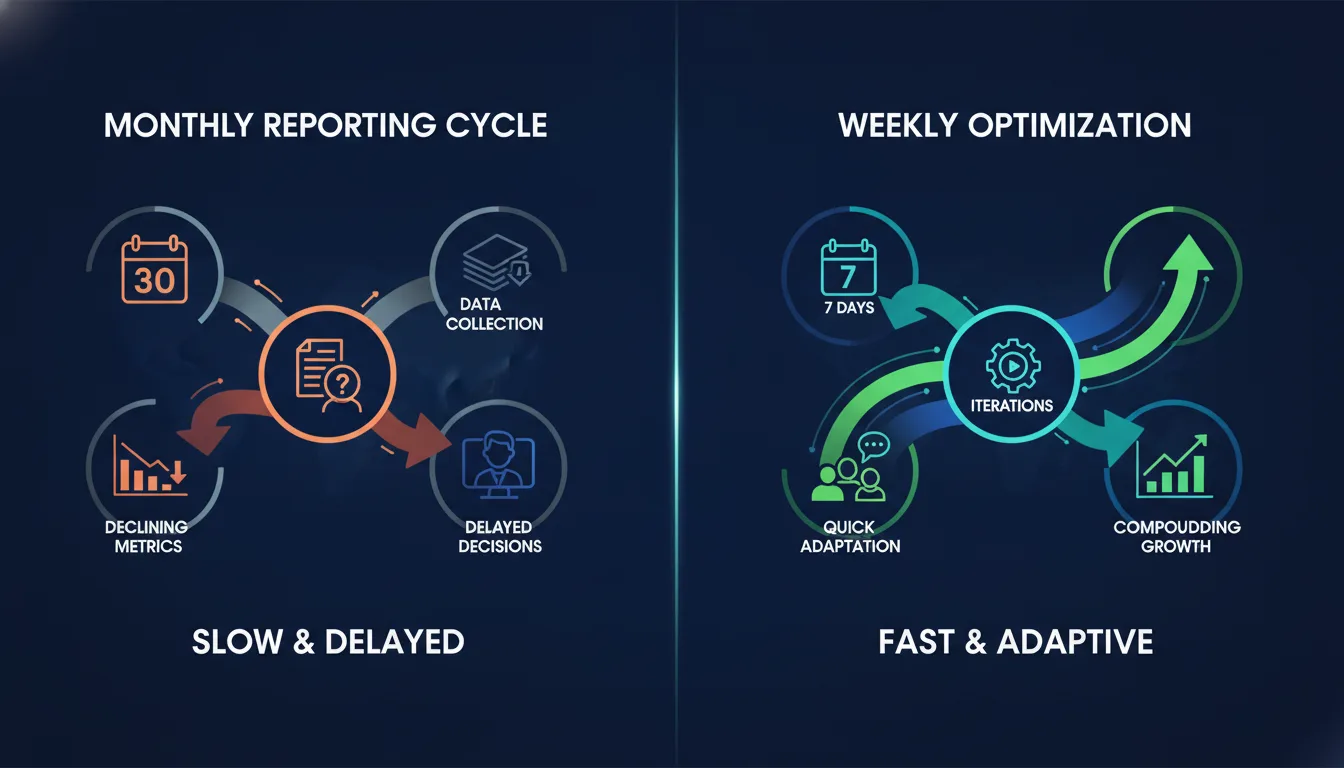
3–4 week delays in identifying and fixing performance issues
No clear ROI visibility across channels (paid media, email, organic)
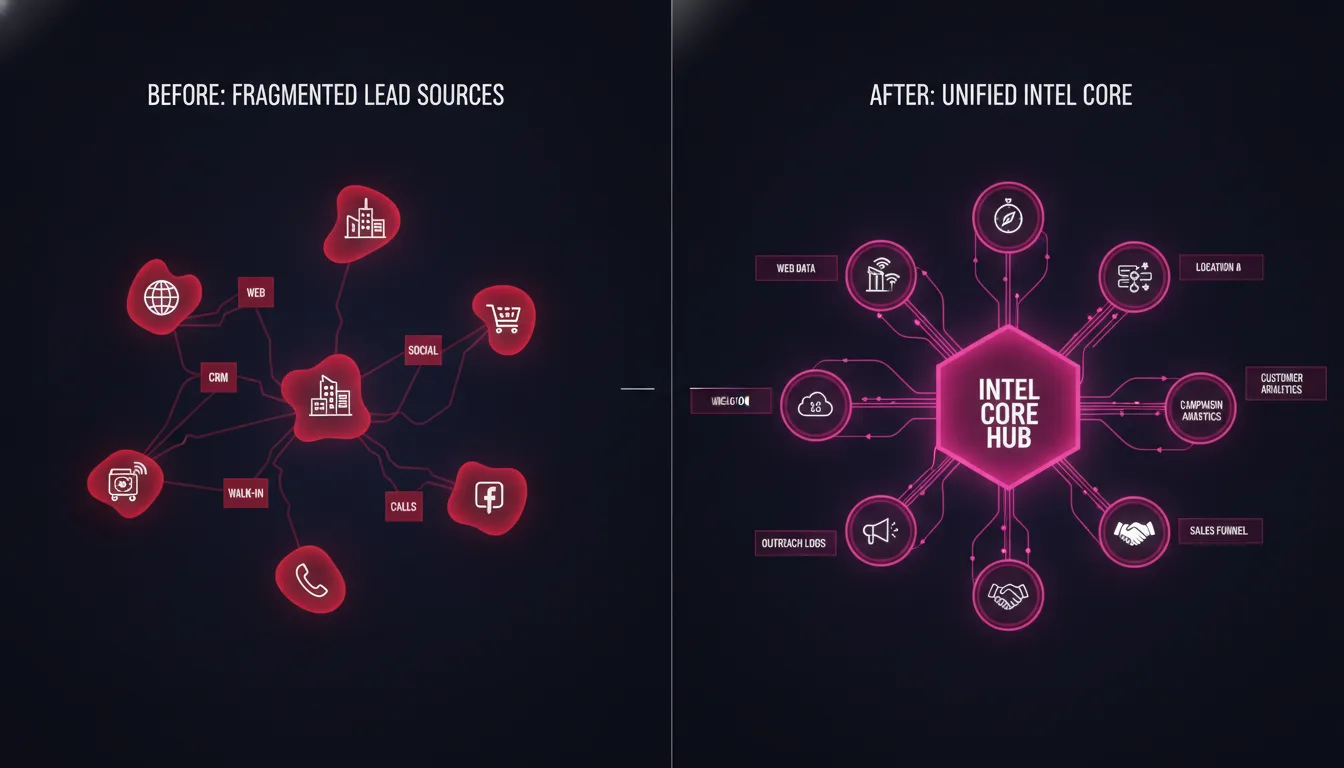
Fragmented knowledge — no single person understands the full system
Cascading failures — a tracking bug breaks email sequences, which breaks attribution, which breaks budget allocation decisions
Infrastructure comes first. Scale comes after.

The Seven Infrastructure Categories You Must Have
We organized the checklist into seven interdependent categories. Each one must be complete before you scale. Each one feeds data into the others.

Category | What "Complete" Looks Like | Primary Dependency | Time to Build |
|---|---|---|---|
1. Conversion Tracking & Attribution | Server-side tracking configured. All revenue events logged. Cross-platform attribution model documented. | None — start here | 2–3 weeks |
2. Landing Pages & Funnels | All landing pages tagged. Conversion funnels built and A/B tested. Page load time optimized. | Tracking live | 2–4 weeks |
3. Ad Account Structure | Campaigns organized by funnel stage. Conversion audiences set up. Budget allocation rules defined. | Tracking + landing pages | 1–2 weeks |
4. Email Automation & Segmentation | Welcome sequence live. Abandoned cart sequence built. List segmentation rules active. | Tracking + ad campaigns | 2–3 weeks |
5. Content Systems & Publishing | Editorial calendar built. Publishing process documented. Content promotion workflows active. | All above | 1–2 weeks |
6. Analytics & Reporting Dashboards | Live dashboards auto-update from data sources. Weekly reporting runs automated. KPI definitions locked. | Tracking + all channels | 1–2 weeks |
7. Optimization Cadence & Documentation | Weekly review process established. Monthly testing calendar live. Decisions logged with hypothesis and outcome. | All above | Ongoing |
Total time to completion: 8–14 weeks for a brand starting from fragmented tools. Most growth-stage brands can compress this to 6–8 weeks if they prioritize ruthlessly and eliminate non-essentials.
Category 1: Conversion Tracking & Attribution — The Foundation
This is where every mature infrastructure starts. You cannot optimize what you cannot measure. You cannot attribute revenue without tracking.
What you need:
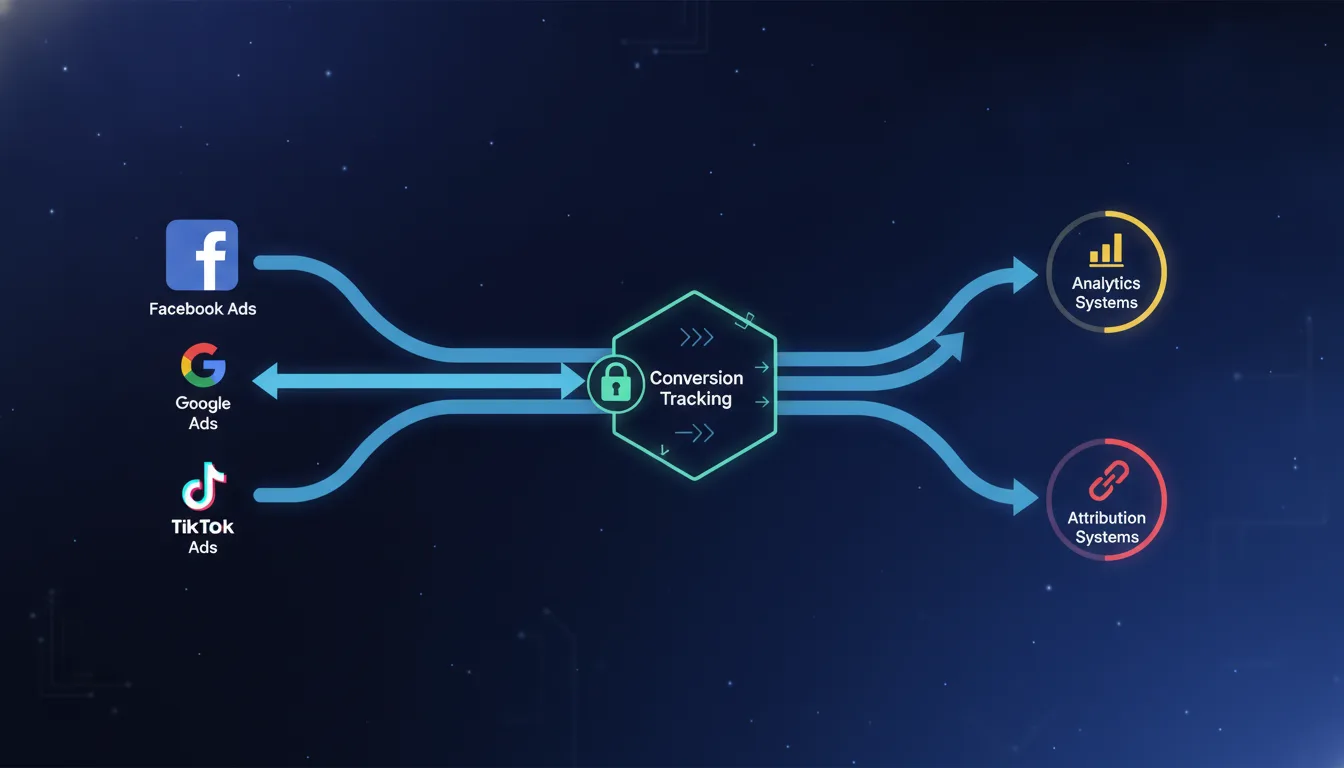
Server-side conversion tracking. Events fire from your backend, not just from browser pixels. This eliminates delays and avoids cookie-based data loss.
All revenue events logged. Not just form submissions — every completed purchase, every subscription upgrade, every meaningful microconversion that feeds the full funnel.
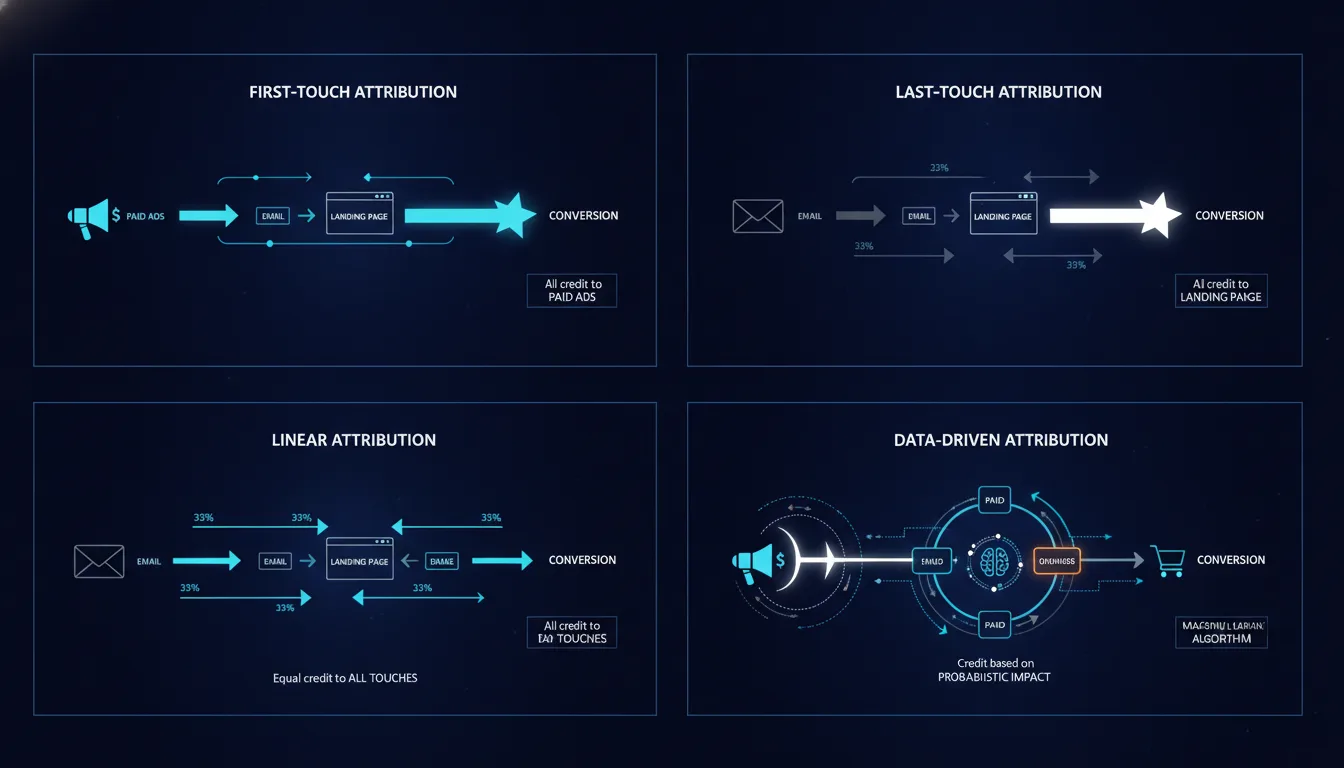
Cross-platform attribution model. How much revenue comes from Google Ads vs Meta vs email vs organic? The model you choose now cascades into every optimization decision later.
Data governance documented. Who owns each tracking parameter? How is PII handled? What happens when a tracking break is discovered?
How to know if you are ready:
Conversion data appears in Google Analytics within 2 hours of the event (not the next day)
You can pull a revenue report showing attribution by channel and campaign without manual work
Your ads platform (Google, Meta, Amazon) reports the same conversion count as your analytics (within 5% variance)
Your team can explain your attribution model in one sentence. If they cannot, you do not have one.
If this category is incomplete: Do not scale. Every dollar you spend will be impossible to attribute. Your reporting becomes guesswork. You cannot optimize because you cannot see what is working.
Category 2: Landing Pages & Funnels — The Conversion Layer
Traffic is worthless without conversion. Landing pages are not just design — they are the core of your funnel, and they must be built with tracking, A/B testing, and psychological certainty in mind.
What you need:
Every landing page properly tagged. UTM parameters, conversion pixels, event tags — everything your ad platform and analytics need to attribute the conversion back to the source.
Funnel stages clearly defined. Awareness → Consideration → Decision. Each stage has different landing pages, different messaging, different conversion goals.
A/B testing framework in place. You can run experiments without relying on your ad platform's built-in testing tools. You have a hypothesis, a variant, a control, and a sample size calculator.
Page load time optimized. Every 100ms delay costs you conversions. Measure Core Web Vitals. Optimize images. Use a CDN.
How to know if you are ready:
All landing pages load in under 3 seconds on 4G connection
Conversion rate for each landing page is documented and a baseline exists
You have a documented hypothesis for the next 3 landing page tests
Every page variation is tracked as a separate URL or a tagged parameter (never an unlabeled test)
Category 3: Ad Account Structure — The Campaign Layer
How you organize your ad accounts determines whether you can scale profitably or not. Poor structure leads to budget waste, poor optimization, and confusion about what is actually working.
What you need:
Campaigns organized by funnel stage. Not by channel, not by product. Awareness campaigns separate from Consideration separate from Conversion. This mirrors your funnel and enables precise attribution.
Conversion audiences built and verified. Your highest-intent audiences — people who have visited a landing page, added to cart, or engaged with email — are segmented and targeted separately from cold audiences.
Budget allocation rules defined. What percentage goes to awareness? To consideration? To retargeting? These rules must be written down, not instinctive.
Account-level automation in place. Bid adjustments, budget shifts, pausing underperformers — these happen on a schedule, not manually each week.
How to know if you are ready:
You can explain your campaign structure to a new team member in 10 minutes
Each campaign tracks a single conversion goal and feeds data back to tracking
You have documented bid strategy (manual, target CPA, maximize conversion value, etc.) for each campaign
Budget allocation to each funnel stage is measurable (we allocate X% to awareness, Y% to consideration, etc.)
Category 4: Email Automation & Segmentation — The Nurture Layer
Email is the single highest-ROI channel for most growth-stage brands, but only when it is built on top of a clean, segmented list and automated sequences that trigger on actual user behavior.
What you need:
Welcome sequence built and live. First touchpoint after signup. This sets expectations, builds trust, and qualifies the lead.
Abandoned cart sequence. If you sell products, this is non-negotiable. Recover 15–30% of abandoned revenue with the right sequence.
Behavior-based segmentation. Your list is not one audience. Segment by signup source, engagement level, product interest, funnel stage, and purchase history.
Integration with tracking. Email engagement (open, click, purchase) flows back to your attribution model. You can measure email ROI precisely.
How to know if you are ready:
Your welcome sequence has been sent to at least 500 subscribers and you know its open rate and click rate
Abandoned cart recovery is running and capturing at least 10% recovery rate
You can segment your list into at least 5 meaningful cohorts based on behavior or funnel stage
Email unsubscribe rate is below 0.5% per send (indicating good list quality and segmentation)
Category 5: Content Systems & Publishing — The Authority Layer
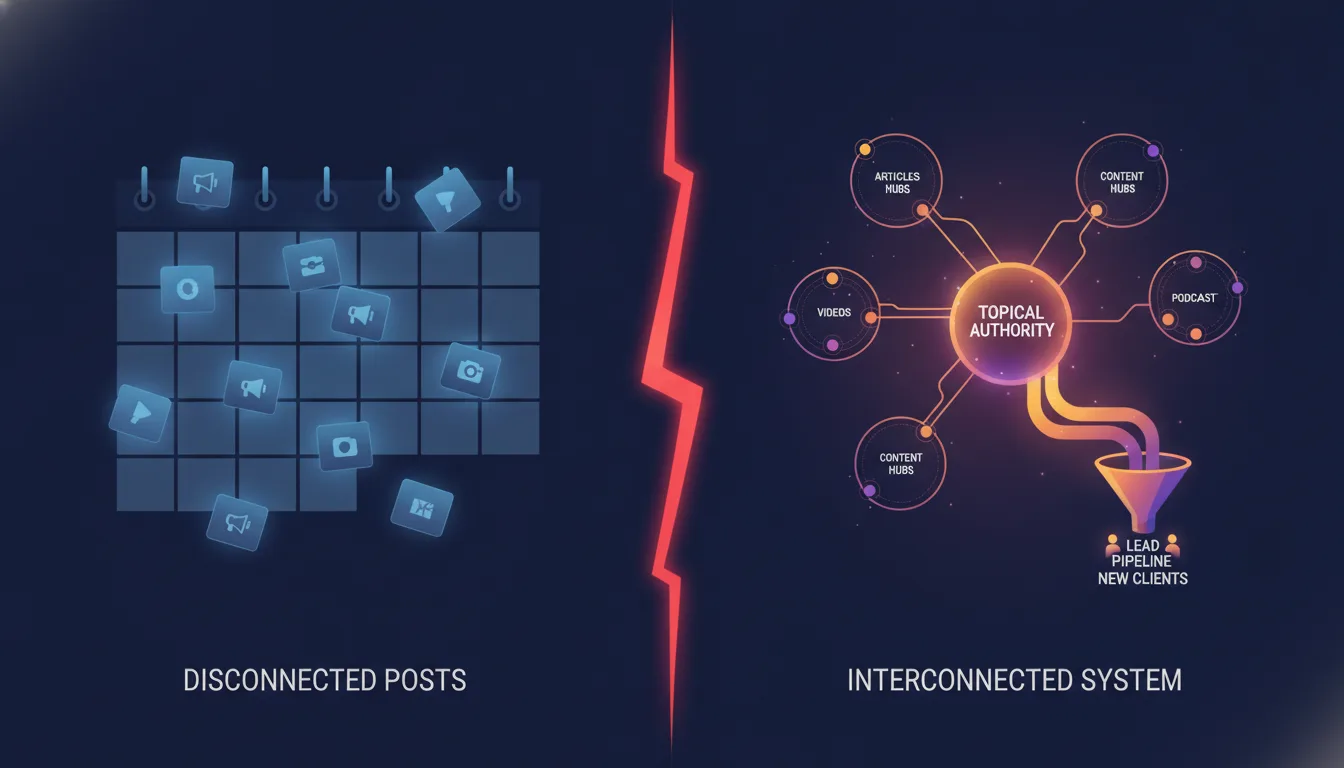
Content serves two purposes: it builds authority with your audience, and it provides a continuous source of qualified traffic to your funnel. Without a documented content system, publishing becomes ad-hoc and unmeasurable.
What you need:
Editorial calendar documented. What topics will you publish? On what schedule? How many pieces per month? This must be written down so someone else can execute it.
Publishing process documented. Idea → Research → Draft → Review → Publish → Promote. Each step has an owner and a deadline.
Content promotion workflows active. A blog post is not published until it is distributed — through email, social, paid promotion, and your funnel.
Content performance measured. Which topics drive the most traffic? Which pieces generate the most leads? Which convert the best? Track this in a database, not a spreadsheet.
How to know if you are ready:
You have published at least 10 pieces of content in your primary format (blog, video, guide, case study)
Your editorial calendar is planned for the next 3 months with assigned owners
You can report on which content pieces drive the most qualified traffic to your funnel
Each content piece has a documented promotion strategy and budget
Category 6: Analytics & Reporting Dashboards — The Visibility Layer
If you cannot see it in real time, you cannot optimize it. Your reporting infrastructure must be live, automated, and accessible to everyone who needs to make decisions.
What you need:
Live dashboards that auto-update. Your primary business metrics (revenue, conversions, cost per acquisition, ROAS) update daily or in real time, not weekly.
Weekly reporting process automated. Not a person spending Friday afternoon in Excel. A system that pulls data from all sources, computes metrics, and delivers a report.
KPI definitions locked in writing. What is a conversion? How is ROAS calculated? What data sources feed each metric? If two people define it differently, your reporting is broken.
Attribution reporting clear. You can see revenue attributed to paid media, email, content, and direct traffic. You understand the path to conversion, not just the last click.
How to know if you are ready:
Your dashboard updates at least once per day (ideally hourly)
Your team can pull a month-to-date report in under 5 minutes without manual work
You have documented your KPI definitions and your attribution model in writing
You know your cost per acquisition, return on ad spend, and email ROI without asking an analyst
Category 7: Optimization Cadence & Documentation — The Compounding Layer

The final category is about turning infrastructure into compounding knowledge. Most brands optimize reactively. Mature infrastructure brands optimize on a documented cadence — weekly reviews, monthly experiments, quarterly strategy audits.
What you need:
Weekly review process. Every Monday or Friday, review signals from your dashboards. Identify patterns. Flag issues. Plan the week's actions.
Monthly testing calendar. Run 2–3 documented hypothesis tests each month. Each test must have a clear hypothesis, success metric, and sample size.
Quarterly strategy audit. Step back from daily optimization. Reassess budget allocation, creative performance, audience mix, and channel mix. Make bold strategic changes quarterly, not continuously.
Decision documentation. Every optimization must be logged: What was the hypothesis? What action did you take? What was the outcome? This creates institutional memory and prevents repeating failed tests.
How to know if you are ready:
You have a documented weekly review process with a consistent owner and time
You ran at least 3 documented hypothesis tests in the last month, each with clear results
You have a library of past tests and their outcomes (not just in email, but in a searchable system)
Every major optimization decision can be traced back to data and documented reasoning
Ready vs Not Ready: The Diagnostic Table
Use this table to quickly assess your readiness to scale. If you have more "not ready" signals than "ready" signals, you should pause scaling and focus on infrastructure first.
Area | Not Ready Signals | Ready Signals |
|---|---|---|
Tracking & Attribution | Conversion data arrives late (24+ hours). Ads platform and analytics report different numbers. No documented attribution model. | Conversion data arrives within 2 hours. Platforms align within 5%. Attribution model is written and understood by the team. |
Landing Pages | Pages load in 4+ seconds. No baseline conversion rate tracked. A/B tests run without hypothesis. | Pages load under 3 seconds. Baseline conversion rates documented. Next 3 tests planned with clear hypotheses. |
Ad Accounts | Campaigns organized by product or channel. No clear budget allocation rules. Optimization is manual and ad-hoc. | Campaigns organized by funnel stage. Budget allocation percentage is defined. Bid and budget automation runs on a schedule. |
Email Automation | Welcome sequence not running or unmeasured. List not segmented. No integration with tracking. | Welcome sequence live with known open/click rates. List segmented into 5+ cohorts. Email events flow back to attribution. |
Content Systems | Publishing is ad-hoc. No editorial calendar. Performance not measured. | Editorial calendar planned 3 months out. Publishing process documented. Content performance tracked in a database. |
Reporting | Reports are manual and weekly. KPI definitions unclear. Dashboards update infrequently. | Dashboards update daily or hourly. Weekly report is automated. KPI definitions are written and team-aligned. |
Optimization Cadence | Optimization is reactive. No hypothesis documentation. Decisions are instinctive, not data-backed. | Weekly reviews are scheduled and consistent. Monthly tests are documented. Past tests are logged and searchable. |
How to Use This Checklist: A Three-Phase Approach
Phase 1: Audit (Week 1)
Go through each of the seven categories above. For each one, mark whether you are "Complete," "Partial," or "Not Started." Be honest. Do not grade yourself on effort — grade yourself on actual capability.
Phase 2: Prioritize (Week 1–2)
You cannot build all seven categories simultaneously. Use the dependency order in the table above:
Start with tracking. Nothing else works without it.
Then build landing pages. You need pages to test and convert.
Then structure ad accounts. Now you have tracking and pages to optimize.
Then add email automation. Now you have audience data from ads to segment.
Then build content systems. Now you have a funnel to feed into.
Then build reporting dashboards. Now you have all channels generating data.
Finally, establish optimization cadence. Now you have everything to optimize.
Most brands need 8–14 weeks to complete all seven from scratch. If you are already partial on most categories, you can compress this to 6–8 weeks.
Phase 3: Build & Document (Weeks 2–14)
For each category, assign an owner. Set a deadline. Track progress weekly. Require documentation — not just that the system is built, but that someone can explain it to a new person.
Do not move to scaling until all seven categories are complete. Not 6 out of 7. Not "mostly done." All seven.

Frequently Asked Questions
1. Can we scale before all seven categories are complete?
Technically, yes. Practically, you should not. Scaling on incomplete infrastructure multiplies your problems. You will waste 40–60% of new spend on channels where you cannot prove ROI. You will make optimization decisions blind. You will corrupt your attribution data. The time you save by scaling early, you will lose to debugging broken systems later.
2. Which category is most important to get right first?
Tracking. Everything cascades from your ability to measure conversions accurately and attribute them to the source. If your tracking is broken, every decision downstream is made on bad data.
3. How much does it cost to build out this infrastructure?
This depends entirely on your stack and your team. If you have an in-house marketer or developer, you might spend $5K–$15K on tools and $40K–$80K on internal labor. If you hire external help, infrastructure builds typically cost $15K–$50K depending on complexity. At Metrics Masters, we build this as part of a managed engagement, so the cost is embedded in our service fees ($2,500–$5,500+/month).
4. What if we are starting from zero? Can we build in 8 weeks?
You can, but you need focus and ruthlessness. Eliminate all nonessential tools. Pick one email platform, not three. Use one analytics tool, not five. Hire or assign a single person to own each category. Set deadlines and hold them. Most of the delay is not technical — it is organizational. If you have clear ownership and deadlines, 8 weeks is realistic.
5. We are halfway through the year. Is it too late to build this before scaling?
No. Infrastructure does not have a season. The sooner you build it, the sooner you stop wasting spend. Waiting until next year costs you months of lost efficiency and wasted budget. Start now, complete in 8–14 weeks, and scale confidently into Q4 or Q1.
6. How do we know when we are actually "ready" to scale?
You are ready when: (1) All seven categories are in the "ready" column of the diagnostic table above, (2) You have documented your systems in writing, (3) Someone other than the person who built it can operate it, (4) You have a clear KPI baseline for each channel, and (5) You have run at least 3 hypothesis-driven tests in the last month and documented the outcomes.
7. Do we need to hire someone full-time to manage this infrastructure?
Not necessarily. If you have an in-house marketer, this becomes their role. If you do not, you have two options: (1) Hire fractionally — a part-time operator or agency to own the infrastructure while you own strategy, or (2) Use a managed marketing infrastructure partner where all seven categories are operated as one system by a single dedicated operator. The critical requirement is that someone, full-time or fractional, owns it.
Next Steps: Scale Confidently
This checklist is your blueprint. Use it to audit your current state, identify gaps, prioritize systematically, and build infrastructure category by category.
The brands that scale fastest are not the ones with the biggest budgets or the cleverest creative. They are the ones with the cleanest infrastructure. One system. One operator. Full visibility. Compounding knowledge.
If you need help auditing your current infrastructure or planning the build phase, let's talk. We have implemented this checklist for dozens of growth-stage brands, and we know the dependencies, the timelines, and the shortcuts.
Your infrastructure is not a cost center — it is your competitive advantage. Build it first. Scale it second. Compound it forever.
Explore our managed marketing infrastructure services →
One expert. One system. Full accountability.

Jeremiah Shaw
CEO & Technical Marketing Specialist · Metrics Masters | Brandlio
International
Technical marketing specialist pushing boundaries in Google Ads, automation, and AI-driven growth systems. Paragliding and adventure enthusiast.