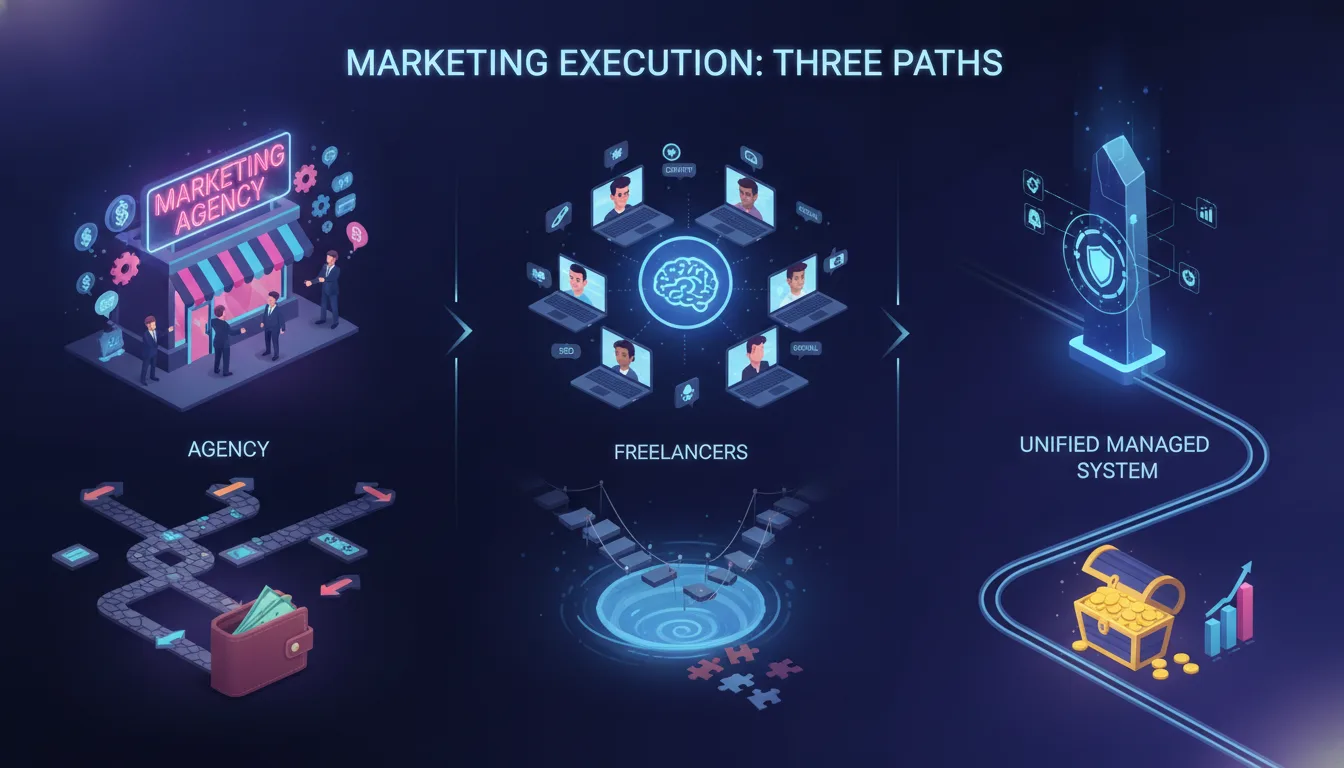
Which Outsourcing Model Is Right for You?
Key Takeaway: There is no universal answer. The right choice depends on your revenue stage, complexity, available internal leadership, and tolerance for coordination overhead. This guide cuts through the tradeoffs — cost, accountability, expertise depth, and long-term value — to help you decide.
Most growth-stage founders face the same dilemma: marketing is broken, but hiring internally feels premature. So the question becomes: do we hire an agency, cobble together freelancers, or explore something newer?
This is a decision with consequences. The wrong choice costs 12–18 months of learning, friction, and compounded mistakes. The right choice scales with you.
We have helped dozens of founders make this decision. This post breaks down the real tradeoffs.
What Each Model Actually Is?
Let's define precisely what we are comparing.
Agencies: Structured Services, Multiple People
A marketing agency is a business. It hires specialists, it operates processes, it sells retainer access to those specialists. You get account management, but that account manager often acts as a coordinator between internal teams rather than as a hands-on executor.
Agencies range from small boutiques (5–15 people) to large holding companies (500+). Cost typically runs $3,000 to $15,000 per month depending on scope. You pay for overhead, process, and team capacity — not just labor hours.
The model assumes: You want hands-off coordination. The agency owns internal project management. You attend monthly status calls and approve strategy.
Freelancers: Low Cost, High Coordination Burden
A freelancer is an individual contractor. One person, one skill set, one email chain. Rate is typically $50–$200 per hour depending on specialization, geography, and demand.
Most brands using freelancers hire multiple ones: one for PPC, one for email, one for content, one for analytics. That means you inherit the coordinator role — ensuring they share data, work toward aligned goals, and don't duplicate effort.
The model assumes: You have internal capacity (usually a founder or marketing hire) to manage contractors. Lower cash outlay. Tolerance for context switching.
Managed Systems: One Expert, One System, Full Accountability
Managed marketing infrastructure is a newer model. One dedicated operator — a Brand Technical Expert — runs your entire stack: ads, funnels, tracking, email, content, and reporting. Everything flows through one system. Everything is documented. Pricing ranges $2,500–$5,500+ per month.
The model is different from both agencies and freelancers. It is not services-based (you are not paying per deliverable). It is not hourly (you are not paying per minute). You are paying for full-stack ownership and documented decisions that compound.
The model assumes: You want one person who owns your entire system. You value documentation and transparency. You are willing to invest in infrastructure rather than freelancers.
How Much Does Each Option Cost?
Price is rarely the deciding factor, but it shapes the decision frame. Here is the full cost picture.

Freelancer Costs: Lower Upfront, Hidden Overhead
A single freelancer costs $50–$200/hour. If you hire three (PPC, email, content), assume 40–60 hours per month per person. That math: 3 freelancers × 50 hours × $100/hour = $15,000 per month at the mid-to-high end.
But that number is incomplete. It does not include:
Your time managing them: Onboarding, context-sharing, decision-making, debugging — typically 10–20 hours per month from a founder or marketing hire.
Tool costs: Project management, Slack, Notion, calendar, screening — often scattered across multiple subscriptions ($200–$400/month).
Ramp-up and turnover: Freelancers have 40% churn annually. Each departure costs 6–8 weeks of onboarding and context loss.
Coordination gaps: Siloed work. No cross-channel visibility. Decisions made in isolation often conflict with other channels.
According to Upwork's 2025 State of Work report, the average brand manages 3–4 concurrent freelancers and spends 12+ hours weekly on coordination and communication. That is equivalent to hiring an additional part-time person.
Real all-in cost: $15,000–$25,000 per month when you factor in your time, turnover, and tool sprawl.
Agency Costs: Predictable, Overhead-Heavy
Agencies typically charge $3,000–$15,000 per month depending on scope and scale. A $5,000/month retainer might include: one account manager (0.25 FTE), one strategist (0.25 FTE), one specialist (0.5 FTE), and tools. A $12,000/month retainer adds more specialists.
The benefit: one invoice, one contact, established processes, and no turnover risk on your end (the agency owns internal team churn).
The cost: agencies have higher overhead. Your retainer includes their office rent, health insurance, recruiting, training, and profit margin. You are paying for scale and stability.
According to Clutch's 2025 Agency Report, the median agency client reports 2–3 contact changes per year due to internal team transitions, restructuring, or account management shifts. That is invisible churn that slows momentum.
Real all-in cost: $3,000–$15,000 per month, plus learning curve time (account manager ramp = 6–8 weeks).
Managed System Costs: Scaled, Transparent, Single Line Item
Managed infrastructure pricing is $2,500–$5,500+ per month depending on channel complexity and traffic volume. One invoice. One operator. Direct API connections. Live reporting.
No hidden coordination overhead because there is only one person. No tool fragmentation because everything integrates. No account management churn because the Brand Technical Expert is dedicated to your account.
Real all-in cost: $2,500–$5,500+ per month, and that is the entire line item.
What About Expertise and Depth?
Not all expertise is equal. The model you choose dictates what kind of expertise you get.
Freelancers: Specialized, Narrow, Siloed
A freelancer is a specialist. They are expert in PPC, or email, or SEO — one domain deeply. That is their strength.
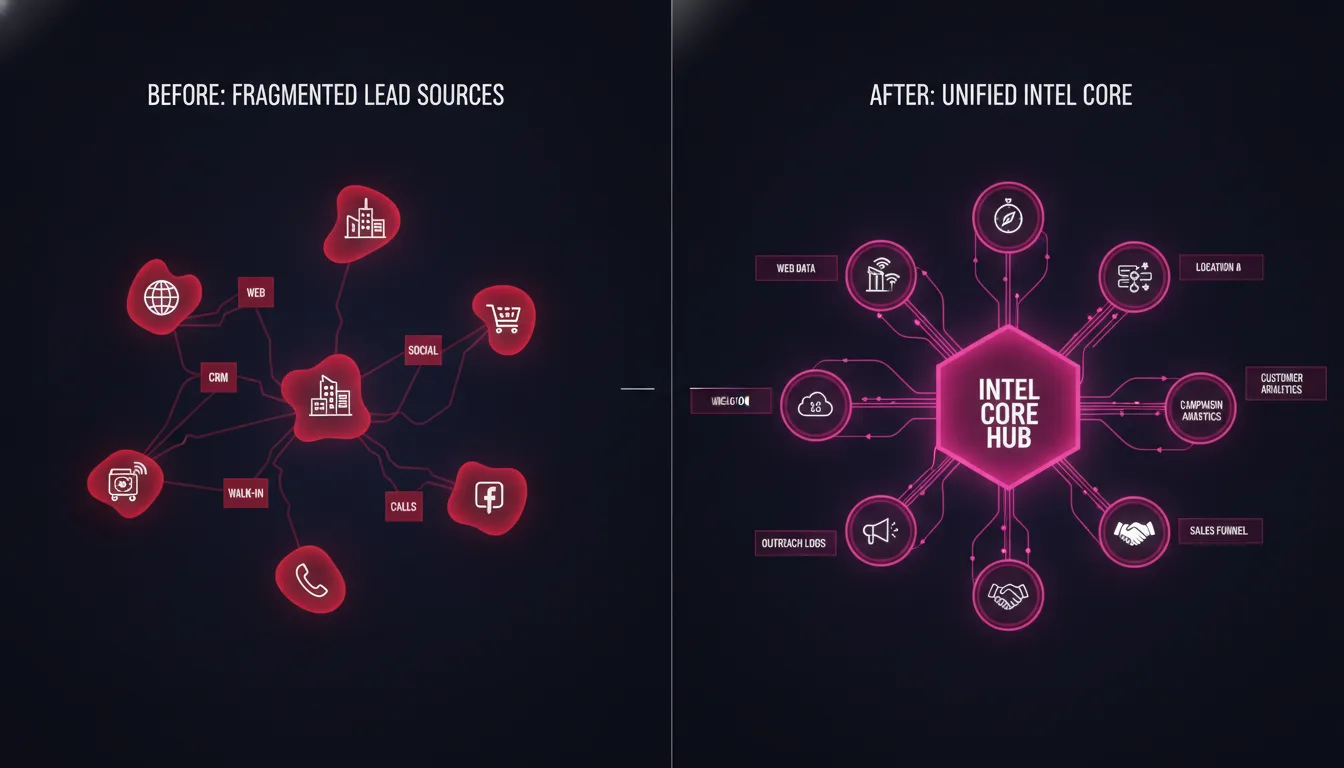
The tradeoff: they do not see your full picture. They optimize PPC independently of email. Email is optimized independently of landing pages. Opportunities at the intersections — audience overlap, funnel inefficiencies, data cascades — go unnoticed because no one person holds the complete map.
Specialist expertise is valuable. System expertise is rarer and more valuable.
Agencies: Broad, Coordinated, Slow
Agencies employ multiple specialists. By design, they can coordinate across channels. Email talks to PPC. Creative talks to strategy. That is the pitch.
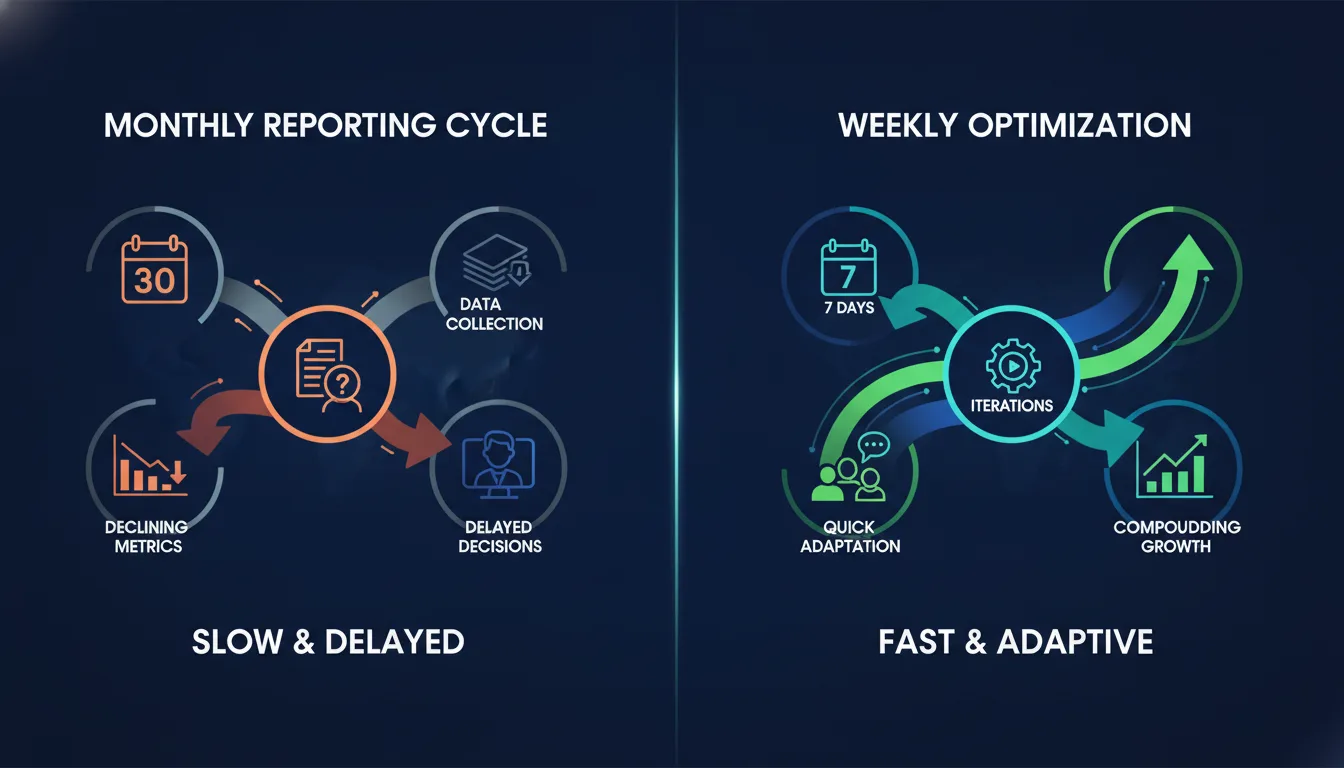
In practice, coordination requires meetings, project managers, and handoff documents. Change requests take weeks. A/B test results from one channel are not automatically reflected in strategy for another until the next quarterly review.
Agency expertise is broad. Agency speed is slow.
Managed Systems: Full-Stack, Documented, Compound
A Brand Technical Expert operates every channel simultaneously. They see the entire funnel in real-time. They know that a 5% improvement in email click-through rate cascades into a 12% improvement in conversion costs across paid ads because they own both channels and the tracking between them.
Critically, this expertise is documented. Every optimization decision — hypothesis, action, outcome, next hypothesis — is logged in Intel Core, the proprietary intelligence system. When you scale or add channels, that knowledge compounds instead of evaporating.
Comparison: Freelancers are specialists. Agencies are coordinators. Managed systems are owners.
Who Is Accountable When Things Don't Work?
This is the sharpest differentiator. Accountability is asymmetric.

Freelancers: You Are Accountable
When freelancers miss a deadline, you can fire them. When freelancers deliver poor work, you can reject it or demand revisions. But when freelancer A's work conflicts with freelancer B's work, you own the problem.
If performance suffers because the channels are not integrated, that is not a freelancer problem — that is a coordination problem, and coordination is your job.
Agencies: Partial Accountability
Agencies take accountability for the work they deliver. If a campaign performs poorly, they own it. If an account manager underperforms, the agency replaces them.
But agencies do not take accountability for coordination between your freelancers or your in-house tools. If your email tool does not sync with their ad platform, they will note it but not solve it.
And agencies rarely own scaling problems. As you grow, you become complex, and that complexity lands on you to manage.
Managed Systems: Full Accountability
The Brand Technical Expert owns everything: performance targets, execution quality, channel coordination, knowledge documentation, and scaling. If something breaks, it is their problem to fix.
This is not theoretical. We often inherit accounts where an agency was hired but channels were never integrated. Tracking was incomplete. Reporting was manually compiled. We spend weeks fixing those gaps, and the client sees immediate improvement because suddenly the system works as one unit instead of parts.
Accountability is the difference between being a vendor and being an operator.
What About Scaling?
Most decisions look different at different scales.

At $500K–$1M Revenue: Freelancers Often Win
You have a small marketing budget. You do not need an agency. You need one or two experts who can move fast. Hire two freelancers, manage them yourself, and build process as you scale. Cost is manageable. Growth is fast.
Success criteria: You have time and willingness to coordinate. Your marketing is simple (maybe one paid channel, one email list). You are hiring B-players — solid contributors who are not trying to build a personal brand.
At $1M–$3M Revenue: The Breakdown Begins
You have tried managing three or four freelancers. It works until it does not. You are spending 15+ hours per week on coordination. Your freelancers are not talking to each other. You hired an in-house marketing person, but they are drowning in vendor management instead of strategy.
At this stage, you have three choices:
Hire a second in-house person (marketing hire + operations hire) — $150K+ all-in.
Graduate to an agency — $5,000–$10,000/month, plus ramp-up time.
Consolidate onto managed infrastructure — $3,000–$4,500/month, immediately operationalized.
Most founders try the agency path first because it is the most familiar. Many discover they still have coordination problems because the agency is not integrated with their tools, freelancers, or in-house hire.
At $3M–$10M+ Revenue: Managed Systems Shine
You have enough marketing complexity that full-stack coordination matters. You are running experiments across multiple channels. You have a brand, a community, and a data-driven culture.
At this scale, freelancers are unscalable (coordination overhead is crushing). Agencies are slow (everything requires approval and meetings). Managed systems are built for this. One operator. Real-time execution. Documented decisions. Scaling is built in.
Key Takeaway: Freelancers are built for starting. Agencies are built for comfort. Managed systems are built for scaling. Your choice should align with where you are now and where you are going in the next 18 months, not where you want to be in five years.
How Do You Know Which One to Choose?
Here are the decision criteria we use when advising founders.

Choose Freelancers If:
Your monthly marketing budget is under $3,000.
You are running a single channel (ads only, or email only, or content only).
You have a founder or marketing hire who can spend 10–15 hours per week coordinating.
Your success metric is simple and does not require cross-channel analysis.
You value flexibility and short-term engagement over long-term partnership.
Best case: You are pre-product-market-fit, testing channels, and learning what works. Cheap experimentation.
Worst case: You scaled into complexity, but keep hiring freelancers because you know how to manage them. Now you are stuck.
Choose an Agency If:
Your budget is $4,000–$10,000 per month.
You want hands-off coordination and established processes.
You are okay with slower decision-making in exchange for vendor accountability.
You have strong internal marketing strategy leadership (CMO or head of marketing).
Your complexity is moderate (2–3 channels, established brand, consistent performance).
Best case: You hire a good agency that becomes a genuine extension of your team. They deliver quality work. Your internal marketing hire focuses on strategy, not vendor management.
Worst case: You discover coordination gaps between the agency and your other tools. Account manager churn frustrates relationships. Cost creeps up.
Choose Managed Infrastructure If:
Your revenue is $1M+, ideally $2M+.
You are running 3+ channels with complex interdependencies (ads + funnels + email + content).
You want one person accountable for cross-channel performance and integration.
You value documented decisions and compounding knowledge over monthly deliverables.
You are planning to scale significantly in the next 18–24 months.
Best case: You offload full-stack marketing execution to one expert. Your internal team focuses on brand, audience, and business strategy. Your Brand Technical Expert scales your operations as you grow.
Worst case: You hired managed infrastructure too early (when freelancers would have been sufficient), or your internal strategy is weak and the operator has nothing clear to optimize toward.
Real-World Scenario: The Comparison
Let us walk through a realistic example: a $2.5M revenue SaaS company with a $1,500/month marketing budget that is now realizing it is not enough.
Model | Freelancers (Team of 3) | Agency | Managed Infrastructure |
|---|---|---|---|
Monthly cost | $12,000–$18,000 (net of your time) | $6,000–$12,000 | $3,500–$5,500 |
Ramp-up time | 2–3 weeks per freelancer | 4–8 weeks for account setup | 2 weeks + kickoff |
Contact points | 3+ (one per freelancer) | 1 (account manager) | 1 (Brand Technical Expert) |
Cross-channel coordination | Your responsibility | Agency's responsibility (slow) | Your operator's responsibility (real-time) |
Scaling capacity | Low (add more people = more chaos) | Medium (agency scales their team) | High (system is designed to scale) |
Knowledge retention | Low (freelancers leave, take context) | Medium (agency retains, but siloed by person) | High (documented in Intel Core, compounds) |
Best for: | Founders with time + simple marketing | Established companies with CMOs + stable teams | Growth-stage brands optimizing for compound growth |
In this scenario, most founders would default to the agency. It feels safer. But the managed infrastructure option is actually more cost-effective, faster to ramp, and delivers better outcomes for a growth-stage company.
Should You Mix Models?
Some founders ask: can I use both? A managed system for my core channels and freelancers for specialized work?
Yes — if you are deliberate. The pattern that works:
Managed infrastructure handles the core: Ads, funnels, tracking, email, reporting. Everything that requires cross-channel integration.
Freelancers handle the specialized: Brand design, content strategy, SEO research, video production. Work that does not require real-time integration.
The key: your Brand Technical Expert coordinates with freelancers. Freelancers do not coordinate with each other. This eliminates the coordination overhead problem.
The hybrid model typically costs $4,000–$6,500/month and delivers more flexibility than pure managed infrastructure while eliminating freelancer chaos.
Frequently Asked Questions
Can you really save money with managed infrastructure vs. an agency?
Usually yes, but not always in the first month. An agency and a managed system might cost the same ($5,000/month). But at six months in, the managed operator has delivered measurable results and documented every decision. The agency is still ramping. At 12 months, the managed system is delivering compounding improvements. The agency is dealing with team changes. Over two years, managed infrastructure is usually 30–50% cheaper on a cost-per-dollar-of-revenue-generated basis.
What if I need multiple channels but do not have the budget for managed infrastructure?
Grow into it. Start with a freelancer for your primary channel (PPC). Once that is stable and generating data, you have proof of concept. Use those results to justify bringing on a second freelancer or graduating to managed infrastructure. Do not overcommit infrastructure spend before product-market-fit.
How long does onboarding take for each model?
Freelancers: 2–3 weeks per person (context transfer, tool access). Agencies: 4–8 weeks (full account setup, strategy alignment, team introductions). Managed infrastructure: 2 weeks (audit, configuration, kickoff). Then live in ~14 days.
What if my agency is not working out — can I switch to managed infrastructure?
Yes, and we help with this regularly. Plan for 2–3 weeks of knowledge transfer and configuration. Your Brand Technical Expert will audit the agency's work, identify gaps, fix them, and build from there. Expect a 4–6 week transition where performance might dip, then recovery.
Do managed system operators work with my existing tools?
Yes. The best operators (like our Brand Technical Experts) integrate with whatever stack you have: Google Ads, Meta, email platforms, analytics, CRM, landing page builders. They do not force you to rip out your tools. They work with what you have and optimize from there.
What is the biggest risk of each model?
Freelancers: you become the full-time coordinator and burn out. Agencies: you hire a bad one and waste six months. Managed systems: you choose the wrong operator and pay for underperformance. Due diligence matters for all three.
Can I start with freelancers and upgrade to managed infrastructure later?
Absolutely. In fact, that is the most common path. You start cheap, prove the model, then consolidate onto managed infrastructure when the freelancer model becomes too complex. Expect a 30–40% improvement in efficiency once you consolidate because overhead vanishes.
How do I know if a Brand Technical Expert is right for my company?
You are right if: you are generating $1M+ in revenue, you are running multiple marketing channels, you have a clear business strategy, and you want one person accountable for execution. If you are still discovering product-market-fit or your marketing is dead simple, freelancers are better. If you have a strong internal team and just need tactical support, an agency might be sufficient.
The Decision Framework
Here is the simplest way to think about it:
Freelancers = Do it yourself (with contractors). You own the system. Low cost. High coordination.
Agencies = Delegate it (to a vendor). They own execution. Medium cost. Medium complexity.
Managed infrastructure = Own the outcome (with an operator). One expert. Higher cost, lower total cost of ownership. High accountability.
The question is not which is cheapest. It is which aligns with your revenue stage, team capacity, and scaling ambitions.
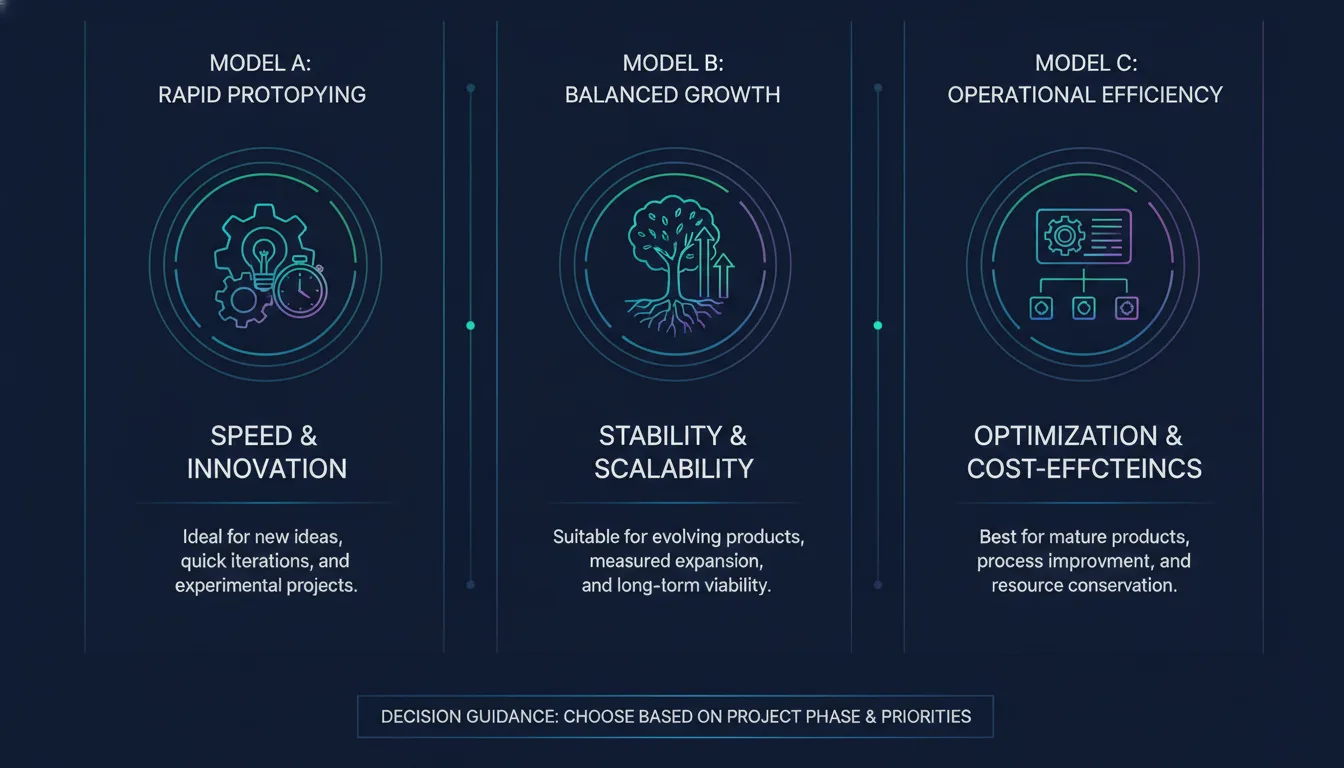
Key Takeaway: The right model depends on your scale. But at growth stage (especially $2M+), you are almost always better off consolidating onto one operator rather than spreading execution across multiple vendors. One person. One system. One invoice. Full accountability.
Next Steps
If you are currently using freelancers and feeling the coordination burden, your next step is honest. Ask: am I spending more time managing them than I would on one managed contract? If yes, it is time to consolidate.
If you are currently with an agency but seeing coordination gaps and account manager churn, your next step is to audit your results. Are you getting the compounding improvements you expected? If not, it might be because the agency model was never designed for it.
If you are exploring managed infrastructure for the first time, start here: read about what managed marketing infrastructure really is, and meet the team of Brand Technical Experts who operate it.
Ready to explore which model is right for you? Schedule a brief conversation with our team. We can audit your current setup, identify gaps, and recommend the right path forward.

Jeremiah Shaw
CEO & Technical Marketing Specialist · Metrics Masters | Brandlio
International
Technical marketing specialist pushing boundaries in Google Ads, automation, and AI-driven growth systems. Paragliding and adventure enthusiast.